

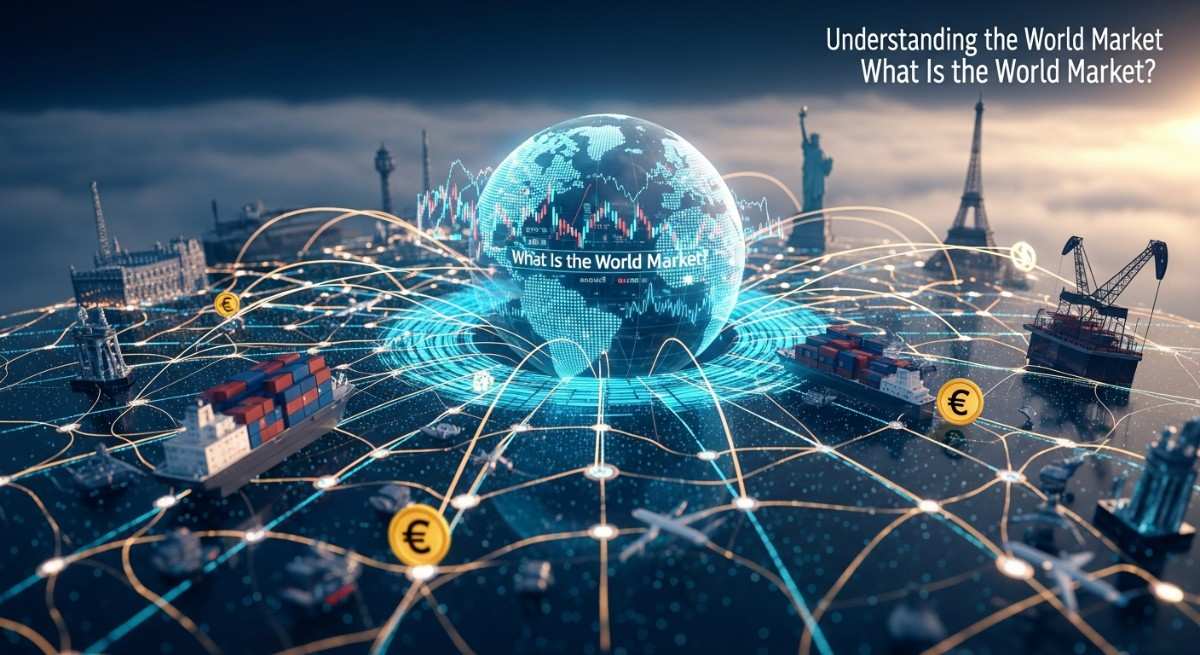
Understanding the World Market
What Is the World Market?
The world market is like a giant marketplace without walls, where countries, companies, investors, and consumers all interact daily. Everything from Middle Eastern oil to Asian smartphones sold in Europe or North America. Pull one thread, and the whole system feels it. Imagine a spider web where every thread connects one economy to another. That’s exactly how the global economy works now. Price changes across the globe can be influenced within days by a disruption in shipping routes, a rise in fuel prices, or a sudden policy change in one major country.
It’s the buying and selling of goods, services, capital, labor, and technology across international borders. International trade, financial systems, investment flows, and digital connectivity power it. 7% more than previous years, global trade in 2025 will surpass $35 trillion, according to UN Trade and Development. The fact that economies are so interconnected shows how deeply connected we are. Your costs, opportunities, and even customer expectations are affected by the world market, whether you run a small online shop or a multinational company.
Why the Global Market Matters Today
What’s the point of caring about the world market if you’re sitting in Bangladesh, Brazil, or Canada? Your daily life is already shaped by it. All these things are linked to global market movements: cooking oil, fuel, imported electronics, even online freelance opportunities. Global central banks react when inflation rises in one economy. Transportation costs go up when oil prices go up. Weather is like that: you can’t control it, but you feel it.
The world market will be even more important in 2026 because economies are recovering and adapting to new pressures. Despite trade tensions and policy uncertainty, the World Bank projects global growth of 2.6% in 2026. However, one in four developing economies is still poorer than it was in 2019, which shows how uneven the recovery has been. There’s risk and opportunity here. Companies that understand these shifts can grow faster, while those that ignore them might struggle.
Current State of the World Market in 2026
Global Trade Growth and Performance
In 2026, the world market won’t move in a straight line, it’ll be like driving on a highway with both fast lanes and traffic jams. There’s still growth in trade, but it’s slowed down. After a strong rebound in 2025, businesses now have to deal with tighter regulations, geopolitical uncertainty, and shifting supply chains. Even so, global trade remains massive, and services trade, particularly digital services, keeps growing.
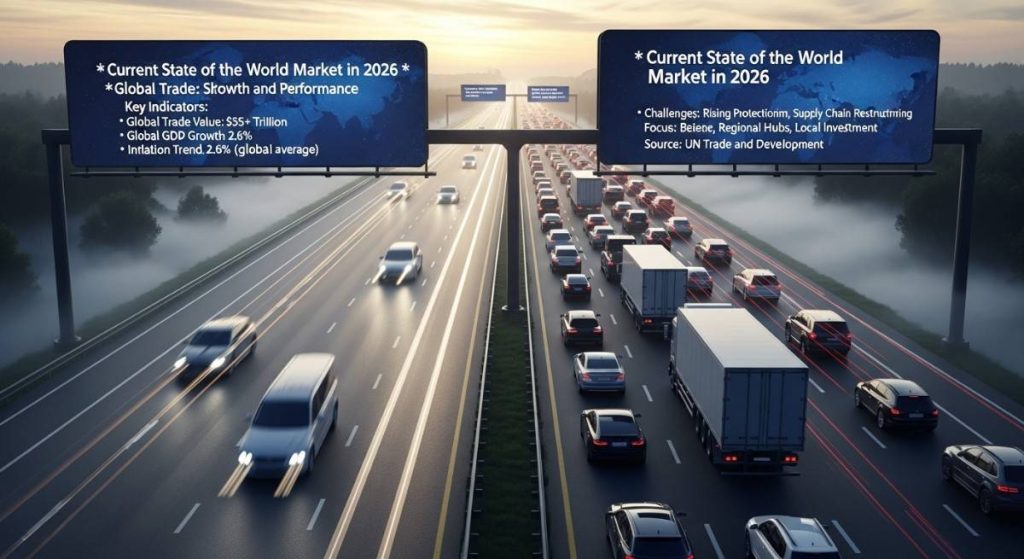
Although 2025 broke records, 2026 is expected to show slower but positive growth due to rising protectionism and supply chain reorganization. The world is trying to reduce its dependence on single suppliers, especially after repeated disruptions in logistics and energy. As a result, businesses are moving factories, building regional hubs, and investing in local resilience. We’re not just talking about cheaper production anymore, we’re talking about safer production.
| Indicator | 2025 | 2026 Forecast |
|---|---|---|
| Global Trade Value | $35+ Trillion | Positive but slower growth |
| Global GDP Growth | 2.8% approx. | 2.6% |
| Inflation Trend | Moderate decline | 2.6% global average |
These shifts are changing how companies plan. Instead of chasing the lowest price, they are balancing cost, speed, and stability.
Inflation, Interest Rates, and Consumer Spending
The silent guest at every dinner table is inflation – it changes what people buy, how businesses price products, and how governments make decisions. Inflation is easing globally, but it still leaves scars from the past few years. There are still cautious central banks, and consumers are watching every dollar, euro, or taka.
Due to softer labor markets and lower energy prices, the World Bank expects global inflation to drop to 2.6% in 2026. It sounds positive, but the reality is more complicated. Prices are still higher than they were a few years ago despite lower inflation. Spending habits are affected by this. Consumers don’t just want luxury, they want value. Comparing more, delaying purchases, and buying trusted brands is what they do.
This change is catching the attention of retail leaders. Major brands are adjusting pricing strategies to keep demand alive. According to business leaders in hospitality and retail, the “C-shaped economy” means spending patterns are changing across income groups rather than sharply dividing rich and poor. It means businesses have to rethink pricing, packaging, and customer service.
Major Industries Driving the World Market
Technology and Artificial Intelligence
It’s probably artificial intelligence that’s going to power the world economy in 2026. AI isn’t just a tech trend anymore – it’s transforming finance, logistics, healthcare, education, and manufacturing. There’s a direct link between AI and productivity and profit so companies are investing heavily. Moving from horses to cars is like moving from horses to cars; everyone wants to be included.
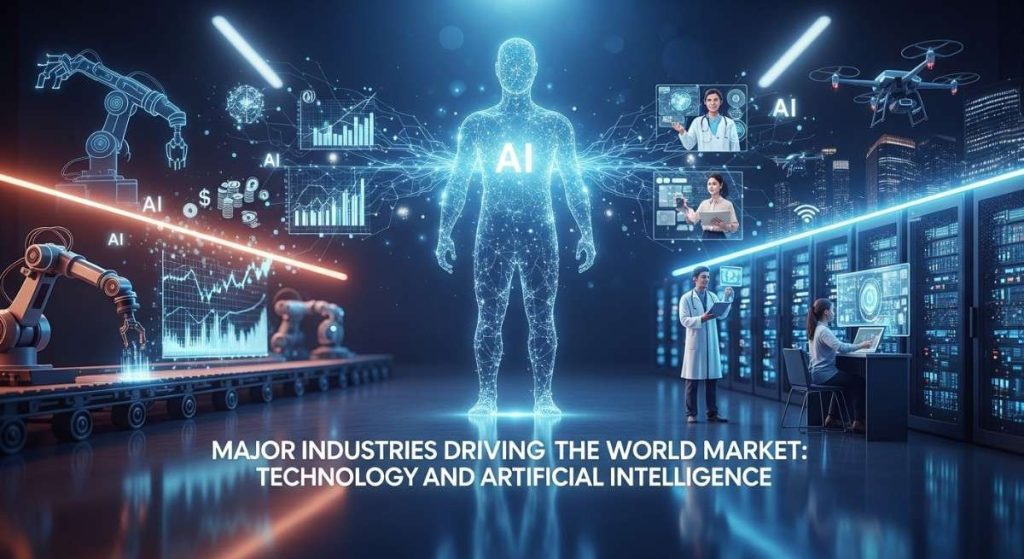
In token terms, Morgan Stanley reports that AI usage has jumped 250% since January, from 6.4 trillion to 22.7 trillion. That’s a huge jump. As a result, data centers, semiconductors, and electricity usage are going up. As AI automates tasks and shifts hiring priorities, it’s changing labor markets, too. There are some jobs that get faster and others that go away.
Early adopters of AI often gain a competitive edge. The benefits are immediate, from customer service bots to predictive inventory systems. AI-related infrastructure, like cloud computing and robotics, is also on investors’ radar.
Energy and Oil Markets
There’s no denying that energy is the heartbeat of the global economy. It doesn’t matter how digital the world gets, factories still need power, planes still need fuel, and supply chains still need oil and gas. Oil supply and investor confidence are affected by geopolitical tensions in 2026.
Oil prices recently hit $110 a barrel, and analysts say extreme scenarios could push them up even more. Disruptions around the Strait of Hormuz and the UAE’s exit from OPEC have increased uncertainty in global oil supply. When oil prices rise, transportation, food, and manufacturing costs rise too. It spreads like dominoes across every sector.
At the same time, energy’s future includes renewables. The sun, wind, batteries, and critical minerals like copper and lithium are becoming strategic assets. The government is trying to balance short-term fossil fuel security with long-term sustainability.
E-commerce and Retail Expansion
It’s no longer just about physical stores, it’s about ecosystems. Apps, social platforms, marketplaces, and hybrid experiences are where consumers shop. The way we shop now is more like a conversation than a transaction. Convenience wins.
Growth strategies are still dominated by online marketplaces. Artificial intelligence helps brands onboard faster, personalize recommendations, and optimize stock levels. A “endless aisle” has evolved into an “intelligent aisle,” where systems predict what customers want before they ask. No, this isn’t science fiction.
The sustainability of retail also influences the choices you make. Buying ethically and using circular economy models is on the rise. Their questions are where the products come from, how they’re made, and whether they can be reused. There’s a new currency called trust.
Emerging Trends Reshaping Global Trade
Green Economy and Sustainable Business
Having a green economy website isn’t just for decoration anymore, it’s a requirement. Proof of sustainability is important to investors, governments, and customers. Markets, partnerships, and funding may be lost to companies who ignore this shift.
With electric cars and carbon reporting, sustainability is now directly tied to profits. Brands that show authenticity and responsibility get more praise from consumers. According to Euromonitor International, authenticity, wellbeing, and professional-grade wellness solutions will shape consumer behavior in 2026. People want comfort and convenience, but they also want the values behind the brand.
Innovation is possible because of this. Investing in renewables, reducing waste, and improving supply transparency can make your business stand out.
Supply Chain Diversification
The phrase “don’t put all your eggs in one basket” perfectly describes modern supply chain strategy. In the wake of pandemic disruptions, shipping bottlenecks, and regional conflicts, companies learned painful lessons. They’re building backup plans now.
Diversification means sourcing from multiple countries, creating regional manufacturing hubs, and reducing reliance on one supplier. Long-term risk is lower, but it costs more at first. It’s more important to be reliable than cheap.
Imports of electronics, pharmaceuticals, and food are especially affected. Local production is also encouraged by governments.
Digital Payments and Fintech Growth
Slowly, cash is becoming a guest instead of a host. Mobile wallets, instant banking, cross-border payment platforms, and fintech solutions are all booming. It’s great for emerging economies because it gives them easier access to global commerce.
Online businesses, freelancers, and exporters need fast and cheap international payments. Fintech reduces friction and makes it easier for small players to compete. The world market gets easier to access, not just for giant corporations but for startups, too.
Challenges Facing the World Market
Geopolitical Conflicts and Trade Tensions
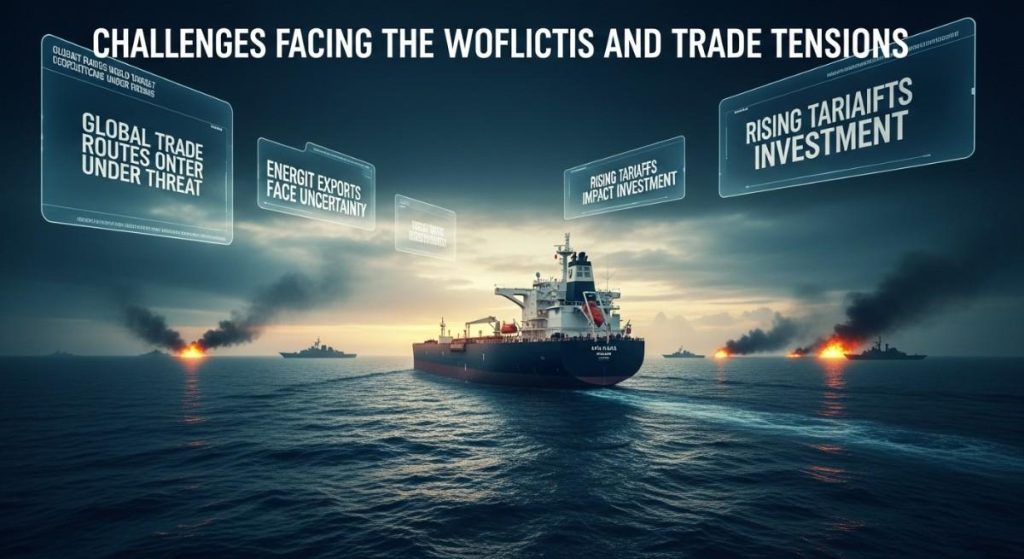
Markets move sometimes because of numbers. They move sometimes because of headlines. There will be a lot of headlines about geopolitics in 2026. Trade routes and energy exports are affected by conflicts, which spread uncertainty faster.
It affects nearly 20% of global crude and LNG trade around the Strait of Hormuz. Trade tensions also slow investment decisions, increase tariffs, and force businesses to rethink expansion plans. Companies get defensive when they’re uncertain.
A World Bank economist noted that the world economy is getting more resilient but less capable of generating strong growth. I’d pay attention to that warning.
Currency Volatility and Debt Pressure
It’s like invisible taxes. All importers, exporters, and investors feel it when currencies move sharply. Developing markets can be hurt by a strong dollar because it makes debt repayment more expensive. It can increase inflation through import costs if the local currency is weak.
Despite this, public and private debt levels remain high. Governments can’t spend as much to support growth because of this. Over time, borrowing becomes painful for businesses and households.
Because of this, financial discipline is more important than ever. It’s not about being blindly optimistic, it’s about flexible planning.
Opportunities for Businesses and Investors
High-Growth Markets to Watch
No matter how uncertain things get, opportunities don’t disappear. They just move. A younger population, digital adoption, and expanding middle class continue to attract attention in Asia, Africa, and Latin America.
There’s still a lot of room for expansion in technology infrastructure, healthcare, renewable energy, logistics, and education. Often, countries with stable policy environments and improving digital ecosystems outperform expectations. Long-term patterns are what smart investors look for, not short-term noise.
Smart Investment Strategies for 2026
Balance is the best strategy for 2026. Diversification across sectors, regions, and asset classes is on investors’ minds. Artificial intelligence, clean energy, and essential commodities remain strong themes, but risk management is just as important.
There are four major investment themes Morgan Stanley identifies: AI and tech diffusion, future energy, the multipolar world, and societal shifts. This isn’t just buzzwords, this is where capital is going.
You’ve got to be patient. Chasing hype usually doesn’t work. The best way to win is to understand structural trends.
The Future of the World Market
Predictions for the next five years
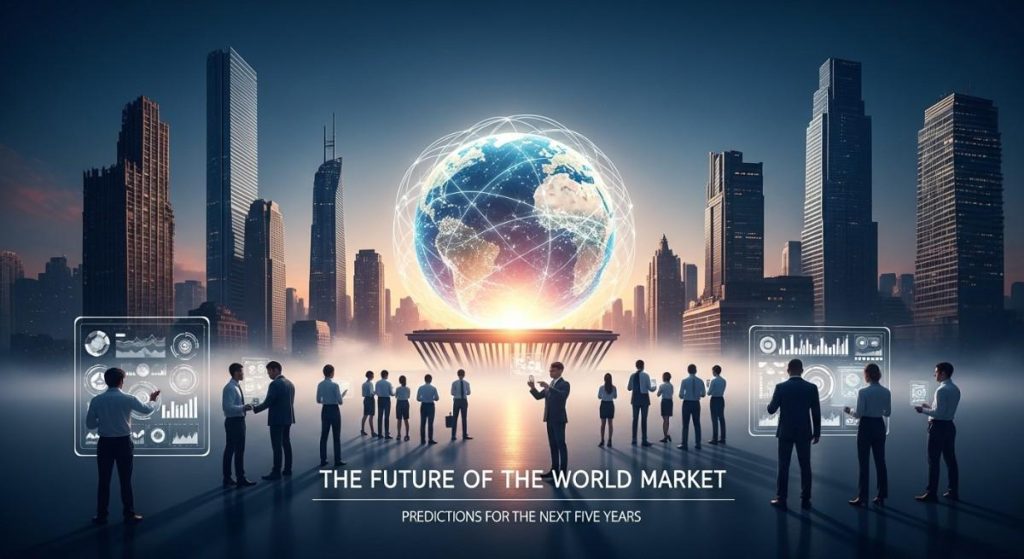
It’s going to be a slower but smarter growth next five years. We might see more regional trade, more central technology, and more measurable sustainability. Rigid systems might fall behind, while businesses that adapt quickly will win.
Artificial intelligence will keep reshaping the workplace. Politics will remain intense. There will be a rise in consumer expectations. Globalization won’t make the market simpler, but it’ll make it more strategic.
How Businesses Can Stay Competitive
Businesses have to think globally and act locally to stay competitive. To do that, you have to understand international risks while building strong local trust. We’re going to need flexibility, digital transformation, and transparent operations to survive.
It’s not always about the biggest companies. They will be the fastest learners.
Conclusion
Trade, technology, energy, politics, and people are shaping the world market in 2026. There’s a lot of surprises, a lot of complexity, and you can’t ignore it. We’re entering an exciting chapter in global business – record trade volumes, slower growth forecasts, AI expansion, and energy volatility.
It’s no longer just a luxury for businesses, investors, and consumers to understand the world market. Rather than trying to predict every wave, learn to surf them.
FAQs
1. What is the World Market?
World markets are where countries and businesses exchange goods, services, capital, and labor.
2. Why is the world market so crucial in 2026?
Economic growth, inflation, prices, trade opportunities, and investments are all affected. Global markets affect pretty much every industry.
3. Which industries lead the world market now?
Technology, artificial intelligence, energy, e-commerce, fintech, and renewable energy are among the top sectors driving growth.
4. How do geopolitical conflicts affect global markets?
As a result, supply chains get disrupted, energy prices go up, trade restrictions are put in place, and investors lose faith.
5. What are the hottest investment themes for 2026?
AI, clean energy, digital infrastructure, diversified supply chains, and emerging consumer markets are among the strongest themes.










Very important information
So clase