


Definition of a National Flag
Flags are the official visual symbols of sovereign states. Think of it like a country’s face in a crowd—it’s the fastest way to identify someone. Flags represent authority, citizenship, and shared belonging, whether they’re raised at an embassy, stitched into a uniform, or carried during an international sports event. There’s a lot of emotional and political significance to it, so it’s often protected.
The majority of national flags have a rectangular design with carefully chosen colors, shapes, and symbols. The design choices aren’t just random—they’re usually influenced by centuries of history. Stripes can symbolize revolutions, stars can symbolize unity, and colors can honor bloodshed for freedom. A green color can represent agriculture, land, or Islamic heritage, while a blue color can signify peace or the ocean or the sky.
As a visual shorthand, flags also work in diplomacy.
It’d be like a concert without an artist’s name if there were no flags at the United Nations.
Despite standing together, flags help nations stand apart.
As well as showing the world where they belong, they remind citizens who they are.
Why Flags Matter Globally
It’s human nature to connect with symbols, so flags are important. Images stick in our minds faster than speeches, and flags elicit emotional reactions almost instantly. Flags are often rallying points during independence movements. It’s the banner of hope. Resistance can be symbolized by it in war. When it’s in peace, it becomes a symbol of pride.
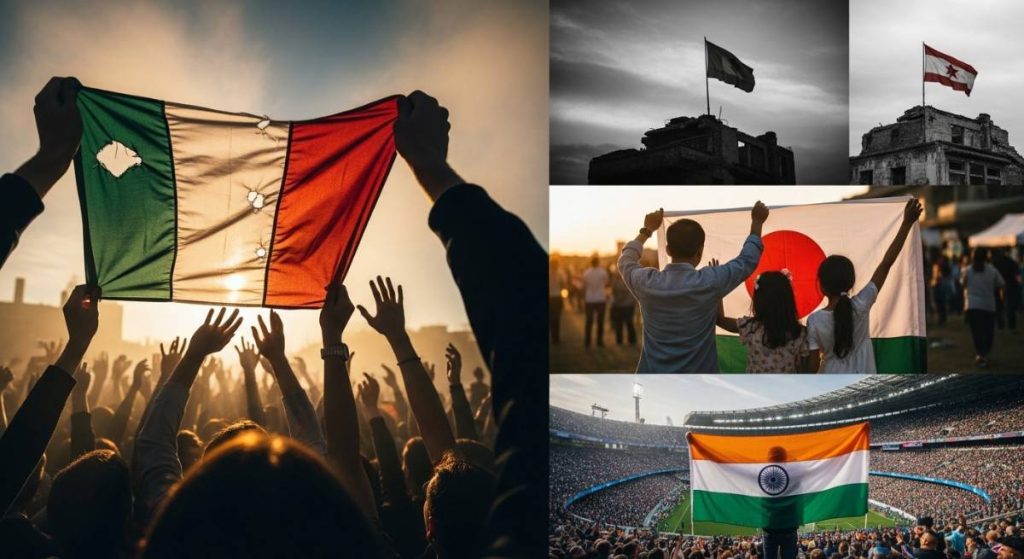
During global events like the FIFA World Cup or the Olympics, flags turn stadiums into oceans of national pride. They’re waved like extensions of themselves. A gold medal ceremony without a flag rising would feel incomplete because the symbol is just as important as the anthem.
Even in everyday life, flags shape perception. Schools teach them, airlines use them, and embassies display them. The flags of countries are often taught before world geography. That’s national branding at its best. There’s nothing like a flag that’s memorable, meaningful, and emotionally charged. It turns abstract patriotism into something visible and tangible.
The History of Flags
Ancient Origins of Flags
It wasn’t always the case that flags were national symbols. Their earliest ancestors were army banners used by ancient civilizations to organize armies. It’s actually the study of flags that comes from the word “vexillology,” which means “standards called vexillum.” Banners were used by Chinese dynasties, Persian empires, and Egyptian kingdoms long before modern countries existed.
Flags back then were more about battlefield practicality than design beauty. It was important for soldiers to know where their leader stood during chaos. Direction, identity, and morale were all symbolized by a banner in the distance. Before the battle even started, losing the flag meant psychological defeat. That emotional relationship with flags has never really disappeared.
As kingdoms became nation-states, flags became political symbols. Ships also needed a way to identify nationalities at sea, so flag development was pushed by maritime trade. The flag became a floating passport. That’s why Denmark, the Netherlands, and the United Kingdom have some of the oldest standardized national flags.
A flag’s journey from battlefield cloth to national identity shows how deeply rooted it is in civilization. The fabric is stitched with history.
National symbols evolve into modern ones
As people’s view of power changed after revolutions, national flags exploded. Tricolor flags and the idea that a flag should represent the people, not just the monarchy, were popularized by the French Revolution. A flag suddenly became a democratic symbol rather than a royal possession.
There was a shift in Europe, and then it spread to the rest of the world. Colonized nations seeking independence often designed new flags to reject imperialism. The creation of flags became a part of nation-building in Africa, Asia, and Latin America. In a way, choosing colors was like writing a constitution.
Colonial empires dissolved in the 20th century, leading to an explosion of new flags. Ethiopia inspired many African countries to use green, yellow, and red to symbolize freedom and unity. The Union Jack often has a big influence on former British colonies, especially in the canton.
Even today, flags get redesigned. It’s common for countries to update their symbols to reflect political changes or new identities. In flag communities, recent examples include Syria’s modern constitution changes and discussions about historical flags. Flags may look permanent, but history proves they’re always part of an ongoing conversation.
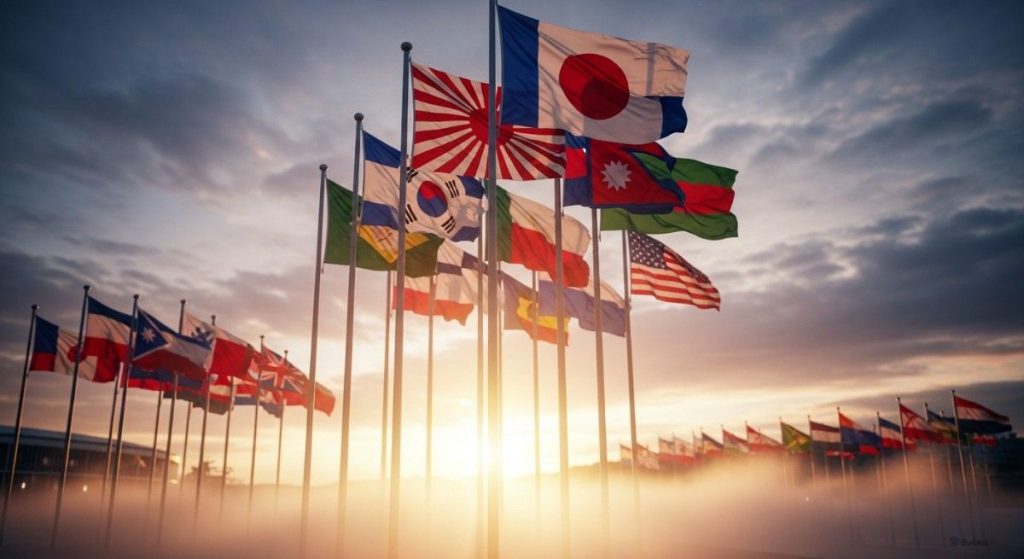
Flags are more than just colorful pieces of fabric waving in the wind. Silent storytellers, carrying pride, pain, victories, and dreams of entire nations. Every flag has a story, from the rising sun of Japan to the unique double triangle of Nepal. Some reflect independence, others religion, geography, revolution, or royal heritage. You might have wondered, “Why does that flag have these colors?” “What does that symbol mean?” “”You are in the right place.
Currently, around 195 countries have national flags, while broader definitions like territories and dependencies often count 196+ flags. From the United Nations headquarters to the Olympic Games, from passports to football stadiums, these symbols are everywhere. Flags are one of the strongest symbols of sovereignty and unity, as they are often the first visual identity people associate with a country.
Discover the fascinating world of flags, their meanings, history, design principles, and the world’s most iconic flags.
Conclusion
World flags aren’t just decorative symbols—they’re living pieces of history, identity, and emotion. Every stripe, star, color, and emblem tells a story shaped by battles won, cultures preserved, revolutions fought, and hopes for the future. Despite speaking different languages, following different traditions, and living in different parts of the world, a flag can bring millions of people together.
Flags show us how to express national identity in countless creative ways, from Japan’s red sun to Nepal’s non-rectangular design. Others represent religion, freedom struggles, or political transformation, while others reflect geography like oceans and mountains. As symbols speak a universal language, they never need translation.
Understanding flags helps us understand the world. Studying a flag is like studying history, politics, culture, and human emotion at the same time. It’s like opening up a country’s biography through its colors and design. It’s for this reason that vexillology, the study of flags, continues to fascinate historians, designers, travelers, and curious minds.
Remember that flags aren’t just cloth when you see them flying over buildings, waving in stadiums, or printed on passports. It’s pride stitched into fabric, a nation’s heartbeat.
FAQs
1. How many are there officially?
195 sovereign countries have their own flags, and each has its own official recognition. Depending on the source and classification system, the number can go up to 196 or more if territories, dependencies, and observer states are included.
2. Which country has the best flag shape?
There’s only one non-rectangular national flag in the world, so Nepal has the most distinctive flag. In addition to its double-pennant shape, it represents the cultural and historical identity of the Himalayan nation.
3. What do common flag colors mean?
It’s not uncommon for flag colors to have symbolic meanings. A red ribbon symbolizes bravery or sacrifice, a blue ribbon stands for peace or freedom, a green ribbon represents agriculture or Islam, a white ribbon stands for purity and peace, and a black ribbon represents determination or struggle.
4. What is the study of flags called?
The study of flags is called vexillology. Understanding flag design, symbolism, history, and usage is a must. The people who study flags are called vexillologists, and they often study how they influence national identity and political movements.
5. Which flag includes weapons in its design?
An AK-47 rifle is on Mozambique’s national flag, the only one with a modern firearm. Symbolizing defense, vigilance, and independence, it represents the country.











Boom boom well
Powerful and,……