


Why do airline tickets cost so much?
When you buy an airline ticket, you’re not just purchasing a seat—you’re buying access to a highly complex system powered by algorithms, demand forecasting, and global logistics. Think of it like booking a concert seat, except the price of your ticket can change hundreds of times before the show starts. Airlines constantly adjust prices based on how many seats are left, how many people are searching for the same trip, and even external factors like fuel costs and economic conditions.

Airline tickets are basically contracts between you and the airline. They include details such as your itinerary, seat class, baggage allowance, and fare rules. What makes them fascinating is how flexible—and unpredictable—they can be. One day a ticket might cost $200, and the next day it could jump to $350 for no apparent reason. It’s because airlines use dynamic pricing systems that react to market demand in real time.
Types of Airline Tickets Explained
Not all tickets are created equal. You’ll typically find one-way, round-trip, and multi-city tickets, each designed for different travel needs. One-way tickets offer flexibility but can sometimes be more expensive per leg, while round-trip tickets often come with bundled discounts. Multi-city tickets are great for travelers who want to explore multiple destinations without booking separate flights.
There are also refundable vs non-refundable tickets. Refundable tickets cost more upfront but give you peace of mind if your plans change. Non-refundable tickets are cheaper but they have stricter rules. Choosing between a budget hostel and a luxury hotel is a classic trade-off.
How Airline Pricing Systems Work
Airlines categorize seats into price groups called fare buckets. When the cheapest seats are taken, the system shifts to higher price levels, which is why early bookers often snag the best deals—though not always. Airlines may later lower prices to fill unsold seats, creating the unpredictable ups and downs of airfare costs.
Today’s pricing systems also track browsing habits, competitor rates, and past demand, making it feel like a stock market where seats in the sky are the commodity. Understanding this system is key to booking airline tickets
Factors That Affect Airline Ticket Prices
“Airfare isn’t random—it’s influenced by predictable patterns and unexpected global events. If you’ve ever wondered why flights skyrocket during the holidays or suddenly increase overnight, there’s always a reason behind it.”
Seasonal Demand and Travel Trends
Travel demand plays a huge role in ticket pricing. Peak seasons like summer vacations and December holidays typically see the highest fares because everyone is trying to fly at the same time. On the flip side, off-peak months like January often offer significantly lower prices due to reduced demand.
Recent data shows that August can be up to 29% cheaper than December for flights, making it one of the best months for budget travelers. This shift is partly due to changing travel behaviors, where people are spreading their trips throughout the year instead of clustering them around holidays.
Fuel Costs and Global Events
Fuel prices are one of the biggest hidden drivers of airfare. When oil prices rise, airlines often pass those costs on to passengers through higher ticket prices or added fees. Recent reports highlight how global conflicts can push fuel costs up dramatically, directly impacting ticket prices and even leading to additional surcharges.
Economic uncertainty also affects booking behavior. When people feel unsure about the future, they delay booking flights, which can temporarily lower demand and create short-term deals. It’s a delicate balance that airlines constantly adjust to maintain profitability.
Best Time to Book Airline Tickets in 2026
Timing your booking is like catching the perfect wave—you have to know when to jump in.
You might overpay if you book too early.
You don’t want to wait too long because prices can spike.
The Ideal Booking Window
According to data from 2026, the sweet spot for booking flights is:
- 1–3 months before departure for domestic flights
- Pre-book international flights 2-8 months in advance
There’s even a “Goldilocks window” when prices are just right – not too early or too late. When it comes to domestic travel, that window usually starts around 38 days before departure, while when it comes to international travel, it typically starts between 50 and 101 days before departure.

Cheapest Days to Book Flights
Don’t believe the myth that Tuesday is always the cheapest day. The trends have changed in 2026. Friday is now one of the cheapest days to book flights, saving around 3% compared to more expensive days like Sunday.
This change reflects changing travel patterns, especially the decline in business travel at the end of the week. Prices adjust accordingly, giving savvy travelers more options.
Cheapest Days and Months to Fly
Choosing the right travel day can make an even bigger difference than booking.
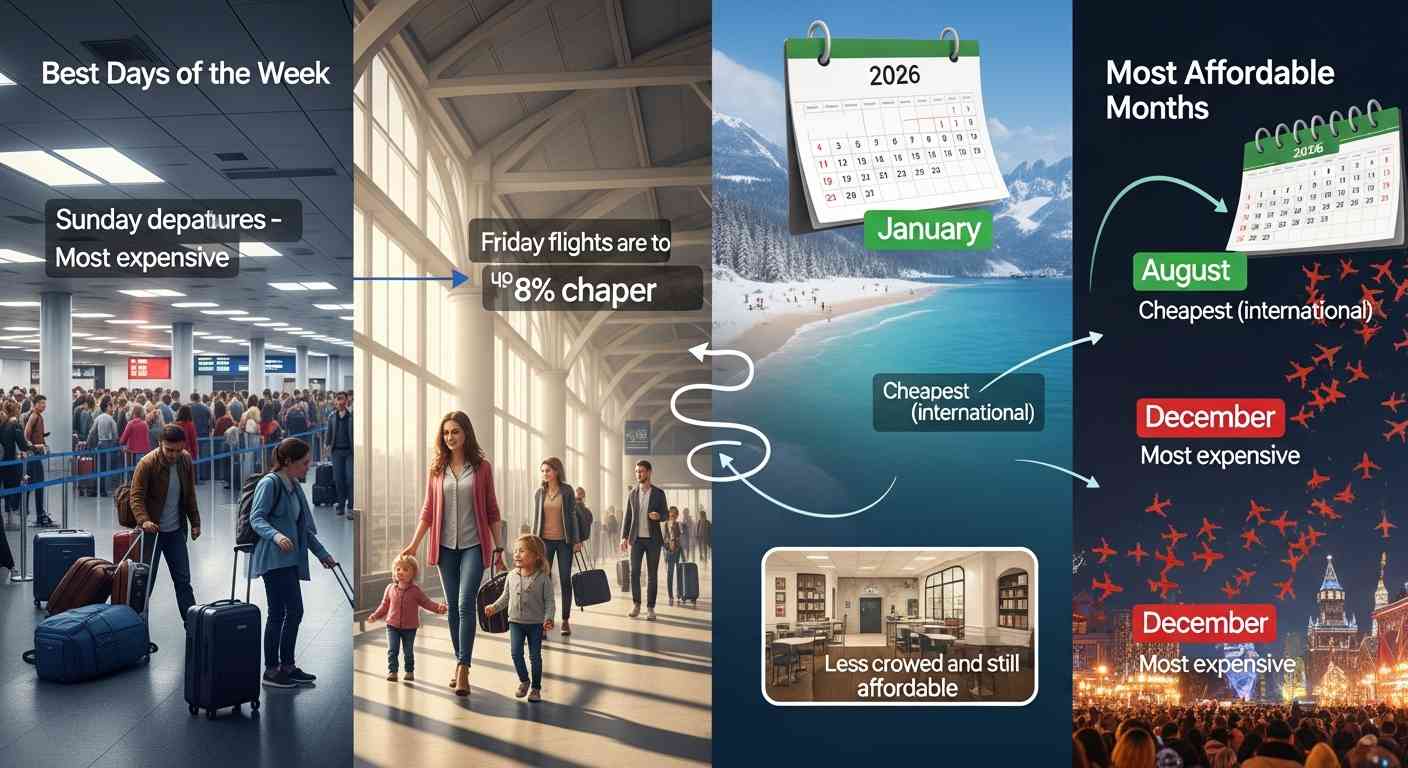
Best Days of the Week
There’s a lot of money to be saved by flying on the right day. As of 2026:
- Flights on Friday are up to 8% cheaper than on Sunday
- Tuesdays are usually less crowded and cheaper
It’s like choosing when to do your grocery shopping-avoid the rush and you’ll get better deals.
Most Affordable Months
If you’re flexible with your travel dates, you can save big by choosing the right month. Data shows:
| Month | Price Trend | Reason |
|---|---|---|
| January | Cheapest (domestic) | Post-holiday low demand |
| August | Cheapest (international) | Reduced business travel |
| December | Most expensive | Holiday peak demand |
This seasonal pattern repeats every year, making it one of the most reliable ways to save money on airline tickets.
Smart Strategies to Find Airline tickets for cheap
Finding cheap flights isn’t luck, it’s strategy.
You’ll be able to play the game like a pro once you understand how it works.
Use Flight Comparison Tools
Flight comparison websites help you find the best deals from multiple airlines.
They’re like flight search engines, showing you options you might never find on airline websites.
Set Price Alerts and Track Trends
Your secret weapon is price alerts. Set up alerts and let technology do the work for you instead of checking prices every day. When prices drop, you’ll be notified right away, so you can book before they go up again.
Budget Airlines vs Full-Service Airlines
The choice between budget and full-service airlines can be like choosing between a cheap smartphone and a high-end flagship.
Both get the job done, but the experience is different.
Key Differences in Pricing and Services
In addition to lower base fares, budget airlines charge extra for almost everything, like baggage, seat selection, and even snacks.
These features are included in full-service airlines’ tickets, which makes them more convenient but often more expensive.
Hidden Fees to Watch Out For
In the last few years, ancillary fees have become a major revenue source for airlines, bringing in over $100 billion a year.
Getting a cheap ticket can quickly turn into an expensive one if you don’t check what’s included.
Airline Ticket Classes Explained
There’s no such thing as an equal seat on a plane.
You can choose the best option for your budget and comfort level by understanding ticket classes.
Economy, Business, and First Class
The economy class is the cheapest, but it’s got limited space and amenities.
There’s more comfort, better food, and priority services in business class, while first class comes with spacious seating and premium amenities.
Premium Economy: Is It Worth It?
It’s between economy and business class.
With extra legroom and better services, it’s a popular choice for long-haul travelers.
Common Mistakes to Avoid When Booking Flights
You can make mistakes even if you’re an experienced traveler.
You’ll save both time and money if you avoid these pitfalls.
Last-Minute Booking Errors

Flights booked within two weeks of departure are almost always more expensive.
The airlines know last-minute travelers aren’t as price-sensitive, so they charge more.
Ignoring Extra Costs
Most travelers don’t think about additional costs like baggage fees, seat selection, and airport transfers. You can significantly increase your trip’s cost by adding these extras.
How Technology Is Changing Airline Ticket Booking
We’re changing the way we book flights with technology, making it easier, smarter, and more personalized.
Dynamic pricing and AI
Airlines can adjust prices in real time based on demand, competition, and customer behavior thanks to artificial intelligence. As a result, prices can change within minutes, creating both challenges and opportunities.
Mobile Apps and Smart Booking
There’s now a mobile app with features like price predictions, deal alerts, and flexible date searches. Find the best deals without spending hours searching with these tools.
Tips for Getting the Best Deals Every Time
There’s one secret to cheap airline tickets: flexibility. Savings opportunities increase when you’re flexible.

Flexibility Is Key
By being flexible with your travel dates, times, and even airports, you can save a lot. There’s usually a better deal if you fly midweek or use an alternative airport.
Combining Deals and Discounts
You can maximize your savings by using price alerts, flexible dates, and comparison tools. Each small discount adds up to a big difference; it’s like stacking discounts in a store.
Conclusion
Ticket prices might seem confusing at first, but once you understand how they work, it all makes sense. We’re not talking about guessing or relying on outdated myths-we’re talking about data, timing, and smart strategies. Everything you do can affect the price, from choosing the right booking window to flying on cheaper days.
There’s a lot of change coming to travel in 2026, with new trends like Friday bookings and dynamic pricing. Staying informed and flexible will help you navigate this ever-changing system with confidence—and maybe even score a great deal.
The FAQ
1. When’s the cheapest day to book airline tickets in 2026?
Flights are currently cheapest on Friday, offering small but consistent savings compared to other days.
2. When should I book a flight?
For the best prices, book domestic flights 1–3 months in advance and international flights 2–8 months in advance.
3. Which day is cheapest to fly?
Friday is often the cheapest day to fly, while Sunday tends to be the most expensive.
4. Why do airline ticket prices change so often?
Prices change بسبب dynamic pricing systems that respond to demand, availability, and external factors like fuel costs.
5. Are budget airlines always cheaper?
Not always. While base fares are lower, additional fees can make budget airlines more expensive than full-service carriers.