


What Is a Department of Public Safety Driving Record?
Your Department of Public Safety driving record is an official document with your driving history. The agency may be called DPS, DMV, BMV, DOT, or Department of Licensing depending on where you live. It doesn’t matter what you call it, the purpose is the same: tracking your driving.
It includes traffic tickets, accidents, license suspensions, DUI convictions, and administrative actions taken against your license. Points accumulated through traffic violations are also included in some states. These records are frequently reviewed by insurance companies, employers, courts, and law enforcement agencies to assess a driver’s reliability.
Think of your driving record as a digital footprint. Getting a speeding ticket, taking a defensive driving course, or getting your license back leaves a mark. Over time, some marks fade, while others stay. Depending on how serious the crime was, certain records may stay visible for three, seven, or even ten years.
A lot of people don’t realize their driving history matters until they have a problem. It could be that their insurance goes up, or that they get denied a job because of a past violation they forgot about. That’s why experts recommend checking your record regularly. It helps you catch mistakes early and understand what other people see when they look at your driving history.
Definition of a driving record
Driving records, also called Motor Vehicle Reports (MVRs), are official records of your driving. Reports like these are often requested for employment screenings, court cases, or insurance evaluations.
WHY STATES MAIN DRIVE HI
Keeping driving records improves road safety and monitors driver accountability. It helps public safety departments identify risky drivers and take corrective action before more dangerous incidents happen by tracking repeat offenders and serious violations.
Information included in a DPS Driving Record
There’s a lot more information in a driving record than most people realize. Most people think it only lists speeding tickets, but modern DPS systems keep detailed records for years.
Traffic violations, accident reports, license classifications, endorsements, suspensions, and court-related actions are some of the most common things on a driving record. Unpaid fines and failure to appear in court may even be included in administrative notes.
Traffic Violations
You’re most likely to see traffic violations on your driving history. Tickets for speeding, reckless driving, illegal turns, distracted driving, and seatbelt violations are common. There’s a good chance minor violations will stay visible for three years, but major offenses can stay visible for a lot longer.
There’s a lot of attention paid to these entries by insurance companies. You might see a slight increase in your premium if you get a speeding ticket, but if you get it again, it could be disastrous. You can add cracks to a windshield – one may not seem serious, but enough damage creates a big problem.
Licence suspensions and revocations
It’s likely your record will show if you’ve ever had your license suspended or revoked. A suspension can happen for lots of reasons, like unpaid traffic fines, DUI convictions, too many points, or not having insurance.
Suspension flags are big red flags for employers, especially if you drive a commercial vehicle or deliver stuff. Companies automatically reject applicants with recent suspensions because they pose more of a liability risk.
Accident history
Accidents are another important part of a driving history. Records may show fault determinations and accident severity depending on state law. This data is heavily used by insurance companies when calculating premiums.
DUI and Criminal Driving Offenses
One of the most damaging entries on a driving record is driving under the influence. Convictions for DUI can stay on your record for a long time and even affect your job, insurance, and travel opportunities.
The DPS keeps serious driving offenses longer than regular traffic violations because of public safety concerns.
Different Types of Driving Records
Driving records aren’t all the same. Depending on why you need the report, states offer different versions. In some cases, the copies are for personal review, while in others they’re for legal or employment purposes.
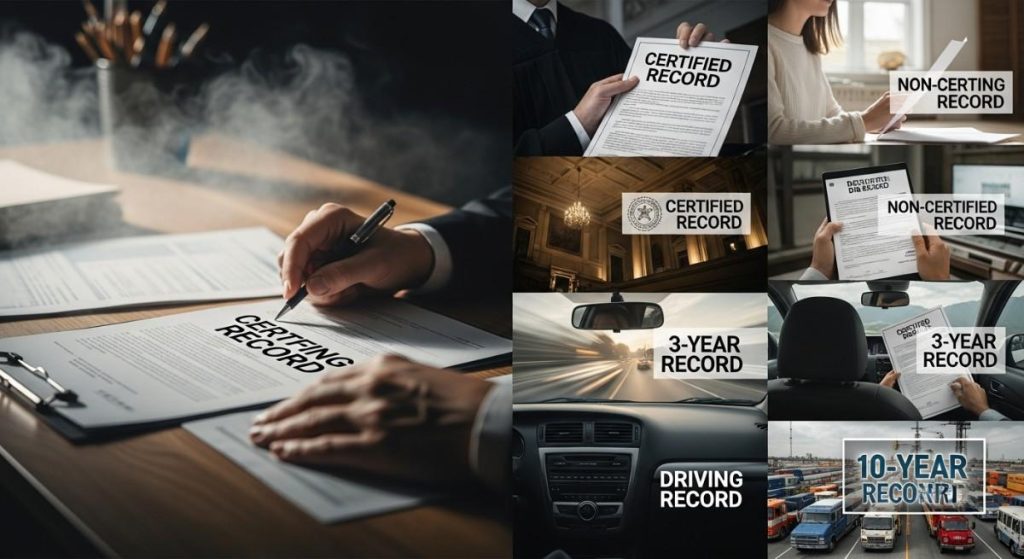
Understanding the difference can save time and prevent rejected applications.
| Type of Record | Main Purpose | Typical Use |
|---|---|---|
| Certified Record | Official legal use | Court cases, employment |
| Non-Certified Record | Personal review | Insurance checks |
| 3-Year Record | Recent history | Routine employer screening |
| 10-Year Record | Extended history | Commercial driving jobs |
Certified Driving Records
Records with a seal or verification from the issuing agency are certified. Because certified copies are considered legally valid, courts, trucking companies, and government employers often require them.
For legal and official purposes, certified driving records can be ordered online through the Iowa Department of Transportation.
Non-Certified Records
Copies that aren’t certified are mostly for personal use. It’s common for drivers to ask them to review their history before applying for jobs or disputing insurance rate hikes.
Three-Year vs Ten-Year Reports
While a three-year report focuses on recent driving behavior, a ten-year report digs deeper into long-term trends. For safety reasons, commercial transportation employers often want longer histories.
How to Request Your Driving Record Online
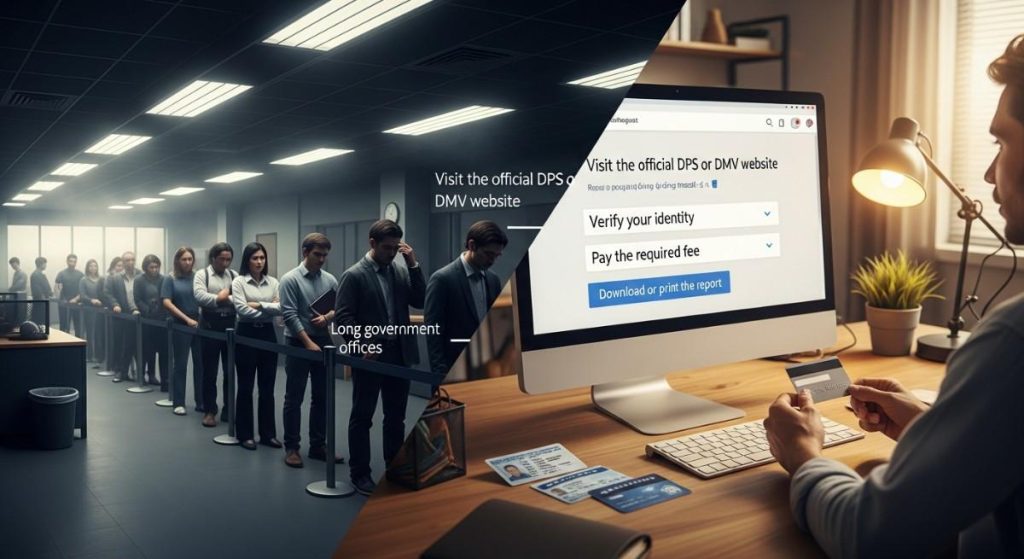
You used to have to wait for a long time at government offices to get your driving record. Many states now have fully digital systems that let drivers request records and print them in seconds.
Online access to driving records is available in California, Tennessee, Washington, and Maine.
It usually goes like this:
- Go to the DPS or DMV site
- You need to verify your identity
- Don’t forget to pay
- The report is available for download or printing
Required documents.
Before releasing a record, most states require several forms of identification. You’ll usually find these:
- Number of your driver’s license
- Born on
- Number of your Social Security card (partial or full)
- Method of payment
Driving records contain sensitive personal information that’s protected by federal law.
Online Payments and Fees
Fees vary from state to state. Online driver records cost as little as $2 in California, while official copies cost about $15 in Washington.
Some states allow instant downloads, while others may take 24 hours or longer.
State-by-State Differences in DPS Systems
There’s a different system for driving records in every state. There are a lot of differences in fees, access rules, retention periods, and types of reports.
Texas DPS Driving Record
The Texas Department of Public Safety system offers multiple types of records for employment, defensive driving, and legal reasons.
Defensive driving dismissals in Texas often require certified Type 3A driving records.
California DMV Records Requests
California’s Department of Motor Vehicles offers digital record access through MyDMV. After paying, drivers can view and print their records instantly.
Tennessee MVR Services
Both 3-year and 10-year motor vehicle reports are available online from the Tennessee Department of Safety and Homeland Security.
Why employers check driving records?
Driving histories aren’t reviewed by employers because they’re curious. The reason they check is that driving behavior often shows responsibility, judgment, and risk management.
The stakes are even higher when it comes to jobs involving vehicles. MVR screenings are important for delivery services, trucking companies, ridesharing platforms, and government agencies.
Commercial drivers
The vehicles that commercial drivers operate are big and can cause severe damage if they’re not handled properly. Risky employees increase insurance costs and legal liabilities dramatically, so companies want drivers with clean records.
Delivery and Ridesharing Jobs
People with recent DUIs, reckless driving charges, or excessive moving violations are often rejected by food delivery and rideshare companies. You can’t get gigs in the gig economy if you have a bad driving record.
How insurance companies use driving records?
Driving records are analyzed by insurance companies like stock charts are by analysts. The more violations, accidents, and suspensions they have, the better they can predict risk in the future.
Clean records usually get lower premiums because insurers think they’re less likely to file claims. Repeated offenders often get steep premium increases or their policies canceled.
Insurance rates can go up dramatically after a DUI. After serious violations, some insurers even require high-risk coverage categories.
Common Errors Found on Driving Records
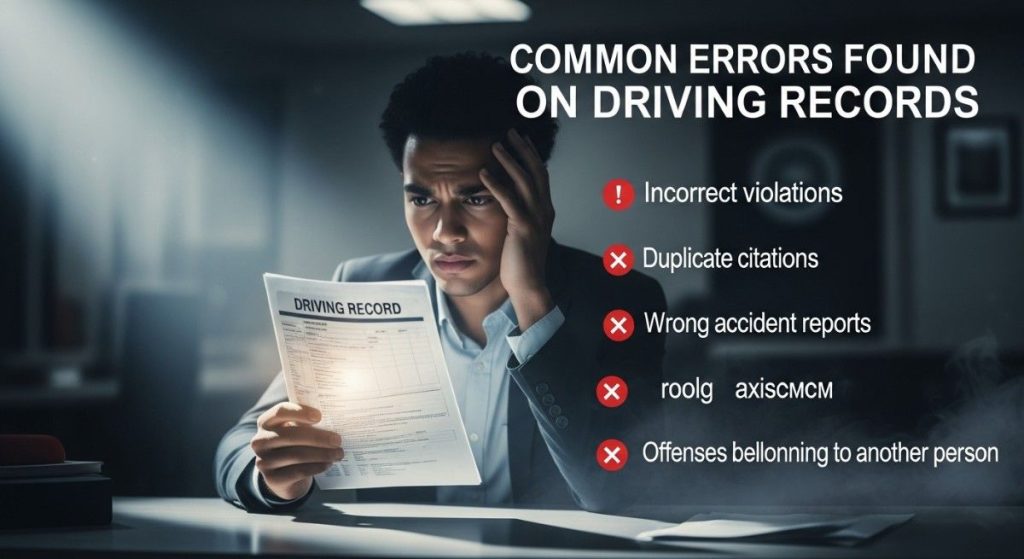
Drivers make mistakes more often than they realize. Sometimes records show incorrect violations, duplicate citations, wrong accident reports, and even offenses belonging to someone else.
It’s common for drivers to discover false entries after checking their MVRs online or in consumer reports.
Mistakes like these can have serious consequences:
- Costlier insurance
- Denials of job applications
- Confusion over license suspension
- Complications with credit
Keeping track of your records is a good habit.
How to Correct Mistakes on Your Record
It takes patience and documentation to fix an error on your driving record. The majority of state agencies have formal dispute procedures for drivers to use.
The typical stuff you need is:
- This is a copy of the wrong record
- Documents supporting the case
- Verification of identity
- An explanation of the problem in writing
Online correction request forms are available in California and a few other states.
Consult an attorney if there are criminal charges or major suspensions.
“Your driving record affects your employment, insurance, and legal standing directly.”
Tips to Keep a Clean Driving History
Maintaining a clean driving record goes beyond avoiding tickets. Building credibility as a responsible driver is key.
Protect your record with these practical habits:
Obey speed limitsAvoid moving violationsPay tickets promptlyPrevent suspensionsMaintain insuranceStay legalAvoid distracted drivingReduce accident riskCheck your record every yearCatch errors early
Some states also let you reduce points with defensive driving. Over time, safe driving pays off financially and professionally.
Conclusion
There’s more to a Department of Public Safety driving record than a simple government record. A driving record affects your insurance rates, career opportunities, legal standing, and personal reputation.
Modern DPS systems make it easier than ever to access driving records online, so drivers can check their histories anytime. Understanding your driving record gives you a powerful edge – whether you need a certified MVR for work, want to dispute an incorrect violation, or just want to protect your insurance rates.
Smart drivers don’t wait for problems to happen. They review their records regularly, fix mistakes right away, and treat safe driving like a long-term investment.
FAQs
1. How can I get my DPS driving record online?
Most states let you make a request online through their official DPS or DMV websites. Your driver’s license number, date of birth, and payment method are usually needed.
2. How long do violations stay on a driving record?
In most states, minor violations stay on your record for 3 years, but major offenses like DUI convictions can stay on your record for 7 to 10 years.
3. What is the difference between certified and non-certified driving records?
Documents that are certified are used in court and at work, while documents that aren’t certified are mostly for personal use.
4. Can employers see my entire driving history?
The state’s privacy laws and the type of record you’re asking for determine whether you’re allowed to see it. There are some employers who only look at recent years, and there are some that look back further.
5. Can incorrect information be removed from a driver’s record?
You’re right. In most states, drivers can challenge inaccurate entries with supporting documentation through formal dispute processes.