


Introduction
There’s a big difference between booking a flight in 2026 and a few years ago. It’s no longer a simple “search, click, confirm” process. As of April 2026, airfares are up 20% year-over-year, fueled by soaring jet fuel prices and strong post-pandemic demand. Over the past year, international summer fares have gone up 22%, while domestic cash fares have gone up 24%.
It’s still possible to find significant savings by understanding the new rules of flight booking, though. There’s a lot to know for 2026, whether it’s knowing when to book (31 to 45 days for international travel), using AI-powered price tracking tools that automatically refund you when fares drop, or choosing the right booking platform.
You’ll read everything you need to know about flight booking in 2026—from platform rankings and timing strategies to AI tools and expert hacks—so you can navigate the complexities of modern air travel.
The 2026 Flight Booking Landscape
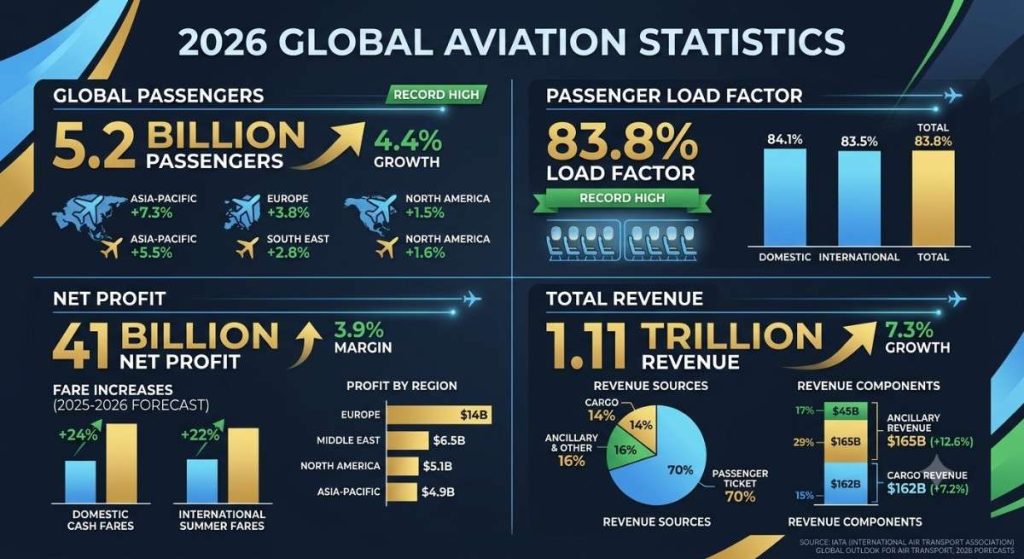
Global air travel is expected to hit record levels in 2026. 5.2 billion passengers are expected this year, a 4.4% increase from 2025, surpassing the pre-pandemic peak of 4.5 billion in 2019. 83.8% of seats are expected to be filled on average, the highest load factor ever recorded, as capacity growth struggles to keep up with demand.
Key Market Drivers and Challenges
| Factor | Impact on Flight Booking |
|---|---|
| Rising airfares | Cash fares up 20% YoY (April 2026); international summer fares up 22% |
| High load factors (83.8%) | Fewer empty seats means less last-minute discounting |
| Fuel costs | Jet fuel forecast at ~$88/barrel; still 25% of airline operating costs |
| Capacity constraints | Aircraft delivery delays and pilot shortages limit seat availability |
| Strong demand | 5.2 billion passengers expected; travel remains a protected budget category |
Technology Reshaping Flight Booking
Travelers are booking flights differently thanks to artificial intelligence. Travelers are using AI-powered tools to find new destinations, compare prices, and plan their trips more efficiently, according to the Mastercard Economics Institute’s 2026 report. US consumers spend nearly twice as much on accommodations as non-users, suggesting these tools are influencing real spending.
In the next few years, AI-based tools will influence more than half of travel bookings, helping users research destinations, plan trips, and compare prices. AI-driven trip planning and customer service adoption continue to grow, with more travelers using conversational interfaces to compare travel options.
Top Flight Booking Platforms Rankings
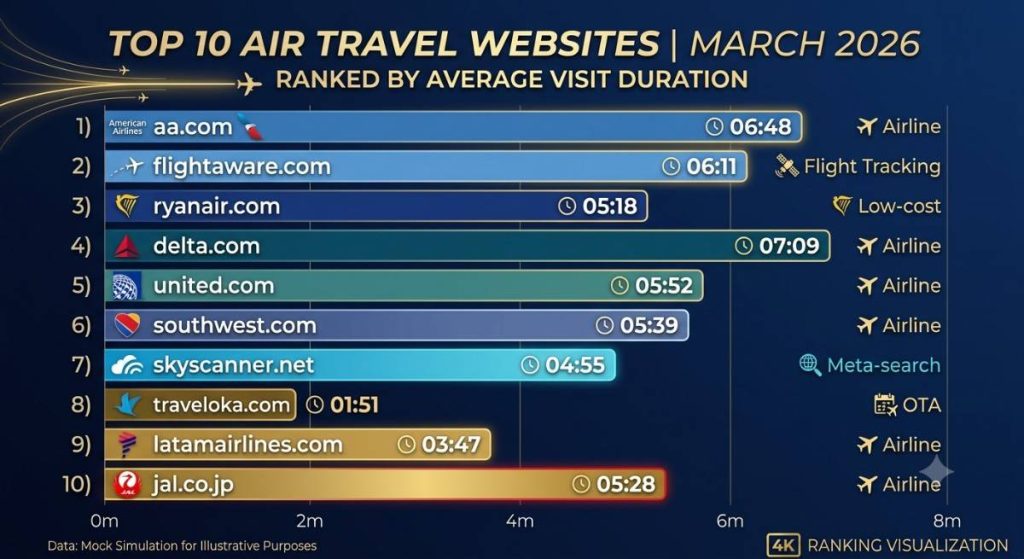
According to Similarweb’s March 2026 rankings, these are the most popular air travel sites:
Top 10 Air Travel Websites (March 2026)
| Rank | Website | Category | Avg. Visit Duration | Pages per Visit | Bounce Rate |
|---|---|---|---|---|---|
| 1 | aa.com | Airline (American) | 00:06:48 | 7.25 | 28.56% |
| 2 | flightaware.com | Flight Tracking | 00:06:11 | 3.43 | 50.41% |
| 3 | ryanair.com | Airline (Low-cost) | 00:05:18 | 6.47 | 25.99% |
| 4 | delta.com | Airline (Delta) | 00:07:09 | 6.05 | 30.94% |
| 5 | united.com | Airline (United) | 00:05:52 | 5.64 | 31.42% |
| 6 | southwest.com | Airline (Southwest) | 00:05:39 | 5.58 | 33.45% |
| 7 | skyscanner.net | Meta-search | 00:04:55 | 5.85 | 34.31% |
| 8 | traveloka.com | OTA | 00:01:51 | 3.33 | 46.62% |
| 9 | latamairlines.com | Airline | 00:03:47 | 4.37 | 36.64% |
| 10 | jal.co.jp | Airline (Japan Airlines) | 00:05:28 | 7.99 | 30.33% |
Best Flight Booking Platforms by Use Case
1. Skyscanner: Best for Price Comparison
The most popular meta-search platform is still Skyscanner, consistently ranking among the top travel sites. With its price tracking features, users can get automatic notifications when prices change on flights they’re tracking. Drops alerts users when a flight’s price drops by 20% or more.
2. Track prices with Google Flights
Google Flights has become an essential tool for savvy travelers. Your Gmail address gets notified when fares change thanks to the “track prices” feature. Simply enter your origin and choose “anywhere” for the destination to browse affordable flight options from your home airport.
Key Google Flights features:
- Predictions of the cheapest time to book based on price history
- See when prices are lowest with this date grid
- You can get email alerts when you track prices
- Check out the Explore tab to find affordable places to go
3. Check out Expedia for package deals
In Expedia’s 2026 Air Hacks report, you’ll find data-driven insights on finding the best fares. In fact, Expedia says international travelers can save 190 by booking 31-45 days in advance instead of six months in advance. Bold travelers can save even more by booking 8-14 days in advance, saving 190 on average by booking 31-45 days in advance instead of six months in advance. Booking 8 to 14 days ahead can save you $225 on average, for bold travelers.
4. Hopper: Best price prediction app
Hopper’s price prediction technology analyzes billions of flight prices every day to help you decide whether to book now or wait. It also offers “Price Freeze” options so you can lock in a fare while you’re making your plans.
5. Airlines Direct (AA, Delta, United, Southwest): Loyalty benefits
Airline direct booking has advantages like mileage accumulation, easy rebooking during disruptions, and member-only fares. By redeeming points, airline loyalty programs can offer long-term savings for frequent travelers.
When to Book Flights: Timing Strategies for 2026
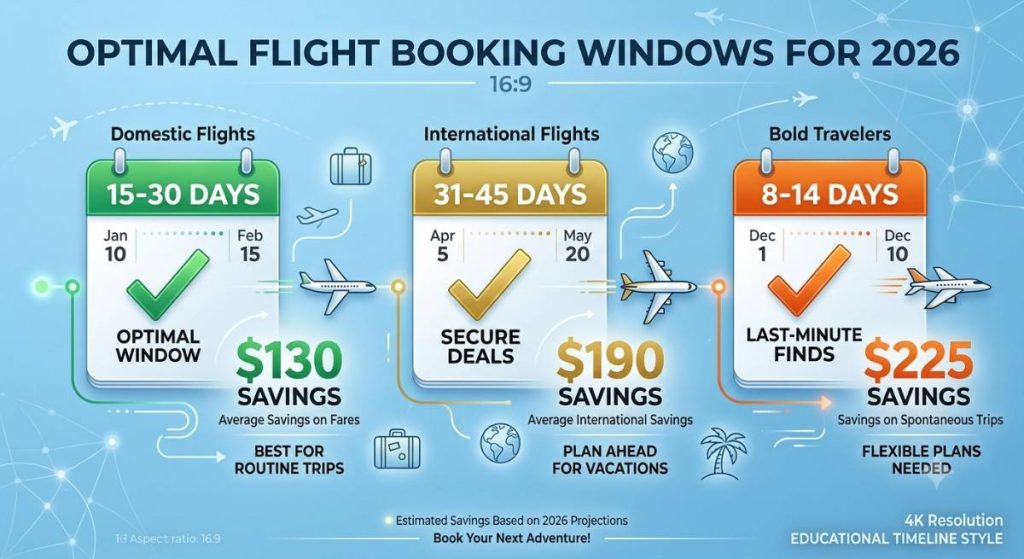
Booking window depends on if you’re traveling domestically or internationally.
Domestic Flight Booking Window
| Booking Window | Average Savings | Recommendation |
|---|---|---|
| 15-30 days before departure | $130 less than 6+ months out | Best for domestic economy flights |
| 1-2 months before departure | Good | TPG and Expedia recommend this window |
| 43 days before departure | Average cheapest day per Google | Optimal booking day on average |
International Flight Booking Window
| Booking Window | Average Savings | Recommendation |
|---|---|---|
| 31-45 days before departure | $190 less than 6+ months out | Best overall value |
| 8-14 days before departure | $225 less than 6+ months out | For bold travelers |
| 3-5 months before departure | Good | TPG recommendation |
The 2026 Summer Booking Urgency
Summer travel is right around the corner. There’s still time to score low summer airfare prices, according to historical data. As soon as deals pop up, TPG recommends monitoring searches three months before travel dates.
According to Expedia’s data, June 3 and 4 are the cheapest days to fly domestically, while August 11 and 17 are the cheapest days to fly internationally. From August 17 to 23, it’s cheapest to fly.
Best Days to Fly for Cheaper Fares
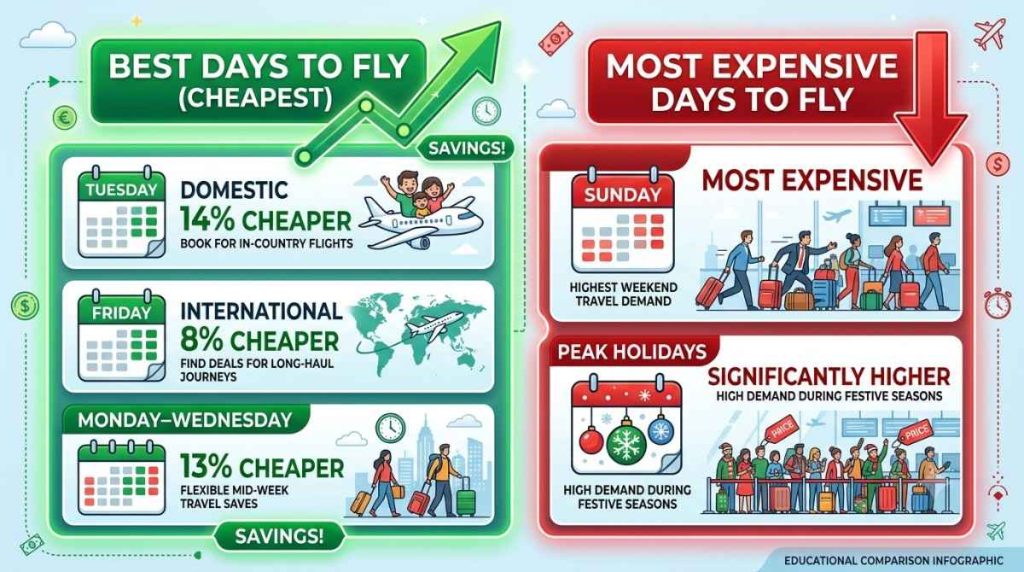
It’s not true that there’s a magic day to book flights. You can, however, get a better deal if you choose a different day.
Cheapest Days to Fly
| Route Type | Cheapest Day | Savings vs. Most Expensive Day |
|---|---|---|
| Domestic (U.S.) | Tuesday | Up to 14% cheaper than Sunday |
| International | Friday | About 8% cheaper than Sunday |
| General | Monday through Wednesday | About 13% cheaper than weekend travel |
| Midweek savings average | Wednesday | $56 saved per domestic ticket |
Most Expensive Days to Fly
| Day | Impact |
|---|---|
| Sunday | Most expensive day for both domestic and international |
| Peak holidays | Significantly higher fares; fly on the holiday itself for better deals |
Best Times of Day to Fly
| Time | Benefit |
|---|---|
| First flight of the day | Often cheapest; also best for avoiding delays |
| Mid-day flights | Typically cheaper than peak morning/evening |
| Red-eye flights | Often the cheapest flights of the day |
Smart Booking Strategies to Save Money
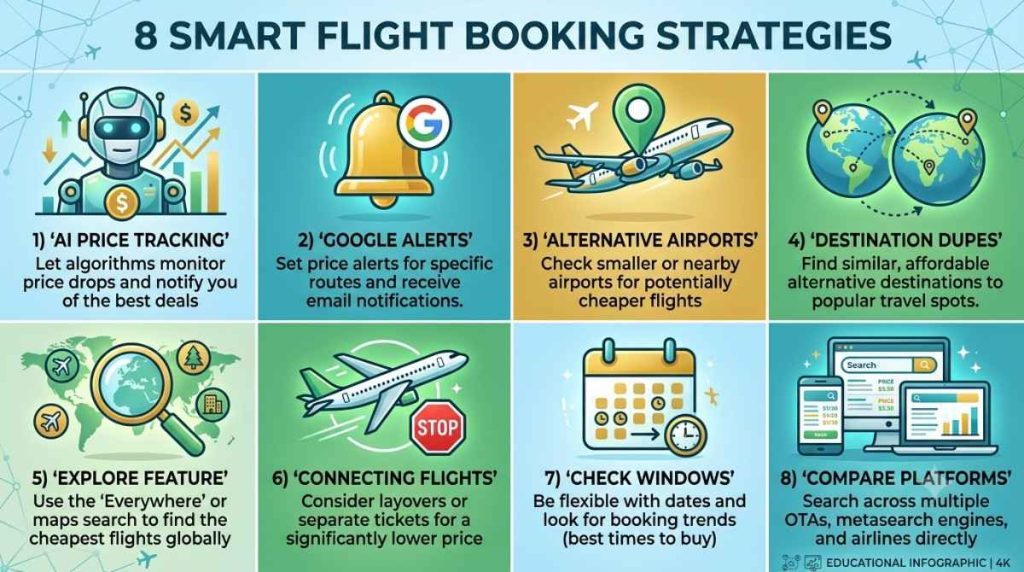
1. Use AI-Powered Price Tracking Tools
With AI tools, flights can be tracked automatically and credits secured when prices drop. Users have saved hundreds of dollars with pAiback and Junova, which TPG recommends.
Here’s how to use it:
- As usual, book your flight
- Get these AI tools for your bookings
- Get credits if the fare drops after you book
- Note: Basic economy fares usually don’t include
2. Set Google Flight Alerts
For tracking prices over time, Google Flights is great:
- Choose a route and a date that works for you
- Track prices by toggling it
- Whenever fares change, you’ll get an email
- See cheapest travel dates on the “Date grid”
- Check the price history to see if the current fares are typical
3. Consider Alternative Airports
| Primary Airport | Alternative | Potential Savings |
|---|---|---|
| San Francisco (SFO) | Oakland (OAK) | Substantial |
| Los Angeles (LAX) | Orange County (SNA) or Burbank (BUR) | Significant |
| London Heathrow (LHR) | London Gatwick (LGW) | Often cheaper |
| New York (JFK/LGA) | Newark (EWR) or Westchester (HPN) | Varies |
Flying into secondary airports can reduce fares and help avoid congestion.
4. Try “Destination Dupes” (Alternative Destinations)
Swap popular cities for more affordable alternatives with similar experiences:
| Popular Destination | Alternative “Dupe” | Savings |
|---|---|---|
| New York City | Philadelphia | Similar museums/dining, hotel rates ~30% lower |
| Los Angeles | Palm Springs | Hotel rates ~25% cheaper |
| Peak European cities | Less crowded alternatives | Significant savings |
5. Use the “Explore” Feature for Flexible Travelers
The Explore tab on Google Flights shows you affordable flights from your home airport. You can search for flights worldwide by entering your origin and destination.
6. Consider connecting flights
The cost of long routes can be reduced by adding a stop or choosing flights with reasonable layovers. Make sure you balance price savings with convenience.
7. Check Different Booking Windows by Travel Type
Travelers should categorize their trips, says aviation expert Amit Mittal:
| Travel Type | Best Strategy |
|---|---|
| Visiting Friends/Relatives (VFR) | Mid-day or mid-week flights; flexible timing |
| Tourists (Peak Season) | Book well in advance; consider off-season travel |
| Business Travelers | Focus on airlines with strong on-time performance; loyalty programs |
8. Compare Multiple Platforms
There can be a slight difference in flight prices between booking sites.
Look at credit card offers, airline promotions, and festive discounts before booking, and compare fares across different platforms.
Flight Tracking and Price Alert Tools
| Tool | Key Features | Best For |
|---|---|---|
| Google Flights | Price tracking alerts, explore map, price history | Comprehensive monitoring |
| Skyscanner | Bell icon tracking, Drops feature (20%+ drops) | International searches |
| Hopper | Price prediction, Price Freeze, watch this trip | Predicting future prices |
| Going (formerly Scott’s Cheap Flights) | Email alerts for deals from home airport | Mistake fares and deep discounts |
| pAiback / Junova | Automated credit claims after booking | Post-booking price drops |
How to Use Skyscanner’s Price Tracking
You can track flights in the Skyscanner app by tapping the bell icon. Whenever the price changes, Skyscanner will let you know. Drops alerts you when there’s a price drop of 20% or more on flights from your hometown.
How to Use Google Flight Price Tracker
If you’re looking for a particular flight route and dates, toggle on the “track prices” feature within the search results. The feature will send you price changes on the route once you turn it on.
Airfare Trends and Market Outlook for 2026
Airfare Projections
| Metric | 2026 Value | vs. Prior Period |
|---|---|---|
| Average round-trip fare | $402 | +1.5% vs 2025 |
| Domestic cash fares (summer) | +24% | vs 2025 |
| International summer fares | +22% | vs 2025 |
| Jet fuel price forecast | ~$88/barrel | Slightly down from 2025 |
Airline Profitability and Capacity
The global airline industry is expected to generate about 41 billion in net profit in 2026. That’s 3.941 trillion, growing faster than expenses.
Capacity growth varies by region:
| Region | Projected Capacity Growth |
|---|---|
| Asia-Pacific | 7-8% |
| Middle East | 9% |
| Latin America | 6-7% |
| Europe | ~4% |
| North America | ~1% |
Regional Demand Variations
With China’s outbound recovery and regional travel growth, Asia-Pacific is leading growth with passenger demand expected to rise 7.3% in 2026. The demand growth in North America and Europe is in the low single digits.
Trending destinations for 2026
Sardinia (Italy), Okinawa (Japan), Phu Quoc (Vietnam), and Hobart (Australia) show increased demand, according to CheapOair. There’s a surge in interest in Alghero, Italy, and Ankara, Turkey, according to Expedia.
Conclusion
There’s more strategy needed for flight booking in 2026 than ever before. The prices are up, planes are fuller than ever (83.8% load factor), and last-minute deals are harder to find.
Travelers have never had more tools at their disposal. When fares drop, AI-powered price tracking can automatically get you a refund. With Google Flights and Skyscanner, you get unprecedented visibility into price history. Understand the timing strategies-31 to 45 days for international, 1 to 2 months for domestic-and you’ll save hundreds.
Here’s what you need to know about flight bookings in 2026:
- Take advantage of the right time: 31–45 days for international flights (save 190); 15–30 days for domestic flights (save 130); 15–30 days for domestic flights (save 190).
- You should fly on Tuesdays for domestic flights (14% cheaper); Fridays for international flights (8% cheaper); avoid Sundays
- Track prices using Google Flights alerts, Skyscanner bell icon, and AI tools like pAiback
- You can save a lot of money by using secondary airports and “destination dupes.”
- Get your summer travel booked now: The best window is already open.
The demand for flying isn’t slowing down, with 5.2 billion passengers expected in 2026. You can still save a lot if you’re informed and use the right tools and timing strategies. Book your next flight now.
Frequently Asked Questions (FAQs)
Q1: What is the best day to book a flight?
The lowest fares don’t come on a magic day. There’s a big difference in price depending on what day you fly. Traveling midweek (Tuesday, Wednesday) is usually 13% cheaper than at the weekend.
Q2: How far in advance should I book a domestic flight?
Don’t wait until the last minute to book domestic flights. 43 days before departure is the cheapest time to book. By booking 15-30 days out, you’ll save $130 compared to six months in advance.
Q3: How far in advance should I book an international flight?
Make sure you book international flights 3 to 5 months in advance. Booking 31 to 45 days in advance can save you $190 on average compared to booking six months in advance.
Q4: Are flight prices higher in 2026?
That’s right. As of April 2026, airline fares are up 20% year over year. There’s a 24% increase in domestic summer cash fares, and a 22% increase in international summer cash fares.
Q5: What is the cheapest month to fly?
Compared to December, August is the most budget-friendly month for international travel, with fares 29% lower.