



Introduction
Your life revolves around money: where you live, what you eat, how your kids are educated, when you retire. Without a plan, money becomes a source of stress rather than a tool for building your dream life.
Planning your finances is about creating a roadmap for achieving your life goals. Getting started isn’t just for the wealthy, and it’s never too late. The Certified Financial Planner Board says the six-step process is the foundation for sound financial planning for decades.
By 2026, financial planning faces new challenges: market volatility, inflationary pressures, high interest rates, and retirement safety net erosion. It’s possible that the strategies that worked five years ago won’t work today. However, the fundamentals of financial planning remain the same: goal setting, budgeting, saving, investing, and risk management.
You’ll learn everything you need to know about financial planning in 2026 with this guide. Take control of your financial future whether you’re just starting out, raising a family, or nearing retirement with this guide.
What Is Financial Planning?
You manage your finances to achieve your personal and family goals through financial planning.
Identifying your goals and developing strategies to reach them involves evaluating your financial situation.
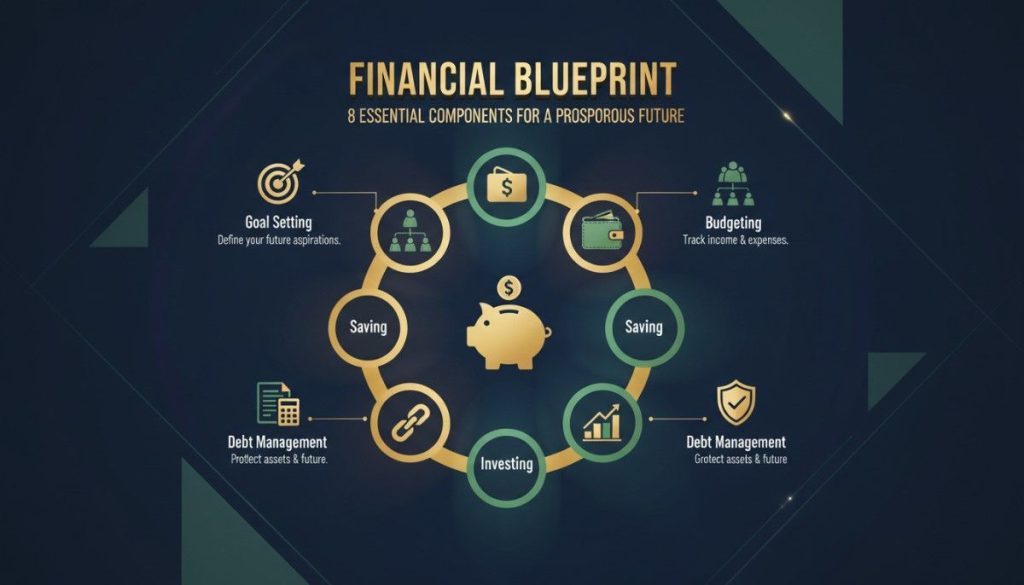
Key Components of Financial Planning
| Component | Description |
|---|---|
| Goal Setting | Defining what you want to achieve (buy a home, retire at 60, pay for college) |
| Budgeting and Cash Flow | Tracking income and expenses to ensure you live within your means |
| Saving | Building funds for short-term needs and long-term goals |
| Investing | Growing wealth through appropriate asset allocation |
| Debt Management | Strategically paying down liabilities |
| Risk Management (Insurance) | Protecting against catastrophic financial losses |
| Tax Planning | Minimizing tax liability legally |
| Estate Planning | Ensuring your assets go where you want after death |
The main goal of financial planning is to achieve financial independence: having enough money to live your desired lifestyle without having to work. Having choices and control over your time is more important than becoming a millionaire.
The Six-Step Financial Planning Process
According to the CFP Board, effective financial planning follows these six steps:

Table: The Six Steps of Financial Planning
| Step | Name | Description |
|---|---|---|
| 1 | Establish Goals | Define short-term (1–3 years), medium-term (3–7 years), and long-term (7+ years) objectives |
| 2 | Gather Data | Collect information on income, expenses, assets, liabilities, insurance, and investments |
| 3 | Analyze Current Situation | Evaluate financial health using ratios like savings rate and net worth trajectory |
| 4 | Develop Recommendations | Create a written financial plan with specific action steps |
| 5 | Implement the Plan | Put recommendations into action (e.g., open an IRA, adjust 401(k) contributions) |
| 6 | Monitor and Review | Regularly revisit the plan to adjust for life changes and market conditions |
Financial planning isn’t something you do once.
It’s important to revisit your plan at least once a year after life changes like getting married, having kids, changing careers, and getting sick.
Why Financial Planning Matters in 2026
There are a few trends that make financial planning more important now than it was before.
Table: 2026 Financial Realities
| Challenge | Implication for Financial Planning |
|---|---|
| Inflation | Purchasing power erodes faster; investment returns must outpace inflation |
| High Interest Rates | Debt costs more; prioritize paying down credit cards and variable-rate loans |
| Erosion of Pensions | Fewer guaranteed income streams; responsibility shifts entirely to individuals |
| Longevity | Retirement may last 30+ years; assets must last longer |
| Stock Market Volatility | Recency bias (expecting recent returns to continue) is dangerous; diversification and rebalancing are essential |
| Student Loan Debt | Delays saving for retirement and homeownership for many young adults |
“With the stock market hitting record highs, it may be tempting to invest heavily in equities and become complacent about risk.”. “With the market on a roll, investors can get lulled into complacency.”.
Well-structured financial plans build resilience. Investing in it prepares you for downturns in the market, job losses, and unexpected expenses without derailing your long-term goals.
SMART Financial Goals: How to Set Them
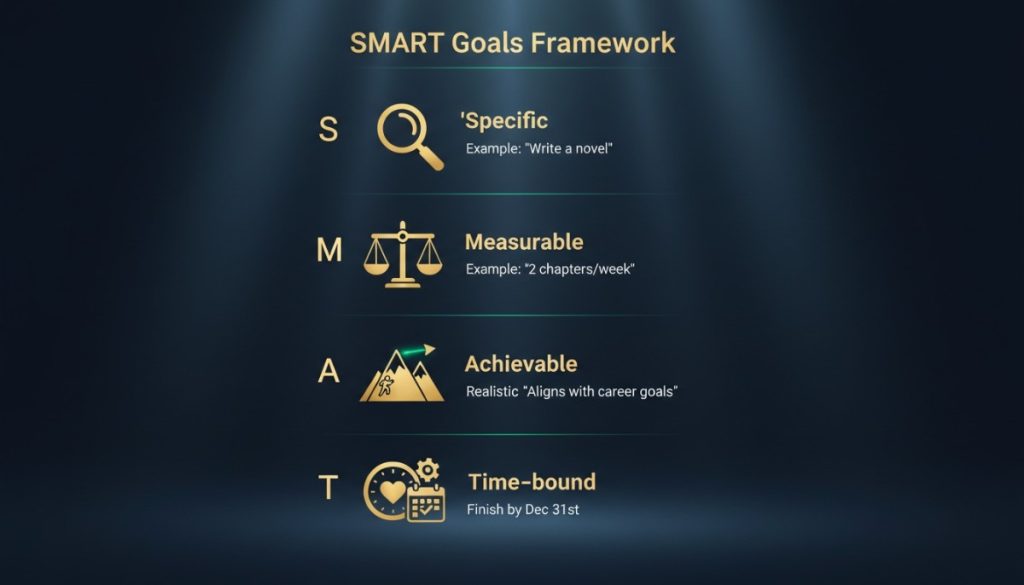
Vague goals produce vague results. “I want to save more” is not a plan. Use the SMART framework:
| Letter | Meaning | Example |
|---|---|---|
| S | Specific | “I will save $50,000 for a down payment.” |
| M | Measurable | “I will track progress monthly.” |
| A | Achievable | “Based on my current income and expenses, this is realistic.” |
| R | Relevant | “Owning a home aligns with my family goals.” |
| T | Time-bound | “I will reach this in 36 months.” |
Time Horizons for Financial Goals
| Horizon | Timeframe | Examples |
|---|---|---|
| Short-Term | 1–3 years | Emergency fund, vacation, car down payment |
| Medium-Term | 3–7 years | Home down payment, starting a business, graduate school |
| Long-Term | 7+ years | Children’s college, retirement |
Wealth Accumulation: The Core of Financial Independence
The engine of financial planning is wealth accumulation.
Earning, saving, and investing all in one.Wealth accumulation is the engine of financial planning. It combines earning, saving, and investing.

The Formula for Wealth
A person’s wealth is composed of (Income – Expenses) × Time × (Rate of Return)
Three of these four variables are in your control:
Earn more money (side hustles, career growth)
Spend less (budgeting, lifestyle choices)
Increase time (start early; compound growth is powerful)
Improve returns (appropriate asset allocation; this comes last)
The Five Pillars of Wealth Accumulation
| Pillar | Description |
|---|---|
| Systematic Saving | Automating contributions to 401(k), IRA, and taxable brokerage accounts removes human decision-making. Spend what is left after saving. |
| Strategic Debt Management | Good debt (mortgage) may be leveraged; bad debt (credit cards) must be eliminated quickly. |
| Prudent Investing | Asset allocation (stocks, bonds, real estate) aligned with risk tolerance and time horizon. |
| Emergency Fund | 3–12 months of expenses in liquid accounts prevent forced selling in downturns. |
| Disciplined Spending | The simplest path to wealth is spending less than you earn. |
Reducing Debt: The Silent Wealth Killer
Not all debt is created equal, but high-interest debt destroys wealth faster than almost any other financial mistake.
Table: Debt Prioritization
| Debt Type | Typical Interest Rate | Priority |
|---|---|---|
| Credit Cards | 18–25% | Highest—pay off immediately |
| Payday Loans | 300–500% | Highest—pay off immediately |
| Personal Loans | 10–20% | High – accelerate repayment |
| Auto Loans | 5–10% | Medium – consider paying faster |
| Student Loans | 4–8% | Medium-Low – depends on rate |
| Mortgage | 3–6% | Low – may keep if rate is low |
Debt Payoff Strategies
| Strategy | How It Works | Best For |
|---|---|---|
| Avalanche Method | Pay debts with highest interest rates first | Mathematically optimal; saves most interest |
| Snowball Method | Pay smallest balances first | Psychological wins build momentum |
Regardless of strategy, eliminating high-interest debt is a guaranteed return (equal to the interest rate you are paying) with no market risk.
Building an Emergency Fund
An emergency fund is a cash reserve that covers unexpected expenses without derailing your financial plan. It is the foundation of financial resilience.
Table: Emergency Fund Guidelines
| Your Situation | Recommended Coverage |
|---|---|
| Stable job, low expenses | 3–4 months of expenses |
| Moderate job security | 6 months of expenses |
| Self-employed or commission-based | 9–12 months of expenses |
| Retired or near-retirement | 12–24 months of expenses |
Where to Keep an Emergency Fund
| Account Type | Pros | Cons |
|---|---|---|
| High-Yield Savings Account (HYSA) | Safe, liquid, FDIC-insured | Low returns (4–5% as of 2026) |
| Money Market Fund | Slightly higher yield | Minimal risk |
| Short-term CDs (3–6 months) | Higher yield than savings | Less liquid (penalty for early withdrawal) |
Stocks aren’t a good investment for emergency funds.
Market drops 20% in the same year you lose your job.
The damage is done when you’re forced to sell at the bottom of the market.
Managing Financial Risk with Insurance
Insurance is the most unglamorous but essential part of financial planning. It protects against catastrophic financial losses that would otherwise destroy your plan.
Key Insurance Types and Coverage
| Insurance Type | What It Protects | When to Have It |
|---|---|---|
| Health Insurance | Medical expenses | Always |
| Term Life Insurance | Income replacement for dependents | While people depend on your income |
| Disability Insurance | Income if you cannot work | Throughout working years |
| Auto/Home/Renters | Property and liability | As required/needed |
| Umbrella Liability | Excess liability beyond auto/home | When net worth exceeds standard limits |
| Long-Term Care Insurance | Custodial care in old age | Ages 55–65 (before premiums become prohibitive) |
Life Insurance: Term vs. Permanent
| Type | Best For | Why |
|---|---|---|
| Term Life | Most families | Low cost; covers the years when dependents need income replacement |
| Permanent (Whole, Universal) | Estate planning: special needs trusts | High cost; generally not recommended for average families |
Protecting Your Family through Estate Planning
Estate planning ensures your assets go where you want, when you want, with minimal tax and legal friction.
Core Estate Planning Documents
| Document | Purpose |
|---|---|
| Will | Directs distribution of probate assets; names guardians for minor children |
| Revocable Living Trust | Avoids probate; provides privacy; manages assets if incapacitated |
| Durable Power of Attorney | Names someone to handle finances if you are incapacitated |
| Health Care Power of Attorney | Names someone to make medical decisions if you cannot |
| Living Will (Advance Directive) | States your wishes for end-of-life care |
| Beneficiary Designations | Supercedes wills for retirement accounts and life insurance |
Even a modest estate (under $100,000) benefits from basic planning. Dying without a will (intestate) means state law decides who gets your assets.
The Behavioral Side: Staying the Course
Financial plans aren’t most at risk from market crashes, they’re most at risk from investor behavior.
When markets drop, we’re tempted to sell.
The instinct is to chase returns when markets rise.
They both hurt your long-term results.
Common Behavioral Biases
| Bias | Description | Impact |
|---|---|---|
| Recency Bias | Expecting recent returns to continue | Buying at peaks, selling at troughs |
| Loss Aversion | Fear of losses outweighs desire for gains | Selling during downturns |
| Overconfidence | Believing you have special insight | Excessive trading, underdiversification |
| Confirmation Bias | Seeking information that confirms existing beliefs | Ignoring warning signs |
Strategies to Overcome Behavioral Biases
| Strategy | How It Helps |
|---|---|
| Automate contributions | Removes decision-making from saving and investing |
| Create an Investment Policy Statement (IPS) | Written document outlining your strategy; refer to it during market turmoil |
| Rebalance systematically | Forces selling high and buying low |
| Work with a fee-only fiduciary advisor | Objective guidance during emotional times |
| Limit portfolio checking | The more often you look, the more likely you are to make a mistake |
Digital Transformation in Personal Finance
Technology has made financial planning more accessible than ever.
Table: Digital Financial Planning Tools
| Tool Type | Examples | Best For |
|---|---|---|
| Budgeting Apps | YNAB, Mint, Simplifi | Tracking spending, setting budget targets |
| Investment Platforms | Vanguard, Fidelity, Schwab, Wealthfront | Low-cost diversified investing |
| Retirement Planners | Personal Capital (Empower), FIRE calculators | Projecting retirement readiness |
| Financial Planning Software | eMoney, RightCapital | Comprehensive planning (often through advisors) |
| Blockchain & Crypto | Bitcoin ETFs, crypto exposure | Speculative; not core planning |
Key Digital Trends
- Automated rebalancing and tax-loss harvesting
- Mobile access to accounts and planning tools
- Goal tracking with visual progress indicators
- Integration across banking, investing, and spending
Financial Planning at Different Life Stages
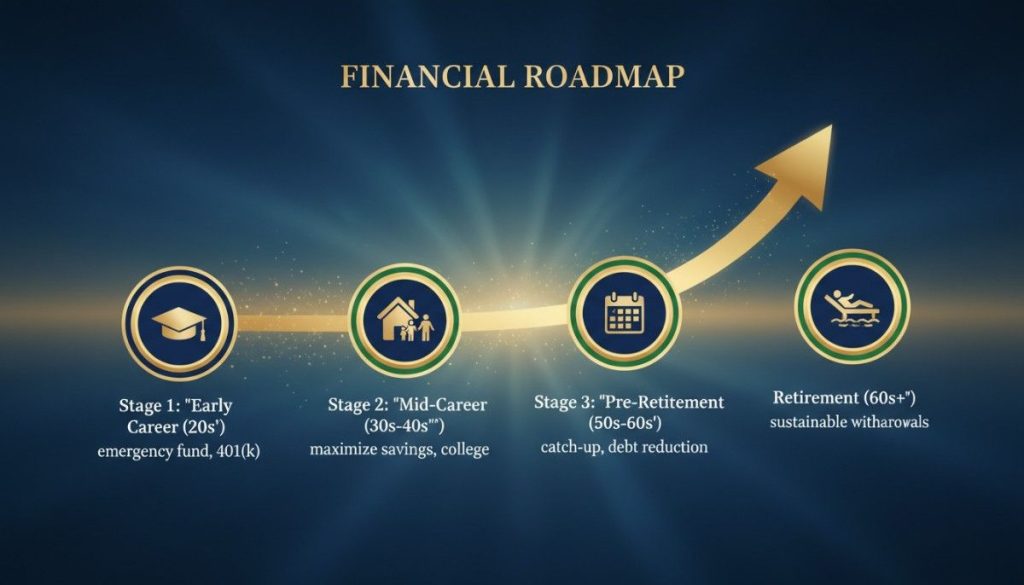
Financial priorities evolve across the lifespan.
Table: Life Stage Financial Priorities
| Early Career (20s) | Build a foundation. | Emergency fund, 401(k) to match, pay off high-interest debt, budget habit |
| Mid-Career (30s–40s) | Accelerate wealth | Maximize retirement contributions, college savings, increase savings rate |
| Pre-Retirement (50s–early 60s) | Transition to income | Catch-up contributions, reduce debt, plan healthcare, evaluate retirement readiness |
| Retirement (60s+) | Sustainable withdrawals | RMD planning, Roth conversions, estate documents updated, gifting strategy |
Conclusion
Financial planning is not about predicting the future. It is about preparing for it. A well-designed financial plan gives you confidence that you are on track—or tells you honestly that you are not.
The plan does not need to be perfect. It needs to be good enough and then followed consistently. Adjust as life changes, but stay the course when markets fluctuate.
Start today. Set a SMART goal. Increase your savings rate by 1%. Write down your net worth. Schedule a 15-minute review of your 401(k) allocations. Small actions, consistently applied, produce remarkable results over decades.
Frequently Asked Questions (FAQs)
Q1: What is financial planning in simple terms?
Financial planning is the process of setting money goals (like buying a house or retiring) and creating a step-by-step plan to reach them. It includes budgeting, saving, investing, and protecting against risks.
Q2: Do I need a financial planner?
Not necessarily. Many people successfully manage simple financial plans themselves. Consider a fee-only fiduciary CFP when your situation involves complexity: stock options, business ownership, significant inheritance, or planning for a special needs family member.
Q3: How much does a financial planner cost?
Fee-only planners typically charge 2,000–8,700 annually for comprehensive planning. Hourly rates range from 200–500. Percentage-of-assets fees range from 0.50% to 1.50% annually.
Q4: What is the 50/30/20 budget rule?
A simple budgeting framework: 50% of income to needs, 30% to wants, and 20% to savings and debt repayment. Adjust based on your goals.
Q5: How much should I have saved for retirement by age?
General guidelines: By age 30: 1× annual salary; by 40: 3×; by 50: 6×; by 60: 8×; by 67: 10×. These are rough targets; actual needs vary.