



What Is Life Insurance?
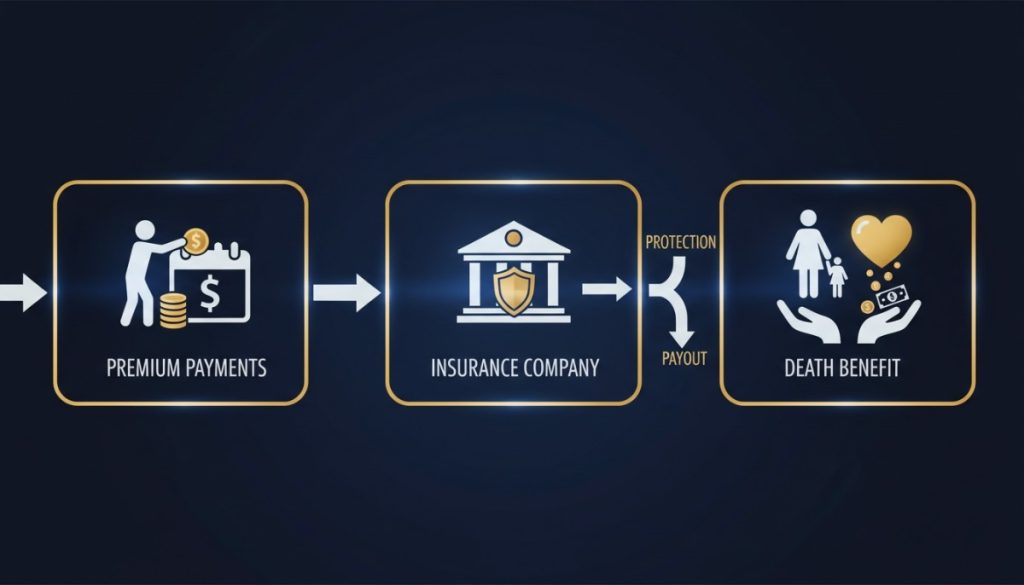
Think about building a house brick by brick for years and then losing the foundation. This is what can happen to a family if the primary earning member passes away unexpectedly. The purpose of life insurance is to keep you from going bankrupt. A life insurance policy is essentially a legal contract between an individual and an insurance company. In return for paying regular premiums, the insurer promises to provide a payout to your chosen beneficiaries if something happens to you.
There’s nothing complicated about this idea, but it has a big impact. A payout can help families cover daily living expenses, pay off loans, support children’s education, or maintain long-term financial goals. Families who don’t have insurance are forced to dip into savings, sell assets, or take on debt to survive financially after a tragedy.
Over the last decade, the insurance industry has changed dramatically. Insurance companies now offer customized policies, flexible payment plans, digital onboarding, and even AI-driven underwriting. In spite of growing awareness about financial protection, over 100 million Americans still don’t have enough life insurance.
Life insurance protects your income and financial contribution to your family, something you can’t replace. Think about it like this: if your phone breaks, you can get another one. Your car can be repaired if it gets damaged. A family’s financial gap can last decades if its main provider dies. You can protect yourself from that risk with life insurance.
How Life Insurance Works
The process of getting life insurance is pretty straightforward. Your first step is to pick a policy based on your needs and budget. When you apply for insurance, the company looks at things like your age, medical history, lifestyle habits, occupation, and financial background. Your insurance company decides how much to charge you based on this assessment.
You can pay your premiums monthly, quarterly, or annually once you’re approved. The beneficiaries get the payout if the insured person passes away while the policy is active. Policyholders can also accumulate cash value over time with some investment features.
One reason life insurance remains one of the most trusted financial products is its simplicity. Yet many people put off buying it because they think they’ve got plenty of time. But waiting can make insurance more expensive because premiums rise with age.
Why Life Insurance Matters Today
The modern world is more financially demanding than ever. Every year, inflation slowly eats away at savings due to rising housing costs, education expenses, and inflation. It doesn’t take much to mess up an entire household. The reason life insurance has become more of a necessity is because it’s less of a luxury.
There’s been a shift in how people think about protection since the COVID-19 pandemic. Financial stability can be fragile for families around the world. Despite the end of the pandemic, LIMRA analysts found life insurance awareness is still high.
Also, younger generations are entering the market faster than ever. Gen Z and millennials are increasingly looking at life insurance as part of their long-term financial plan. With digital insurance platforms and simplified online applications, buying policies has never been easier.
The Growing Importance of Life Insurance in 2026
In 2026, the life insurance industry will undergo a dramatic transformation. Consumers are becoming more financially aware, and digital technology is changing policy management. In India alone, the industry collected record premiums, helped by favorable tax and GST reforms.
Uncertainty is one of the main reasons for this growth. The slowdown in the economy, inflation pressures, healthcare costs, and unstable job markets have made people build stronger financial safety nets. People are realizing that savings aren’t enough during emergencies. In an unpredictable world, insurance provides a predictable layer of protection.
A lot of insurers are modernizing at the same time. Digital claims processing, artificial intelligence, and mobile policy management have improved customer experiences. Today, buying life insurance feels a lot less intimidating than it used to. In a matter of minutes, you can buy many policies online instead of filling out endless paperwork.
Rising financial uncertainty
Most households are under financial pressure these days. The stress of mortgage payments, education loans, medical bills, and rising everyday expenses is enormous. Families can struggle for years if their primary income source disappears suddenly.
You can stabilize that uncertainty with life insurance. You’ve got a guaranteed financial resource during tough times. Survivors can use the payout to maintain their lifestyles, cover emergency costs, and avoid financial panic.
Think of life insurance as a bridge during a storm. Taking out insurance doesn’t stop the storm from happening, but it helps you get through it without going broke.
Post-pandemic awareness
Consumer behavior around insurance was forever changed by the pandemic. People who once ignored coverage suddenly realized how important it is. It looks like heightened awareness will continue to influence buying decisions in 2026, according to LIMRA.
Protective products, especially term insurance, are now a priority. Young families and working professionals love these policies because they’re affordable and cover a lot. A broader cultural shift is making financial preparedness a priority rather than an afterthought.
Major types of life insurance
There’s no one size fits all when it comes to life insurance. There are different types for different financial goals, lifestyles, and risk preferences. Having an understanding of these options can help buyers pick the right policy.
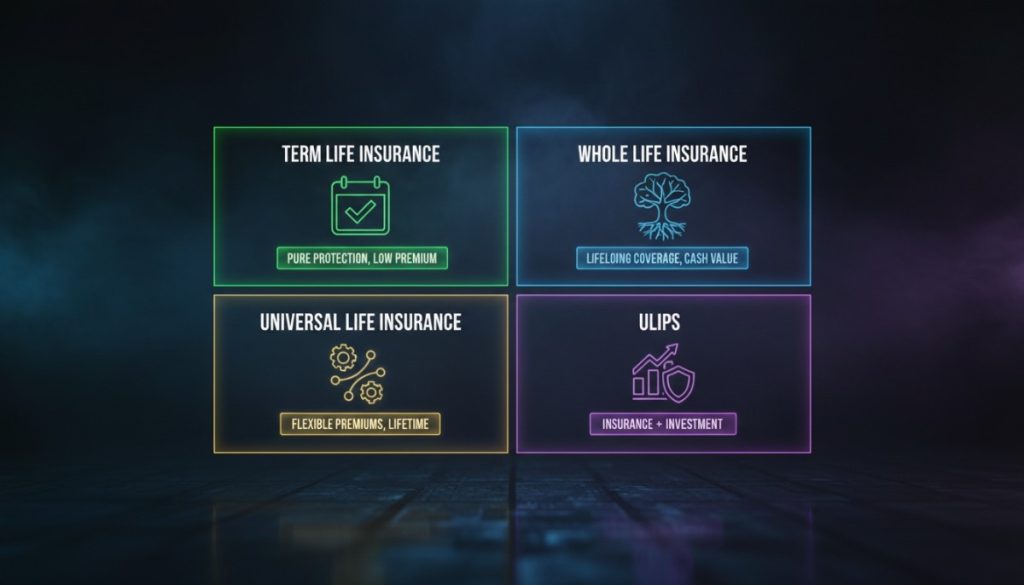
| Type of Insurance | Main Purpose | Premium Cost | Coverage Duration |
|---|---|---|---|
| Term Life Insurance | Pure protection | Low | Fixed term |
| Whole Life Insurance | Lifelong coverage | Higher | Lifetime |
| Universal Life Insurance | Flexible protection | Moderate | Lifetime |
| ULIPs | Insurance + investment | Variable | Long-term |
Term Life Insurance
You can get term life insurance for the most affordable price. Usually, you buy protection for 10, 20, or 30 years. Beneficiaries get the money if the insured person dies during that period.
This option is great for young families, homeowners, and people with big financial responsibilities. With no investment features, premiums are low because it’s just about protection. Term insurance offers high coverage at an affordable price, so it’s the best place to start for first-time buyers.
Whole Life Insurance
Life insurance with a cash value component provides lifelong coverage. The death benefit portion of your premium goes toward your death benefit, while the savings portion goes towards your savings account.
Although whole life policies are more expensive than term insurance, they’re good for long-term financial planning and permanent coverage. Estate planning, wealth transfer, and legacy creation are some uses for these policies.
Universal life insurance
Life insurance with universal coverage gives you more options. Depending on changing financial needs, policyholders can adjust premiums and death benefits. People with fluctuating incomes or changing long-term goals like it because of its adaptability.
There’s also an interest component, so there’s another layer of financial growth. These policies need to be managed carefully because market conditions can change.
ULIPs and Investment-Linked Plans
Unit Linked Insurance Plans, or ULIPs, combine life insurance with market-linked investments. A portion of your premium goes for insurance, and the rest goes for investments.
Especially among younger investors seeking dual benefits, these products are gaining traction in India. Investment-linked policies have grown a lot lately, according to industry data.
ULIPs have the potential to create wealth. You’re exposed to market risk. This type of policy should be chosen by people who fully understand investment fluctuations.
Benefits of Having Life Insurance
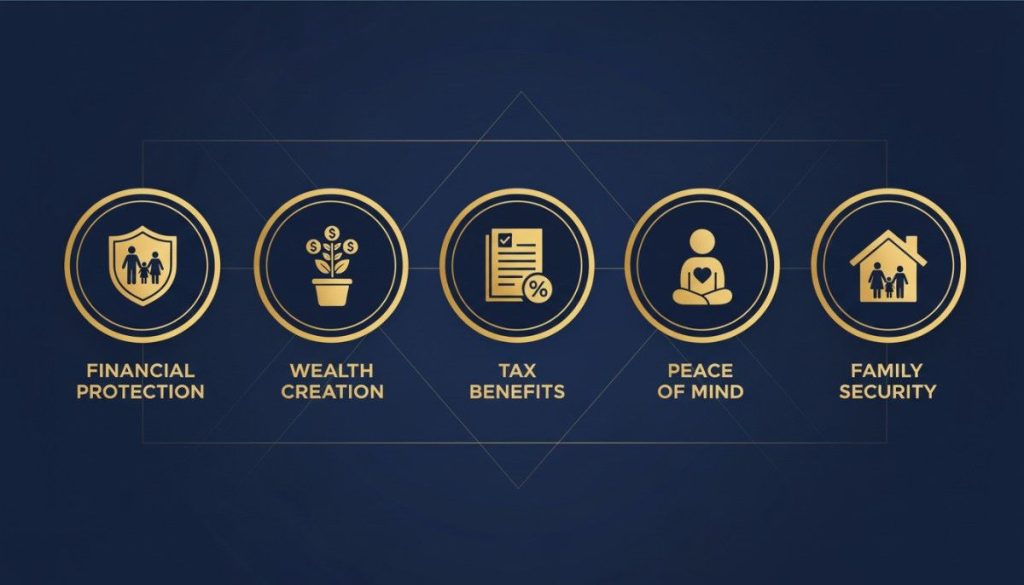
Financial protection is life insurance’s biggest benefit, but its value extends far beyond death benefits. Financial stability, retirement planning, tax efficiency, and wealth creation are all possible with modern policies.
Often, families underestimate how expensive daily life is until their income suddenly disappears. No matter what happens, rent, groceries, education, healthcare, transportation, and debt repayments keep going. In emotionally tough times, life insurance keeps loved ones from getting overwhelmed financially.
Financial Protection for Families
Life insurance is all about this. The payout helps dependents maintain financial stability after losing a primary earner. Children can continue their education without interruption. You don’t have to change your lifestyle right away to cover living expenses. We can pay back loans and mortgages instead of letting them pile up.
In many families, insurance proceeds make the difference between financial recovery and financial disaster.
Wealth Creation and Tax Benefits
Investing in certain policies can save you money and grow your portfolio. Premiums and payouts may qualify for tax deductions or exemptions depending on your local regulations.
It’s also possible to create disciplined savings habits with long-term insurance. The insurance premiums encourage structured financial planning over decades, which many people struggle to do on their own.
How Much Life Insurance Coverage Do You Need?
Buyers have a hard time figuring out how much coverage they need. While others overpay for unnecessary coverage, some purchase too little protection to help their families.

Financial advisors often recommend coverage equal to 10 to 15 times annual income, but your circumstances matter more. A person with young kids, a mortgage, and elderly parents might need a lot more coverage than a single guy.
Income Replacement Strategy
The main goal is to replace lost income. Would your family be able to survive financially without you if you disappeared tomorrow?
Ideally, coverage should include:
- Living expenses
- Education for kids
- Paying back your debts
- Put some money aside for emergencies
- Financial goals for the future
The goal isn’t to make beneficiaries rich overnight. During a tough transition, it’s to preserve financial stability.
Debt and Lifestyle Considerations
It changes everything when you’re in debt. It’s easy for surviving family members to get buried under home loans, car loans, personal loans, and education debt.
Lifestyle matters too. Families used to dual incomes might struggle after losing one. You don’t have to worry about your finances and emotional well-being when you have insurance.
Factors That Affect Life Insurance Premiums
There’s no randomness in insurance premiums. A risk assessment model tells companies how likely they are to pay a claim.
Age and health
Age still matters most when it comes to pricing. Statistically, younger buyers have lower health risks, so they usually get lower premiums.
Having diabetes, heart disease, obesity, or smoking habits can raise your premiums a lot. It’s for this reason that experts always recommend buying insurance early.
Lifestyle and occupation
Risk exposure increases with certain professions and hobbies. Premiums may be higher for pilots, miners, construction workers, and offshore workers. Pricing can also be affected by extreme sports participation.
Underwriting systems powered by AI are improving risk assessment accuracy. The use of adaptive AI questionnaires is making underwriting faster and more personal.
Common Mistakes People Make When Buying Life Insurance
Waiting too long is one of the biggest mistakes. Most people think they can wait until later in life to buy insurance, but that usually means higher costs and fewer options.
Focusing only on premium price instead of policy quality is another common mistake. Coverage that’s cheap might not be as flexible or as beneficial as it should be. Rather than choosing a policy based solely on ads, buyers should pay attention to claim settlement ratios and solvency metrics.
Some people underestimate their coverage needs because they don’t calculate future inflation, education expenses, and debt obligations correctly. Some people ignore policy terms and later discover exclusions they didn’t know about.
Choosing the wrong nominee, not updating beneficiaries after marriage or divorce, and letting policies lapse are other common issues.
Life Insurance Trends Shaping 2026

There’s a lot of change in the life insurance industry. The way policies are sold and managed is changing because of technology, consumer behavior, and regulatory changes.
AI-Powered Underwriting
Underwriting processes are being transformed by artificial intelligence. Insurers now use digital data analysis, predictive modeling, and adaptive questionnaires instead of lengthy medical exams.
Technology like this reduces approval times and improves customer service. Using AI, you can customize policy recommendations, streamline claims processing, and identify fraud risks faster.
Digital insurance platforms
Insurance is more accessible than ever with digital platforms. Online customers can compare policies, calculate premiums, submit documents, and track claims.
Younger consumers expect mobile-friendly experiences, so this convenience is especially important. Additionally, insurtech platforms are expanding insurance access in semi-urban and rural areas.
How to Choose the Best Life Insurance Policy
Finding the right policy isn’t about finding the perfect one. It’s all about finding the policy that fits your financial responsibilities, goals, and budget.
Start by figuring out what you’re trying to accomplish:
- Replacing your income
- Protecting your debt
- Creating wealth
- Getting ready for retirement
- Planning your estate
Make sure you compare insurers carefully. Examine more than just marketing slogans:
- Ratios of claim settlements
- The Solvency Ratio
- Reactions from customers
- Stability in the economy
- Flexibility is key
Solvency ratio has become an increasingly important metric for assessing insurer strength in 2026, according to industry discussions.
Reviewing policies every year is also a good idea. Life changes fast. All of these things can increase insurance needs over time, like marriage, kids, career growth, and property purchases.
Conclusion
Death isn’t really the point of life insurance. Responsibility, protection, and love are involved. If life throws you a curve ball, you can make sure the people you depend on can keep moving forward financially.
The importance of financial preparedness has never been greater. Growing family expenses, economic uncertainty, and evolving lifestyles have made insurance a financial necessity, not a nice-to-have. Global growth figures reflect this changing mindset as more people prioritize long-term protection.
People usually don’t think about buying life insurance until it’s too late. Waiting usually means paying more for less coverage. It’s easier to create lasting financial security for the people you care about when you act early, understand your options, and pick coverage wisely.
FAQs
1. What is the right age to buy life insurance?
When you’re young and healthy, it’s the best time to buy life insurance. Younger people have lower premiums, and you can lock them in for decades.
2. Is term life insurance better than whole life insurance?
You’ll have to decide based on your financial goals. You can get lifelong coverage with term insurance, and you can grow your cash value with whole life insurance.
3. How much life insurance coverage should I have?
Generally, experts recommend coverage equal to 10–15 times your annual income, but your debts, family needs, and financial goals should determine the final amount.
4. Can I buy life insurance online?
Yes, of course. Online applications, policy comparisons, and approvals are now available from many insurers, making the process faster and easier.
5. Does life insurance cover natural death?
That’s right. Natural death is usually covered by standard life insurance policies, as long as they’re active and meet the terms and conditions.