


Understanding Early Childhood Education
What Is Early Childhood Education?
From birth to around eight years old, early childhood education involves structured teaching and care. It’s often said that this is the foundation of lifelong learning because kids absorb information like sponges. Whether a child is learning numbers through songs, identifying colors with toys, or developing social skills while sharing crayons with classmates, every experience contributes to their development. There’s no rule that says early childhood education has to be in a classroom. There are preschools, kindergartens, daycares, and even educational activities at home.
Over the last few years, governments and educational organizations have put more emphasis on early learning. According to UNICEF, children who attend at least one year of pre-primary education are more likely to develop the essential skills needed for long-term academic success. Despite that, global access to preschool is still uneven, especially in low-income countries.
Early education is like building a house’s foundation. Cracks start showing up later if the base is weak. Reading problems, communication problems, and low confidence often stem from early gaps. Children who learn in a stimulating and nurturing environment tend to be more adept at language, have healthier emotional responses, and are more problem-solvers.
It’s common for parents to assume education begins in elementary school, but experts disagree. Learning begins at birth. Observation, sound recognition, facial expressions, and interaction are all things babies learn. The brain grows 90% by age five, making it one of the most crucial ages for brain development.
Why Early Years Matter
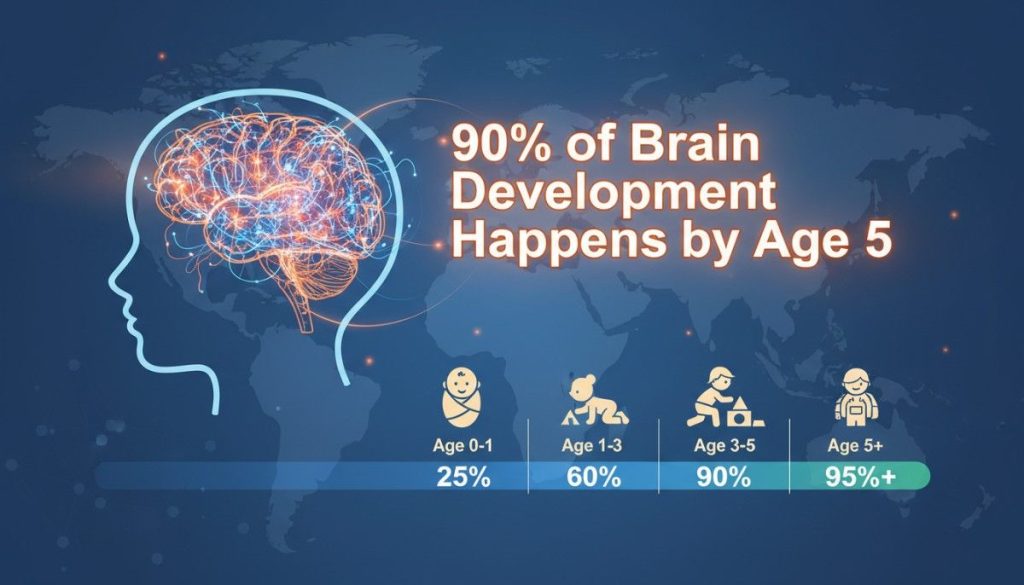
In the first few years of a child’s life, personality, intelligence, confidence, and emotional resilience are shaped. Neural connections are being formed at an astonishing rate during this stage. Having positive experiences strengthens these pathways, while having negative experiences slows them down. The importance of nurturing environments, responsive caregivers, and quality education programs can’t be overstated.
Early learning programs introduce children to routines, social interaction, and structured activities. They learn concepts like cooperation, patience, empathy, and independence from these experiences. Imagine if a kid went to primary school without knowing how to communicate, follow instructions, or interact with peers. As the adjustment goes on, it gets harder. Children learn how to deal with these transitions through early education.
Getting a good preschool education improves kids’ academic performance later in life. Higher education, stable employment, and high school graduation rates are better for them. The benefits aren’t just educational, they’re also economic and social. Early childhood programs often lead to lower crime rates, lower dropout rates, and higher workforce productivity.
There’s been a lot of emphasis on this issue by global education agencies. UNESCO and UNICEF’s Global Report on Early Childhood Care and Education says quality early learning is crucial for school readiness and lifelong well-being. Millions of kids still don’t get proper preschool education, causing long-term inequality before formal schooling even begins.
Early childhood education isn’t just babysitting with toys and cartoons, parents, teachers, and policymakers are waking up to that. Human development is a strategic investment. Young minds need structured stimulation just like athletes train muscles early and musicians practice scales from childhood.
The Science Behind Early Learning
Brain Development in Young Children
Early childhood is the most important time for brain development. Young brains are like a rapidly growing city where roads and connections are constantly being built. These neural pathways are strengthened by every interaction, conversation, game, and emotional experience. Simple activities like storytelling, singing nursery rhymes, and building blocks are actually powerful education tools.
The UNESCO and UNICEF reports show that quality early childhood care improves learning outcomes and emotional well-being. Stronger vocabulary and literacy skills are developed in children exposed to rich language environments. In the same way, interactive play helps kids develop critical thinking and problem-solving skills.
Emotional safety and nutrition also affect brain development. Stress and neglect can make a kid have trouble concentrating and regulating their emotions. Conversely, supportive caregivers help kids build confidence and emotional stability. One reason early childhood educators focus so much on creating a positive classroom environment is because emotional security leads to learning.
It turns out that play is one of the brain’s favorite ways to learn. Children develop memory, planning, and communication skills while building towers, running a grocery store, or making up imaginary adventures. On the surface, play-based education may seem simple, but it’s actually really good for brain development.
The importance of early intervention is being reinforced by modern neuroscience. Because the brain is still highly adaptable during early childhood, experts say it’s easier to deal with learning difficulties during that time. Adolescence is like reshaping hardened concrete instead of soft clay when it comes to developmental gaps.
Emotional and Social Growth During the Preschool Years
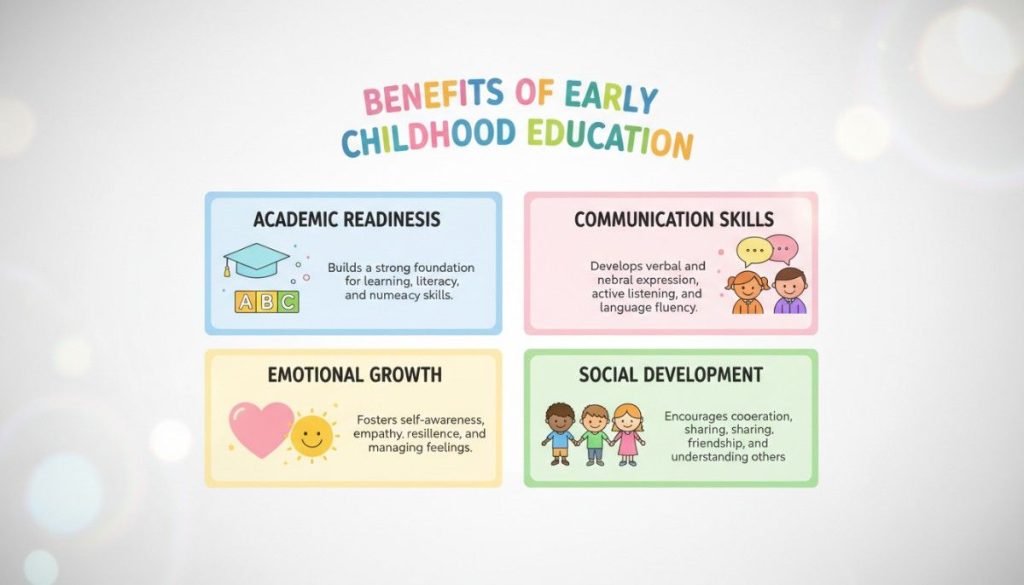
There’s more to learning than just academics. Emotional and social development during early childhood is just as important as academic success. Children are learning how to express their feelings, handle frustration, share attention, and build relationships. They’re basic, but they’re essential for healthy adulthood.
Getting kids to work together and cooperate is important in preschool. They learn about other people’s feelings, opinions, and boundaries. Kids start developing emotional intelligence when they share toys, apologize after conflicts, or comfort a crying friend. Future friendships, workplace communication, and even romantic relationships are shaped by these early lessons.
During this stage, teachers act as emotional coaches. Effective educators guide kids through their emotions and encourage positive problem-solving instead of just correcting their behavior. Teachers might encourage turn-taking and verbal communication instead of punishing kids for grabbing toys. Rather than frightening children, this approach helps them understand emotions.
It’s also good for your confidence to interact with people. It’s natural for some kids to feel shy or anxious in new situations. Structured group activities help them get more comfortable expressing themselves. Public speaking and self-esteem improve with participation in songs, stories, and classroom discussions.
Early childhood education has emotional benefits that go beyond the classroom. Mental health outcomes are better for kids who develop emotional regulation skills early. They’re better at handling stress, adapting to change, and maintaining relationships. Emotional intelligence becomes the invisible engine behind academic and professional success.
Major Benefits of Early Childhood Education
Academic Advantages
Stronger academic performance is one of the biggest benefits of early childhood education. A preschooler usually has better literacy, numeracy, and comprehension skills when they get to elementary school. They recognize letters earlier, understand instructions better, and adapt faster to structured learning environments.
There’s a domino effect when you get an academic head start. When kids feel confident in their learning, they’re more likely to participate actively in class. It fuels curiosity when you’re confident. It makes kids eager explorers instead of scared learners when they believe they can succeed.
Around four in ten kids aged three to four are enrolled in organized programs worldwide, according to UNICEF data. Millions of kids miss out on foundational skills before they start school.
Language exposure is another major advantage. Preschool classrooms are full of songs, stories, conversations, and new vocabulary. Communication strengthens reading readiness and listening comprehension. It’s been proven that kids from language-rich early learning environments do better on reading tests later on.
Preschool education should also encourage curiosity and creativity instead of rote memorization. Through exploration, children ask questions, experiment with materials, and find answers. Lifelong skills like independent thinking are developed through these experiences.
Improved communication skills
The bridge between thoughts and understanding is communication. Through daily interaction, early childhood education helps kids strengthen verbal and nonverbal communication skills. Children constantly practice language development when they explain ideas, ask questions, or listen to stories.
Classrooms teach kids how to take turns, maintain eye contact, and express emotions. Those may seem like simple social behaviors, but they directly affect confidence and future success. Leadership abilities, teamwork, and career opportunities are all enhanced by strong communication skills.
Also, teachers introduce kids to structured storytelling, songs, and rhymes. By using these methods, you’ll improve your pronunciation, comprehension, and memory. Multiple forms of language interaction help kids develop better literacy skills earlier than their peers without them.
The popularity of bilingual early education programs is also on the rise. During early childhood, learning multiple languages is easier because young brains adapt quickly to new sounds. Cognitive flexibility and cultural awareness can both be improved by multilingual exposure.
Speaking clearly isn’t the only thing that makes communication effective. Listening carefully, interpreting emotions, and responding appropriately are all part of it. All these skills can be practiced daily in early learning environments, turning communication into a lifelong strength.
Different Types of Early Childhood Education Programs
Montessori education
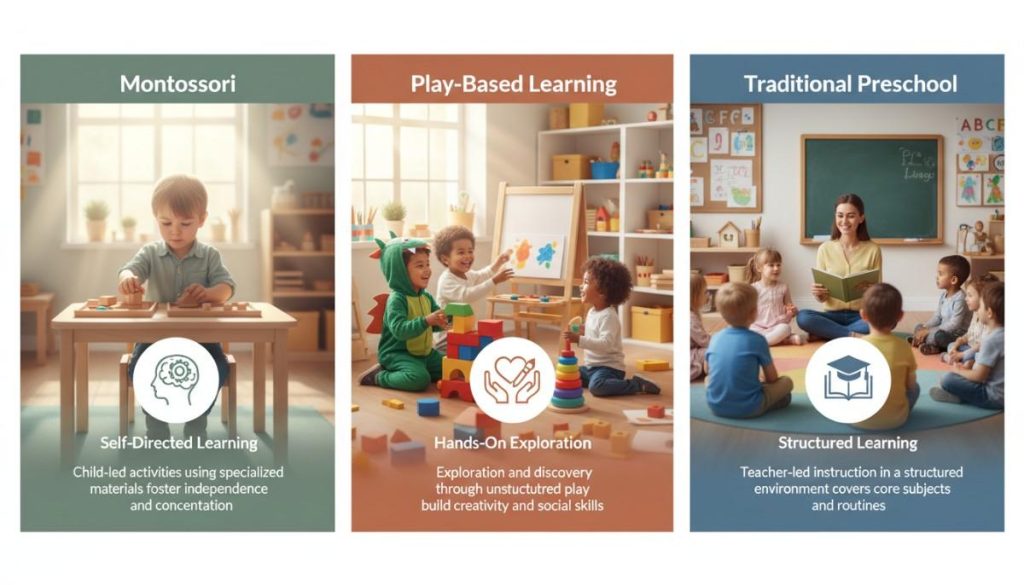
Child-led learning and independence are the hallmarks of the Montessori method. Instead of teacher-centered instruction, kids choose their own activities while educators guide them. Students often explore and discover themselves through hands-on activities in the classroom.
The Montessori method emphasizes practical life skills along with academics. Children can learn math while sorting objects or improve coordination by pouring water carefully between containers. Through experience rather than pressure, this method encourages concentration, discipline, and confidence.
Montessori emphasizes respect for individuality, which is one reason parents love it. There’s no need to create unnecessary competition in Montessori classrooms, since every kid develops at a different pace. Self-motivation instead of rewards or punishments teaches kids to be independent.
Critics say Montessori classrooms lack structure, but supporters say it develops creativity and independent thinking better than rigid education. Montessori education is engaging and empowering for many kids, especially those who thrive on hands-on exploration.
Play-based learning
Kids learn best through active engagement, not passive instruction, in play-based learning. Games, storytelling, role-playing, and creative activities instead of worksheets let kids explore ideas.
Imagine a bunch of kids running a restaurant. During play, they practice counting money, communicating with others, solving problems, and cooperating. Simple fun turns into a powerful learning experience.
During early development, play-based learning reduces stress and pressure. Children are naturally curious and imaginative, and play allows educators to harness these instincts. With this approach, you’ll learn academics and grow emotionally.
Because kids actively participate in the learning process, structured play builds stronger long-term understanding. Instead of memorizing information for tests, they develop deeper conceptual understanding through experience.
Technology and Modern Early Education
Educational Apps and Digital Learning
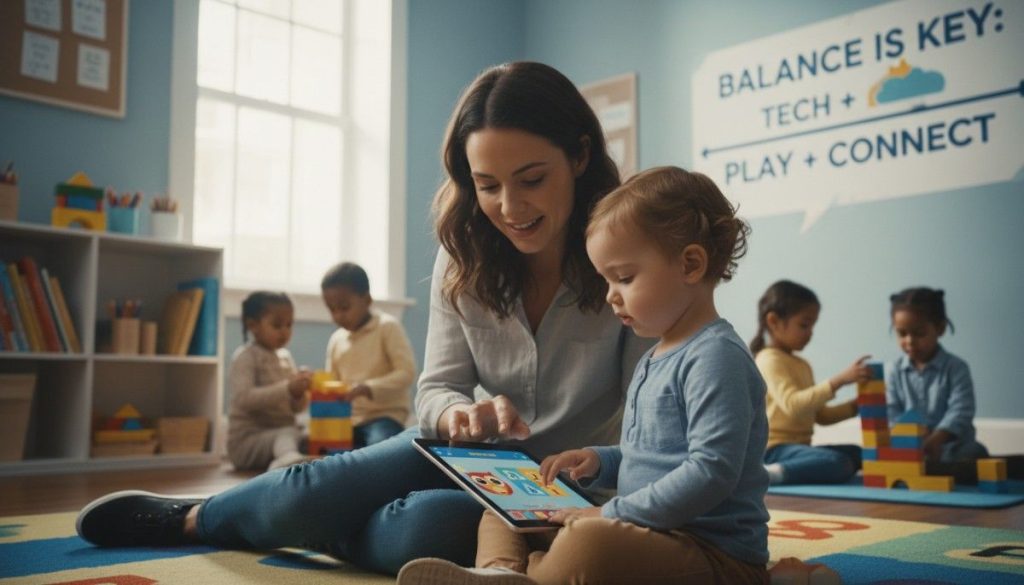
Almost every aspect of modern life has been transformed by technology, including early childhood education. Interactive apps, educational videos, and digital learning platforms have replaced traditional teaching methods. With the right technology, learning can be more engaging and personalized for young children.
Colorful animations, storytelling, puzzles, and phonics activities are common in educational apps. You can even customize learning experiences based on a child’s progress. Since millions of kids relied on online education during the COVID-19 pandemic, digital learning tools became extremely important.
Families in remote areas can also access educational resources thanks to technology. When physical schools aren’t available, parents can download learning materials, interactive games, and virtual lessons. Education inequality could be reduced significantly with this accessibility.
It’s still important to strike a balance. Learning should be enhanced by technology, not replaced by it. Children learn best through conversations, physical activity, and emotional connection with caregivers and teachers. It’s hard to replace storytelling with parents or hands-on learning in the classroom with screens.
Risks of excessive screen time
Despite its benefits, too much screen time during early childhood can cause serious developmental problems. Staring at tablets or TVs for a long time can be bad for your health, sleep, and social life.
Children need to move, explore nature, build friendships, and play imaginatively. Too much screen time can limit these experiences and sometimes lead to attention problems or communication problems.
Screen limits combined with high-quality educational content are often recommended by experts. Instead of passive entertainment, parents should prioritize interactive learning. When you engage with guided educational activities with caregivers, it’s much different than watching random cartoons.
Reduced face-to-face communication is another concern. When kids are young, they learn emotional cues from eye contact, tone of voice, and physical contact. It’s hard to replicate these experiences on a digital device. Instead of becoming the center of childhood, technology works best when it’s integrated into balanced learning environments.
Challenges Facing Early Childhood Education Today
Accessibility and Affordability
Although early childhood education is becoming increasingly important, millions of families still can’t afford it. Many kids can’t get quality early learning experiences because of high tuition costs and limited preschool options.
Nearly half of eligible children aren’t in preschool, according to UNICEF. Low-income countries have the lowest access rates. Because children without strong foundational learning may struggle academically later in life, this educational gap reinforces cycles of poverty.
Working parents often have to choose between childcare affordability and educational quality. Families rely on informal caregiving due to financial limitations, even when structured preschool programs would be better for kids.
There’s been a lot of advocacy for universal preschool access from governments and international organizations. Many experts say early education should be treated as a public necessity rather than a luxury. Long-term social and economic benefits often exceed the initial costs of affordable preschool programs.
Teacher Training and Quality Standards
Early childhood education is all about teachers. Without skilled educators who understand child development, even the best curriculum won’t work. There are still a lot of problems around the world, including teacher shortages and inconsistent training standards.
It takes more than just supervising kids in the classroom to provide quality early education. Teachers need to understand emotional development, communication strategies, behavioral guidance, and inclusive teaching methods. To adapt learning experiences for different developmental levels, they need patience, creativity, and adaptability.
There are times when low wages and demanding workloads stop talented professionals from entering the field. Staff shortages cause classroom quality to drop and existing educators to stress out. It’s not just about buildings and materials – it’s about teacher support and professional development too.
Teacher-child relationships affect learning outcomes just as much as curriculum design. When children feel emotionally secure, respected, and encouraged, they thrive. A skilled teacher creates an environment where curiosity flourishes.
The Future of Early Childhood Education
Global Trends and Innovations
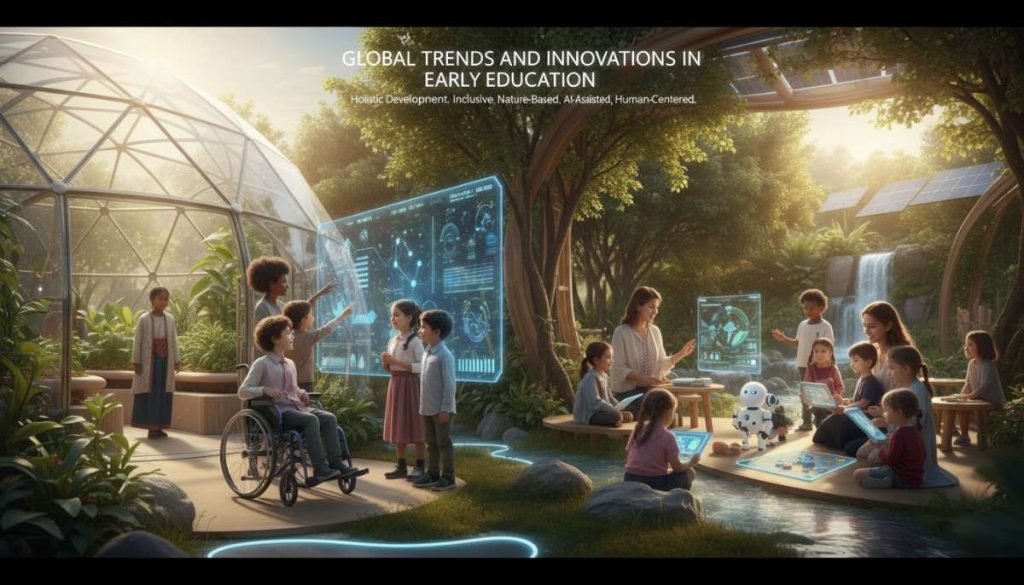
Research, technology, and policy innovations are reshaping learning environments worldwide as early childhood education evolves. Economic growth, workforce development, and social equality are all boosted by investing in early learning.
UNESCO’s recent reports stress the importance of integrating education, healthcare, nutrition, and family support systems. Child development is moving beyond academics alone in modern early education.
Another growing trend is inclusive education. Schools are doing more to support kids with disabilities, language differences, and diverse backgrounds. Educators are starting to realize that every kid learns differently, so they’re using personalized learning approaches more and more.
There’s also a growing trend for nature-based education. Through outdoor classrooms, gardening activities, and environmental exploration, kids develop creativity, resilience, and physical health. In an increasingly digital world, a lot of educators think kids need more connections with nature.
Future classrooms may also feature artificial intelligence and adaptive learning tools, but human connection will probably remain the core. Teachers can use technology to help them, but they can’t replace empathy, encouragement, and emotional support.
Conclusion
The purpose of early childhood education goes way beyond preparing kids for elementary school. On it, we build lifelong learning, emotional resilience, communication skills, and social confidence. How kids think, interact, and respond to the world around them is shaped by their first five years.
As well as helping children develop academically, emotionally, and socially, quality early learning experiences also benefit families and entire societies. From better literacy skills to improved emotional intelligence, the advantages go far beyond childhood. Communities and economies around the world benefit from investing in early education, according to research from organizations like UNESCO and UNICEF.
Major challenges still remain. There are millions of kids without access to affordable and high-quality preschool. Inequalities need to be addressed by governments, educators, communities, and parents.
Investing in young kids is an investment in the future. When a child grows up learning, exploring, and exploring, those benefits last a lifetime.
FAQs
1. When do you consider early childhood education?
Generally, early childhood education covers kids from birth to around eight years old, including preschool and kindergarten.
2. Why is early childhood education important?
As well as improving long-term academic and social outcomes, it helps develop brains, emotions, communication skills, and school readiness.
3. What are the main types of early childhood education?
The most common approaches are Montessori education, play-based learning, Reggio Emilia, and traditional preschools.
4. How does early education affect future success?
Preschoolers who attend quality programs often do better academically, develop stronger social skills, and have better career opportunities.
5. Can parents support early childhood education at home?
You’re right. You can encourage early learning at home by reading stories, talking regularly, playing, maintaining routines, and providing emotional support.