

What Is Plastic Pollution?
The Definition of Plastic Pollution
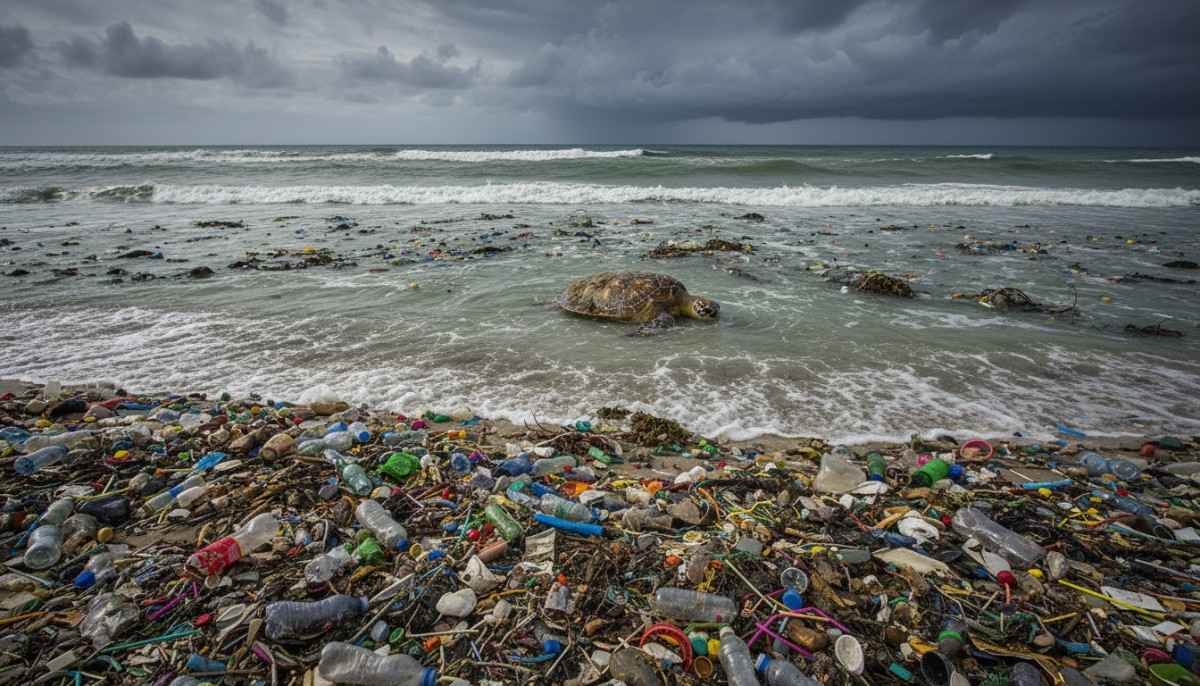
Plastic pollution is when plastics accumulate in the environment where they harm wildlife, ecosystems, and people. Unlike organic waste, plastic doesn’t naturally decompose. In nature, microplastics can last for hundreds of years because they break down into smaller and smaller pieces. Imagine throwing a plastic bottle in a river today and realizing it will still be there long after your great-grandchildren are gone. Right now, that’s the frightening reality humanity faces.
Modern society relies heavily on plastic because it’s cheap, lightweight, durable, and convenient. Everyday life is woven with plastic, from food packaging to medical equipment to smartphones and clothing. The problem starts when this convenience turns into trash. Waste management systems can’t keep up with rising plastic production, so millions of tons leak into oceans, rivers, forests, and cities each year. Plastic pollution already affects land, air, and water ecosystems on an alarming scale, according to recent research.
How plastic became a Global Dependency
When industries discovered plastic’s massive commercial potential after World War II, production exploded. Because plastic was cheap and versatile, companies marketed it as revolutionary. The market was dominated by reusable plastic products at first. As corporations grew, disposable packaging increased profits and convenience for consumers. The planet turned into a giant plastic warehouse because of that change.
There’s a use for plastic in pretty much every industry today. Packaging and components used in food delivery, e-commerce, healthcare, agriculture, electronics, and fashion are all made of plastic. There’s been a 230-fold increase in global plastic production since 1950, according to the OECD. Most of this plastic is designed for short-term use, which is scary. Despite being used for ten minutes, plastic straws can last a lifetime. One of the biggest reasons for the plastic crisis is the imbalance between usage time and environmental lifespan.
The Shocking Scale of Plastic Waste
Global Plastic Production Statistics
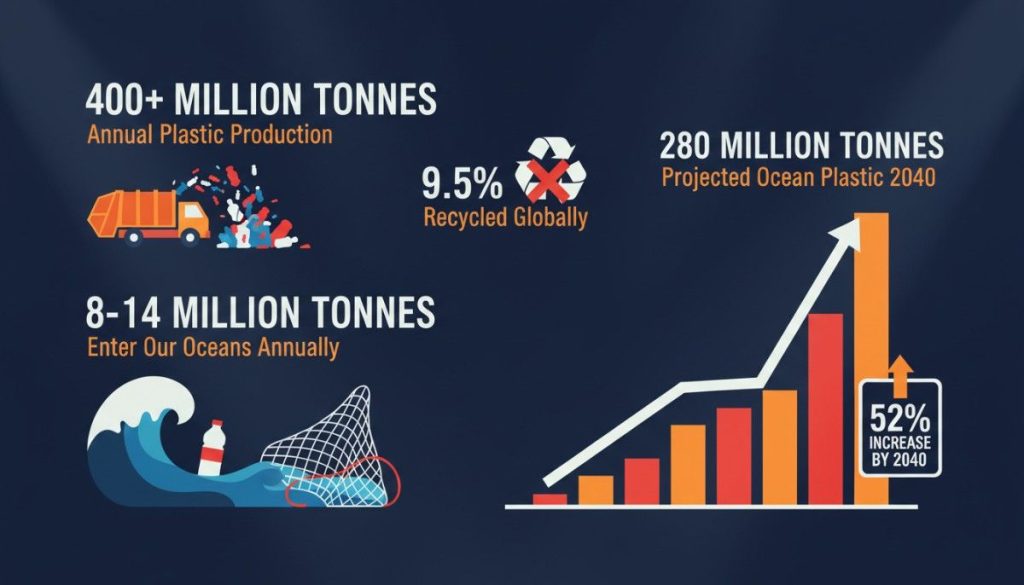
There’s almost no way to believe the numbers surrounding plastic pollution. Plastic production has topped 400 million tonnes in recent years, and experts warn it could reach nearly 800 million tonnes by 2050. Plastic pollution could rise from 130 million metric tons in 2025 to 280 million metric tons by 2040, according to Pew Charitable Trusts researchers.
Put that in perspective by imagining a garbage truck full of plastic being dumped into nature every second. That comparison isn’t exaggerated. The scale of pollution entering ecosystems around the world is literally described by that analogy. There’s millions of tons of plastic in the ocean every year, and cities in developing countries have overflowing waste systems. The crisis isn’t just in coastal areas anymore. The polar regions and remote mountains are now full of microplastics.
Here is a quick overview of the global plastic situation:
| Plastic Pollution Fact | Latest Estimate |
|---|---|
| Annual global plastic production | 400+ million tonnes |
| Plastic recycled globally | Around 9.5% |
| Plastic entering oceans yearly | 8–14 million tonnes |
| Projected plastic pollution by 2040 | 280 million tonnes |
| Increase in plastic production by 2040 | 52% |
Why Recycling Is Failing
There’s a lot of people who grew up thinking recycling would solve the plastic crisis. Unfortunately, reality isn’t like that. Globally, only 9.5% of plastic comes from recycled materials. The majority of plastic waste ends up in landfills, incinerators, or natural environments because recycling systems are limited, expensive, and inefficient.
The problem with many plastics is that they can’t be recycled again. Unlike glass or metal, plastic quality degrades when it’s processed. The chances of recycling are also reduced by mixed materials, food contamination, and poor waste separation. There are some companies that use recycling campaigns more as marketing tools than as real environmental solutions. Some critics compare it to trying to empty a sinking boat with a teaspoon while someone keeps drilling holes.
World leaders are finally waking up to the fact that recycling alone won’t cut it. Reducing plastic production, encouraging reusable alternatives, and redesigning packaging systems are far more effective long-term strategies. The fight against waste is becoming more important with reuse systems, refill stations, and biodegradable innovations.
The Main Sources of Plastic Pollution
Single-Use Plastics
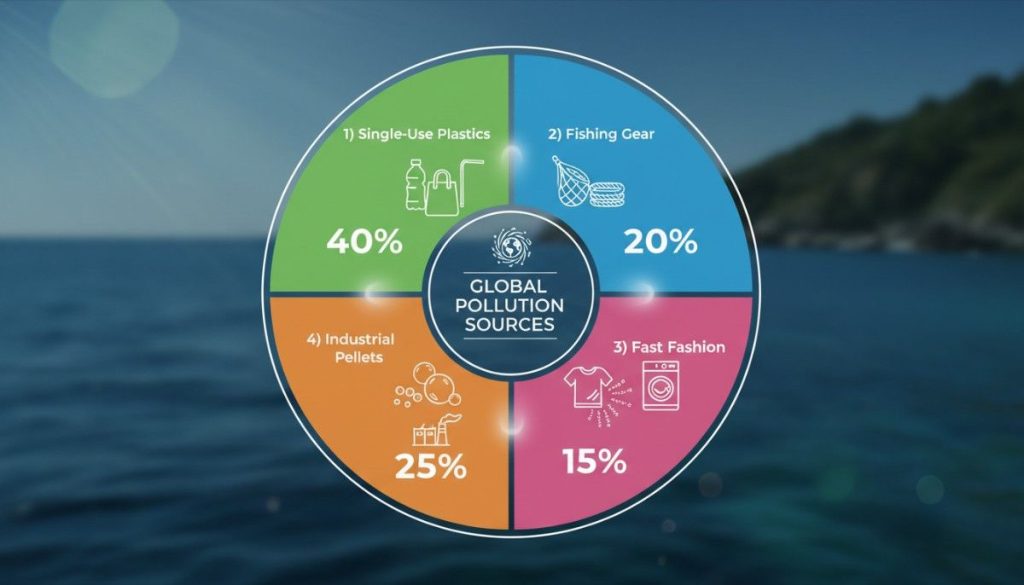
Waste generation is dominated by single-use plastics. Global litter surveys are dominated by plastic bags, bottles, straws, food wrappers, and takeaway containers. An international coastal study found food and drink packaging in 93% of surveyed coastal regions. For a few minutes, these items are convenient, but for centuries, they’re destructive.
The problem has been accelerated by fast food culture and online shopping. There are usually multiple layers of disposable packaging in every delivery order. Most people don’t think about where these materials go after they’re thrown away. Most of them end up in waterways, drainage systems, or oceans. Plastic-clogged drains cause severe flooding in many developing countries during rainy seasons.
Fishing gear and marine waste
A lot of ocean pollution comes from abandoned fishing nets and ropes. These materials keep trapping fish, turtles, and marine mammals long after they’re thrown away. Since fishing equipment is made from synthetic plastic, it can last a long time.
Plastic debris fills the stomachs of whales and sea turtles all the time. Some animals mistake floating plastic bags for jellyfish, while seabirds feed their chicks plastic fragments. There’s a deadly illusion in the ocean where plastic looks like food. As a result, entire marine food chains and biodiversity systems are disrupted.
Fast Fashion and Synthetic Fibers
Clothing contributes to plastic pollution, most people don’t realize. When you wash polyester, nylon, and acrylic fabrics, they release microscopic plastic fibers. Wastewater systems carry these microfibers to rivers and oceans. Fast fashion brands are intensifying this hidden environmental problem by making cheap synthetic clothes at high speeds.
Microplastics are everywhere, say scientists studying soil and water contamination. Experts are worried about the long-term effects of soil microplastics on agriculture and food security. It’s possible for tiny plastic particles to change soil quality, reduce microbial activity, and enter crops we eat.
Industrial plastic pellets
The industrial plastic pellet, also called the nurdle, is a small raw plastic bead used in manufacturing. Although they look harmless, but millions spill into waterways during transportation and production. According to citizen science studies, these pellets are the most common form of coastal pollution.
The tiny pellets act like poison pills for marine animals because fish and seabirds mistake them for food. If swallowed, they can block digestion and carry toxic chemicals into the body. Pellet spills should be subject to stricter regulations and penalties, say environmental activists, since ecosystem damage spreads quickly.
Plastic Pollution in Oceans
Impact on Marine Animals
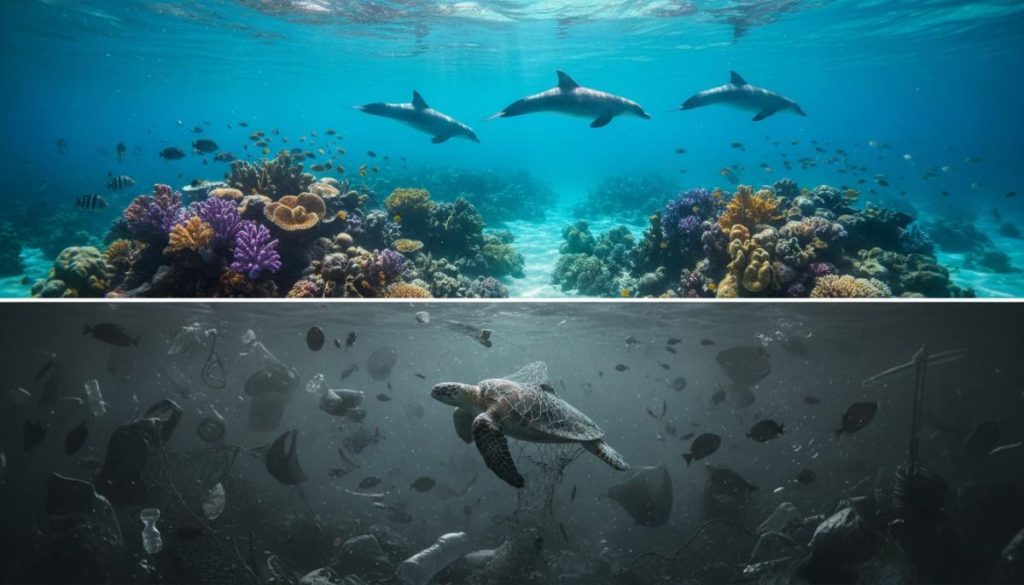
There’s something heartbreaking about ocean plastic pollution because it directly harms wildlife. Turtles get tangled in fishing nets. It’s not uncommon for dolphins to swallow plastic fragments. It’s trash filling their stomachs, not food, that causes seabirds to starve. Plastic-related injuries and ingestion kill millions of marine animals every year, according to scientists.
The Great Pacific Garbage Patch is one of the most infamous examples of ocean pollution. Across vast areas of the Pacific Ocean, there’s an enormous accumulation of plastic waste. It looks like a toxic soup filled with bottles, fishing gear, packaging, and microplastics. It’s really hard to clean up ocean debris because ocean currents constantly move it around.
Marine ecosystems could suffer irreversible damage if pollution continues unchecked. Climate change, overfishing, and habitat destruction are already destroying coral reefs and mangroves. The plastic adds another layer of stress to systems that are already struggling.
Microplastics in seawater
Due to their almost invisible nature, microplastics are among the most dangerous forms of pollution. Sunlight, waves, and weathering break down larger plastics into these tiny pieces. Seafood, arctic ice, and even rainwater have been found to have them.
Microplastics absorb toxic chemicals and enter food chains, so scientists are worried. They’re eaten by fish, eaten by bigger predators, and then humans eat them. It’s a disturbing cycle where pollution literally ends up on our plates. Early findings are deeply concerning about how microplastics affect human organs, hormones, and immune systems.
Plastic pollution on land
Soil contamination
The problem of plastic pollution isn’t just in the ocean. There’s also a lot of damage done to land ecosystems. Plastic waste and microplastic contamination are increasingly found in agricultural fields, urban areas, forests, and rural communities. The use of plastic mulch in farming, synthetic fertilizers, and wastewater sludge all contribute to soil pollution.
In soil, microplastics can disrupt plant growth, alter water retention, and damage microorganisms. Imagine trying to grow healthy food in dirt that’s slowly filling up with artificial particles. The long-term consequences are still being studied, but early signs suggest major problems for food security and ecosystems.
Urban waste and overflowing landfills
Plastic waste is everywhere in cities. Waste management systems can’t handle the growing volume in many developing countries. Low-income areas are notorious for open dumping and burning. Toxic chemicals are released into the air when plastic is burned, posing serious health risks.
It takes plastic centuries to decompose in landfills. Instead of disappearing, it fragments into smaller pieces while still releasing toxic chemicals. In addition to attracting pests, overflowing waste sites contaminate groundwater. Living near these areas means plastic pollution is a daily reality, not just a distant environmental issue.
Human Health Risks Linked to Plastic Pollution
Microplastics Inside the Human Body
Human bodies now contain microplastics, one of the most alarming discoveries in recent years. In blood, lungs, breast milk, and even placentas, scientists have found plastic particles. Because of this revelation, pollution isn’t just an environmental issue anymore, it’s a deeply personal one.
Microplastics may contribute to inflammation, hormone disruption, reproductive problems, and cardiovascular disease. Researchers have linked plastic chemicals to cancer, asthma, fertility issues, and neurological disorders. Humans are conducting an uncontrolled experiment on themselves, experts say, though research is still developing.
Toxic chemicals and diseases
There are thousands of chemical additives in plastics that make them more durable, flexible, or colorful. Some of these chemicals interfere with hormone systems and are known to be endocrine disruptors. There are others that could be cancer-causing or toxic to kids.
The risk of exposure to plastic is higher in communities near plastic production facilities. Air and water pollution can affect nearby residents for decades. It’s dangerous to burn plastic waste because it releases dioxins and other harmful compounds. Without major reforms, health impacts from plastic production and pollution could increase by 75% by 2040.
Economic and Climate Impacts of Plastic Pollution
Financial Burden on Governments
Governments and taxpayers are under enormous financial pressure from plastic pollution. Waste is collected, waterways are cleaned, drainage systems are maintained, and landfills are managed. Cities spend billions on these things. The tourism industry also suffers when beaches are trashed.
Another hidden cost is flooding caused by blocked drainage systems. During heavy rains, discarded plastic bags and packaging clog sewers. Transportation, businesses, homes, and public infrastructure are all affected. Governments spend public money fixing problems caused by disposable consumption.
Plastic and greenhouse gas emissions
Plastics are mostly made from fossil fuels like oil and gas. As a result, plastic production contributes directly to global warming. Global plastics could become one of the world’s biggest greenhouse gas emitters by 2040 if they were considered a country.
In addition to emissions during transportation, incineration, and decomposition, plastic releases greenhouse gases. This creates a dangerous feedback loop where fossil fuel dependency fuels both climate change and pollution. By reducing unnecessary plastic production, we’d be able to tackle two major global issues at once.
Solutions to plastic pollution
Government Policies and Global Treaties
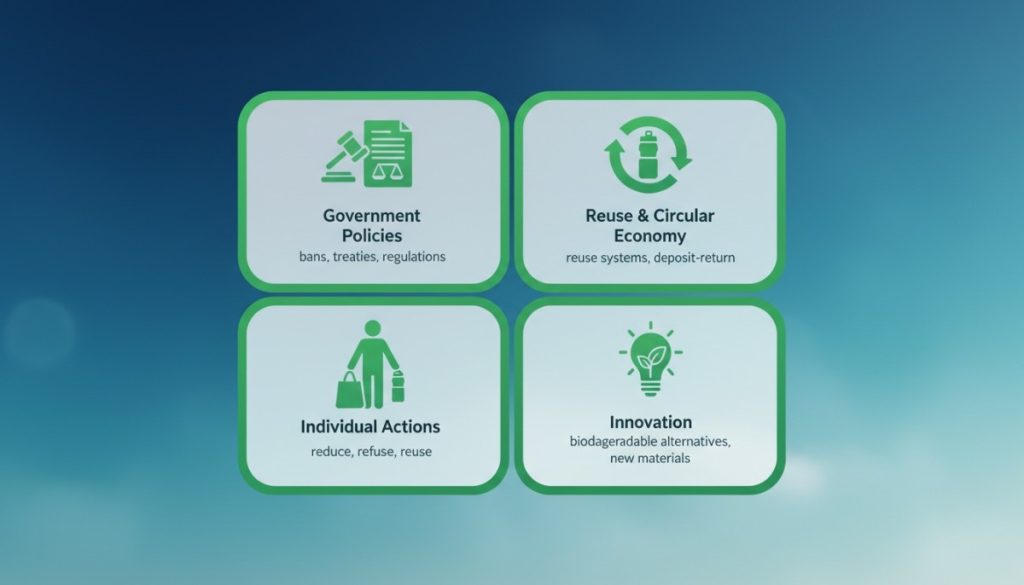
The plastic crisis is finally being recognized by governments around the world. There have been bans on single-use plastic bags, straws, and foam packaging in many countries. A global plastics treaty is also being negotiated to reduce pollution and increase accountability.
It’s more important to reduce plastic production itself than just recycle it, say environmental experts. We need strong regulations, corporate responsibility laws, and sustainable alternatives. In Southeast and East Asia, stronger policies and better waste systems could reduce plastic leakage by over 95%.
Reuse and Circular Economy
Circular economies keep materials in use for as long as possible instead of throwing them away constantly. This strategy focuses on reusable packaging, refill stations, deposit-return schemes, and redesigning products.
Within 15 years, reuse and return systems could dramatically reduce packaging pollution. Imagine grocery stores that return, clean, and reuse containers instead of throwing them away after one use. Those models used to be common before disposable culture took over. You could get rid of a lot of waste by reviving it.
What individuals can do daily
Even though individual actions won’t solve the crisis, they still matter. We can reduce our plastic footprints by making small choices every day.
Here’s what people can do:
- Drink water and use reusable bags
- If you can, avoid excessive packaging
- Make sure your products are recyclable or refillable
- Encourage businesses to use sustainable packaging
- Clean up your community
- Separate household waste properly
- Cut down on fast fashion
Every small action counts as a vote for the kind of future we want. Industries and governments eventually respond when millions adopt better habits.
Conclusion
Modern environmental challenges include plastic pollution. From a symbol of innovation, it’s now a global threat affecting oceans, wildlife, human health, economies, and climate systems. From deep oceans to human bloodstreams, scientists keep finding plastic particles in places they thought were safe.
Although the crisis seems overwhelming, there are already solutions. Regulations can be strengthened, industries can redesign products, and individuals can change their consumption habits. If we treat plastic like trash, or like a resource that needs responsibility and restraint, the future depends on us.
We’re at a crossroads. One path leads to mountains of waste and escalating health risks. The other leads to smarter systems, cleaner ecosystems, and a healthier relationship with materials. We still have the choice.
Frequently Asked Questions (FAQs).
1. What is the biggest cause of plastic pollution?
Bags, bottles, food wrappers, and packaging are the biggest contributors to global plastic pollution because they’re used briefly and thrown away a lot.
2. How long does plastic decompose?
Different types of plastic take different amounts of time to break down. There are some materials that can last 500 years in the environment.
3. Are microplastics harmful to humans?
Although research is still ongoing, microplastics may disrupt hormones, cause inflammation, and cause respiratory problems.
4. Why is recycling not enough to solve plastic pollution?
Global recycling systems handle only a small percentage of plastic waste, and most plastics can’t be recycled multiple times.
5. What are the cheapest alternatives to plastic?
The best alternatives to disposable plastic are reusable glass, metal, paper-based packaging, biodegradable materials, and refill systems.