


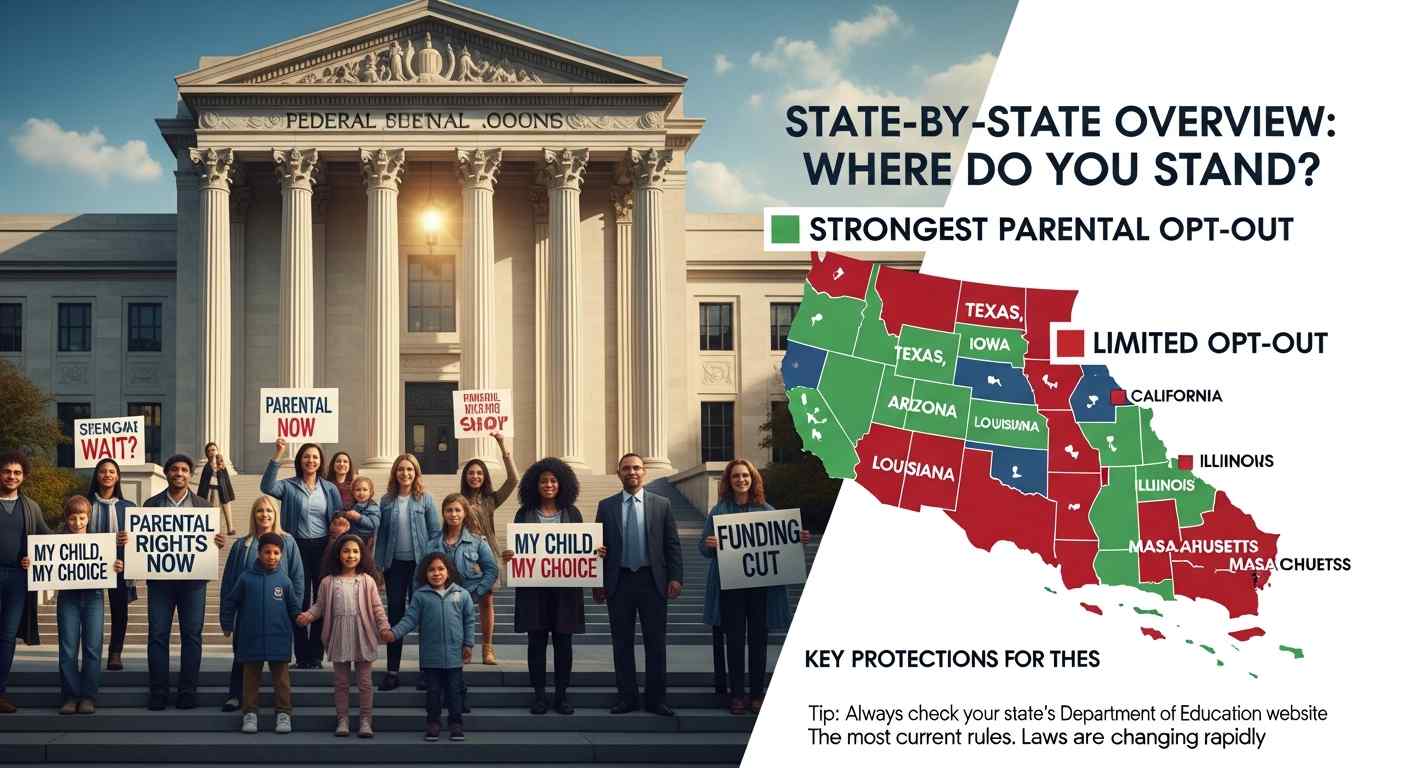
Introduction: A Growing Movement Across America
Across the United States, a quiet but powerful shift is taking place in classrooms. Parents are no longer willing to remain silent when it comes to what their children learn, read, or are asked about in school.
From Florida to California, moms and dads are asserting what is now widely known as parental opt-out rights in education. These rights allow families to remove their children from specific lessons, surveys, or school activities that conflict with their personal, moral, or religious beliefs.
But what exactly are these rights? Where do they come from? And how can you, as a parent, use them effectively in 2026?
This article answers all those questions and more.
What Are Parental Opt-Out Rights in Education?
Parental opt-out rights refer to the legal ability of parents to excuse their child from participating in certain school programs, surveys, or instructional materials without facing punishment or discrimination.
These rights are not unlimited. However, federal and state laws provide specific protections that every American parent should know.
The most important federal law covering this area is the Protection of Pupil Rights Amendment (PPRA) , originally enacted in 1978 and updated several times since.
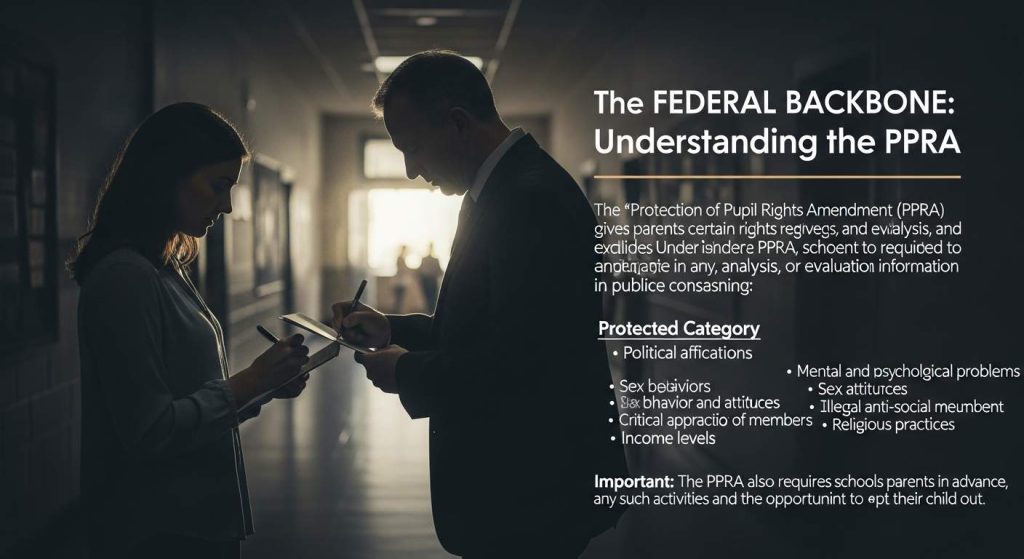
The Federal Backbone: Understanding the PPRA
The Protection of Pupil Rights Amendment (PPRA) gives parents certain rights regarding surveys, analysis, and evaluations conducted in public schools.
Under the PPRA, schools must obtain written parental consent before a student is required to participate in any survey, analysis, or evaluation that reveals information concerning:
| Protected Category | Examples |
| Political affiliations | Party membership, voting history |
| Mental and psychological problems | Depression, anxiety screenings |
| Sex behavior and attitudes | Sexual orientation, contraceptive use |
| Illegal or anti-social behavior | Drug use, theft, violence |
| Critical appraisals of family members | Negative opinions about parents |
| Religious practices | Church attendance, beliefs |
| Income levels | Family financial status |
Important: The PPRA also requires schools to notify parents in advance of any such activities and give them the opportunity to opt their child out – even without a formal written law in your state.
The 2025 Supreme Court Landmark: Mahmoud v. Taylor
In June 2025, the U.S. Supreme Court issued a ruling that changed the landscape of parental rights forever.
The case, Mahmoud v. Taylor, originated in Maryland, where Muslim and Christian parents objected to elementary school storybooks featuring LGBTQ+ characters. The parents argued that reading these books violated their sincerely held religious beliefs.
The Court’s Decision: In a 6-3 ruling, the Supreme Court held that:
“Parents have a fundamental constitutional right, protected by the First Amendment’s Free Exercise Clause, to direct the religious upbringing of their children. When a public school compels exposure to material that substantially burdens a parent’s sincerely held religious beliefs without a compelling government interest, the parent may opt the child out of that specific instruction.”
What This Means for Parents in 2026
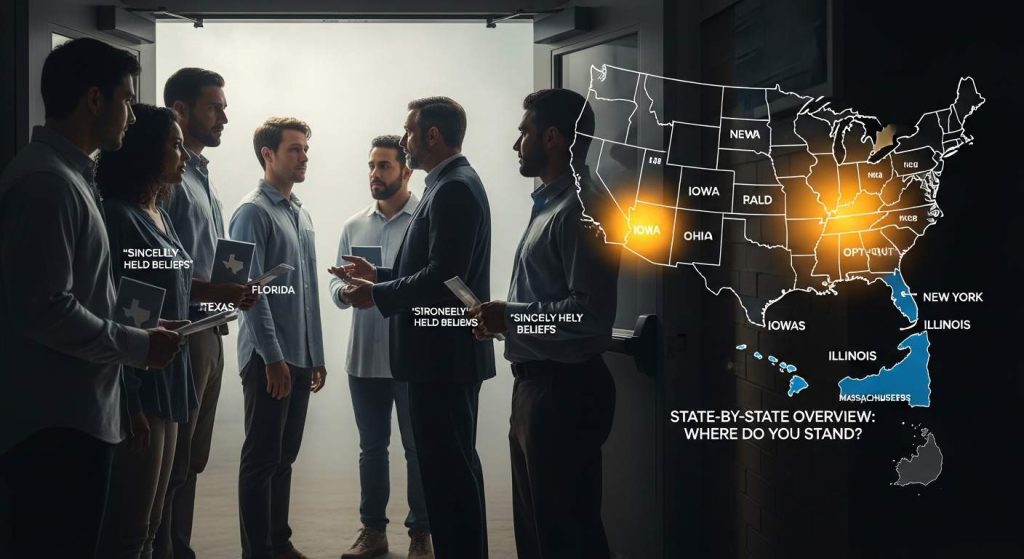
Following the Mahmoud decision:
- Schools must now provide meaningful opt-out options for religious objections
- Parents cannot be required to explain their beliefs in detail, only state they are “sincerely held”
- Schools that refuse reasonable opt-out requests can face federal lawsuits and potential loss of funding
- Several states (Texas, Florida, Iowa, and Ohio) have already passed new laws strengthening opt-out rights based on this ruling
State-by-State Overview: Where Do You Stand?
While federal law provides a baseline, individual states have expanded parental opt-out rights in different ways.
Strongest Parental Opt-Out States (as of 2026)
| State | Key Protections |
| Florida | Parental Rights in Education Act (HB 1557) allows opt-out of any instruction on gender identity or sexual orientation through 8th grade |
| Texas | Parents can opt out of any curriculum materials they find objectionable; schools must provide alternative assignments |
| Iowa | New 2026 law requires schools to notify parents of all surveys and obtain active consent before student participation |
| Arizona | Opt-out rights extended to include social-emotional learning (SEL) programs |
| Louisiana | Parents may remove children from any reproductive health or sex education lessons |
States with Limited Opt-Out Rights
- California and New York generally follow PPRA minimums but have rejected broader opt-out expansions
- Illinois requires opt-out requests to be reviewed by a school committee, with possible denial
- Massachusetts allows opt-out only for sex education and specific surveys, not general curriculum
Tip: Always check your state’s Department of Education website for the most current rules. Laws are changing rapidly.
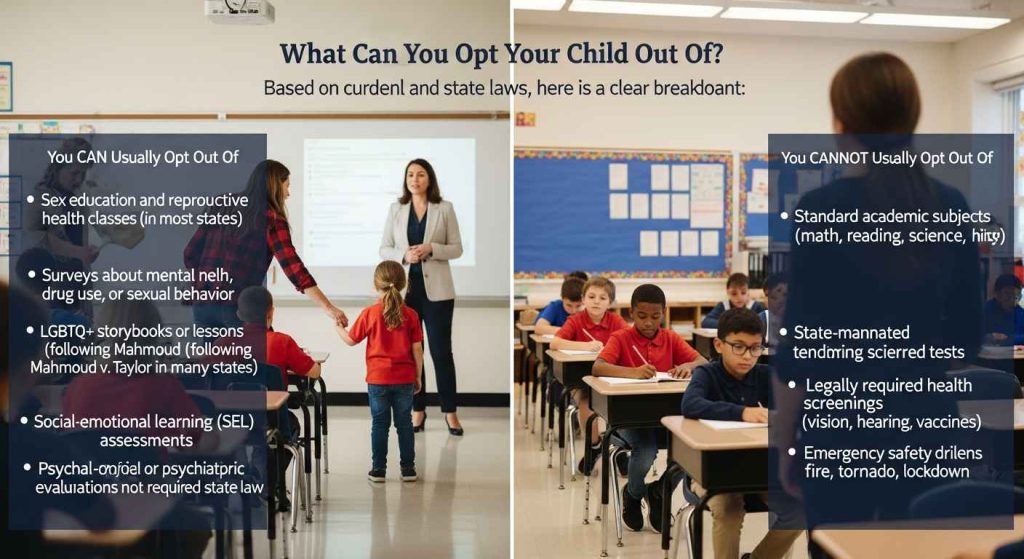
What Can You Opt Your Child Out Of?
Based on current federal and state laws, here is a clear breakdown:
✅ You CAN Usually Opt Out Of:
- Sex education and reproductive health classes (in most states)
- Surveys about mental health, drug use, or sexual behavior
- LGBTQ+ storybooks or lessons (following Mahmoud v. Taylor in many states)
- Social-emotional learning (SEL) assessments
- Psychological or psychiatric evaluations not ordered by a court
- Physical exams not required by state law
❌ You CANNOT Usually Opt Out Of:
- Standard academic subjects (math, reading, science, history)
- State-mandated standardized tests
- Legally required health screenings (vision, hearing, vaccines)
- Emergency safety drills (fire, tornado, lockdown)
- Core civics or American history instruction
How to Exercise Your Opt-Out Rights: Step-by-Step Guide
If you want to opt your child out of a specific activity, lesson, or survey, follow these five steps:
Step 1: Identify What You Object To
Be specific. Instead of saying “I don’t like the curriculum,” say:
“I object to Lesson 12 in the 4th grade health unit titled ‘Understanding Puberty’ because it discusses reproductive anatomy, which conflicts with my family’s religious beliefs.”
Step 2: Review School District Policy
Check your school district’s website or handbook. Look for:
- “Parental rights” section
- “Opt-out forms” or “Exemption requests”
- PPRA notification policies
If you cannot find anything, contact the school principal or district office in writing.
Step 3: Put Your Request in Writing
Email or letter is best. Use this template:
Subject: Opt-Out Request for [Child’s Name] – [Grade/Class]
Dear [Principal Name or Teacher Name],
I am the parent/guardian of [Child’s Name], who is in [Grade/Class] at [School Name].
Pursuant to the Protection of Pupil Rights Amendment (20 U.S.C. § 1232h) and the Supreme Court’s ruling in Mahmoud v. Taylor (2025), I am requesting that my child be opted out of [specific activity, lesson, or survey] scheduled for [date].
My objection is based on sincerely held [religious/moral/personal] beliefs. I request a reasonable alternative assignment for my child during this time.
Please confirm in writing within 5 business days that this opt-out request has been granted.
Thank you for your cooperation.
Sincerely,
[Your Full Name]
[Phone Number]
[Email Address]
Step 4: Demand Written Confirmation
Schools are required to respond to formal opt-out requests. If they ignore you or say no, ask for the denial in writing with their legal reasoning. You will need this if you escalate the issue.
Step 5: Escalate If Necessary
If the school denies your request:
- Contact the school district superintendent
- File a complaint with your state’s Department of Education
- Contact the U.S. Department of Education’s Family Policy Compliance Office (FPCO)
- Consult with a parental rights attorney (many offer free consultations)
Common Questions Parents Ask
Q1: Can a school punish my child for opting out?
A: No. Under federal law, schools cannot penalize students academically or socially for a legitimate opt-out request. Your child must be given a reasonable alternative assignment.
Q2: Do I need to explain my religious beliefs in detail?
A: No. Following Mahmoud v. Taylor, you only need to state that your objection is based on “sincerely held religious beliefs.” You do not have to name your religion or provide proof.
Q3: Can I opt my child out of a whole class (like sex ed)?
A: In most states, yes. However, your child may miss state-mandated content. The school must provide an alternative lesson, not simply exclude your child from instruction entirely.
Q4: What if the school loses my opt-out form?
A: Always keep a copy. Send requests via email (which creates a timestamp) or certified mail. If the school claims they lost it, resend it and ask for a signed confirmation of receipt.
Q5: Are private schools subject to the same opt-out rules?
A: Generally, no. Private and religious schools receive less federal funding and are not bound by the PPRA or Mahmoud in the same way. Check your enrollment contract.
The Debate: Two Sides of Parental Opt-Out Rights
Like many education issues, parental opt-out rights are controversial. Here is how both sides argue:
Arguments FOR Opt-Out Rights
- Parents know their children best and should make value-based decisions
- Religious freedom is a First Amendment right, not a school privilege
- Surveys and SEL programs often collect sensitive data without real consent
- One-size-fits-all curriculum ignores family diversity
Arguments AGAINST Opt-Out Rights
- Classroom disruption occurs when multiple students leave for different reasons
- Social isolation can harm children who are singled out
- Slippery slope – could parents opt out of teaching evolution or civil rights history?
- Public schools must serve all families, not just the loudest voices
As a news portal, thenewshant.com presents both perspectives fairly. The law currently favors parental rights, but the debate is far from over.
Recent News Updates (March 2026)
Stay current with these developing stories:
- Florida: New bill (HB 987) would require schools to post all curriculum materials online 30 days in advance so parents can opt out before lessons begin
- California Lawsuit: A group of parents is suing the Los Angeles Unified School District for refusing opt-out requests related to gender identity instruction
- Federal Guidance: The U.S. Department of Education released new PPRA guidance in February 2026, clarifying that opt-out rights apply to digital surveys and online learning platforms
- Election 2026: Parental rights remain a top issue in congressional races, with both parties proposing competing education bills
Final Takeaways for American Parents
Parental opt-out rights in education have never been stronger or more clearly defined than they are today in 2026.
Remember these three key points:
- You have rights under federal law (PPRA) and the Supreme Court’s Mahmoud decision
- Put everything in writing – verbal requests are easily ignored or forgotten
- Laws vary by state – know your local rules, but federal protections apply everywhere
Your child’s education should align with your family’s values. The law is increasingly on your side.











Good news
Yes