
Why Workplace Etiquette Matters More Than Ever
Workplaces in 2026 won’t just be physical places. Email, instant messaging, virtual meetings, collaborative documents, AI assistants, and flexible schedules make up the digital ecosystem. Due to this shift, etiquette has evolved from basic manners to a broader concept of respect and emotional intelligence. We judge people not only by what they say, but also by how they communicate online, how quickly they respond, and how thoughtfully they collaborate.
It’s now the standard for many industries to do hybrid work. Over 50% of remote-capable employees work in hybrid environments, while fully remote and fully office-based jobs are dwindling. The change means employees have to switch between digital and physical interactions all the time. One day they’re brainstorming in person, the next they’re leading Zoom calls from home. It’s etiquette that keeps those experiences consistent.
Modern communication is another reason etiquette matters more. Older workplaces took time for misunderstandings to spread. In 2026, one careless Slack comment can affect the whole team. Poorly written emails can sound cold or hostile, even if they weren’t intended that way. Both professionalism and unprofessional behavior are amplified by technology.
Also, companies are putting more emphasis on soft skills. Technical talent still matters, but employers are looking for people who can communicate clearly, collaborate respectfully, and maintain emotional maturity in stressful situations. Despite all the AI tools and automation, the workplace is becoming more human. Human etiquette becomes more valuable the more digital work becomes.
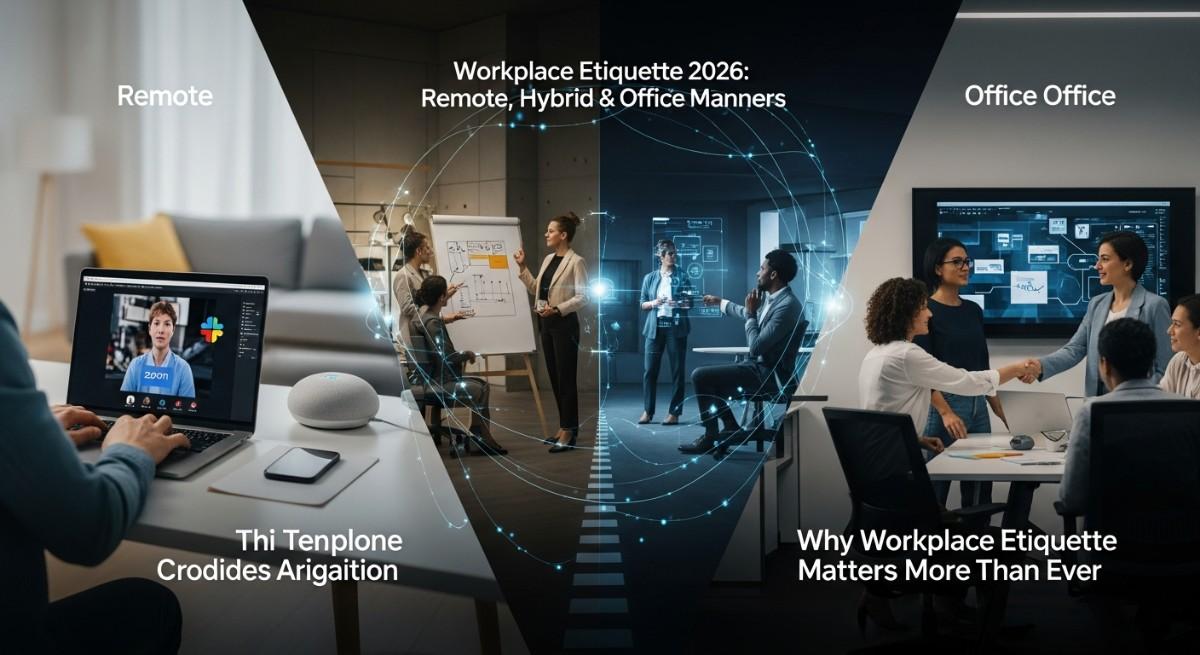
Compared to a decade ago, the modern workplace looks completely different in 2026. Many employees work from home offices or sleek corporate offices, and some switch between the two every week. Hybrid work has changed the rules of professional behavior. In the workplace, what used to be simple etiquette—showing up on time, dressing professionally, respecting your coworkers—has evolved into something layered and digital.
Hybrid work has become the dominant model for knowledge workers in 2026, with over half of remote-capable employees working in hybrid arrangements. In many companies, policies are being redesigned to balance flexibility with accountability.
Likewise, workplace etiquette has become a career must-have. What’s the reason? Modern teams are distributed, multicultural, AI-assisted, and heavily reliant on technology. Even a rude Slack message, an ignored Zoom camera, or a passive-aggressive email can ruin trust.
In 2026, there will be new rules of professional behavior across remote, hybrid, and office environments. It’s like learning the social operating system of modern work to understand workplace etiquette today, whether you’re a manager, freelancer, intern, or entrepreneur.
The Rise of Hybrid Work Culture
Employees now interact differently because of hybrid work cultures. People used to work in the same office environment every day, which naturally created social bonds and communication habits. In 2026, coworkers may rarely meet face-to-face, so intentional etiquette will be crucial.
Many organizations now follow structured hybrid schedules, often using the “3-2” model — three days in the office and two days at home. While maintaining in-person teamwork, this model offers flexibility. However, it also creates new social challenges. People who work remotely may feel excluded from office discussions, while office workers may think remote coworkers aren’t engaged. That tension can be eliminated with good etiquette.
Changing from visibility-based to trust-based productivity is one of the biggest changes in hybrid culture. Physical presence at a desk isn’t enough anymore to determine whether an employee is good or bad. Rather, they’re evaluated on communication, responsiveness, outcomes, and collaboration. That means digital professionalism is just as important as physical professionalism.
As well as blurring professional and personal boundaries, hybrid work has also blurred a lot of lines. During virtual meetings, coworkers see parts of each other’s homes, families, and daily routines. This gives people a chance to empathize, but it also makes them respect each other. Burnout can happen if you interrupt people during video calls, message them late at night, or expect instant responses.
Flexibility remains one of the most desired workplace benefits, with many employees willing to switch jobs if remote options disappear. Companies with respectable hybrid cultures are likely to keep their employees longer and build healthier work environments.
Core Workplace Etiquette Principles in 2026
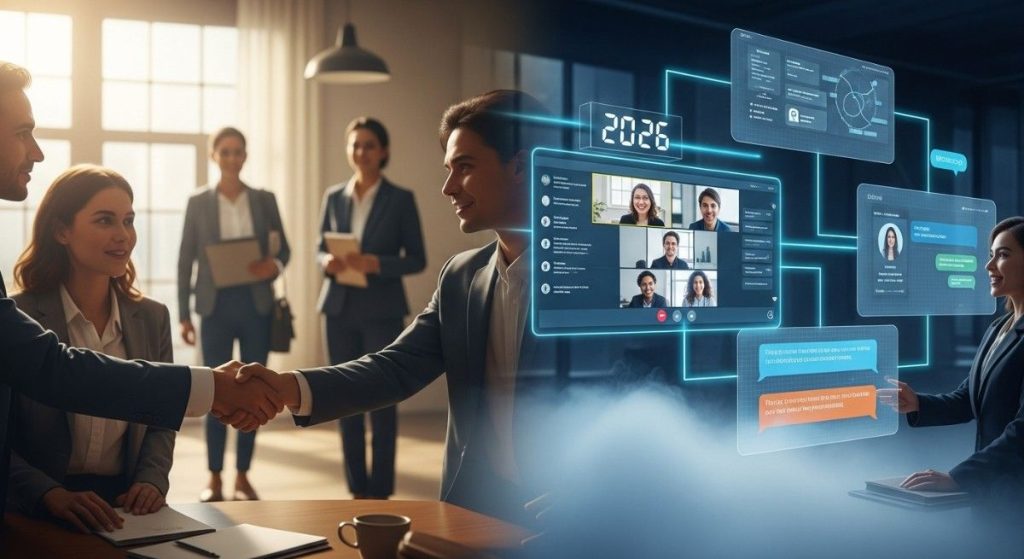
Though technology and work models keep changing, workplace etiquette remains surprisingly timeless. Strong workplace behavior is still defined by respect, empathy, professionalism, and accountability. It’s just how those values are expressed across digital and hybrid environments that’s changed.
The ability to respect time has become a big indicator of professionalism. In a world full of constant notifications and endless meetings, employees appreciate colleagues who communicate efficiently. Arriving late for a virtual meeting is now viewed like being late for an in-person meeting. Respect others’ schedules by keeping meetings short, preparing agendas in advance, and avoiding unnecessary calls.
A major workplace skill in 2026 will be emotional intelligence. There’s a wide range of generations, cultures, time zones, and communication styles at work. Emotional intelligence, conflict management, and communication skills often determine workplace success more than technical knowledge. When people forget the details of a project, they remember how you made them feel.
Digital awareness is also part of professional etiquette. Sending messages in all caps can feel aggressive, and giving vague one-word replies can seem dismissive. Over time, little things make a big difference. Respectful employees know what’s behind digital communication and adapt accordingly.
Here is a quick comparison of traditional etiquette versus modern etiquette expectations:
| Traditional Workplace Etiquette | Workplace Etiquette in 2026 |
|---|---|
| Dress professionally | Maintain professional online presence |
| Arrive on time | Respect virtual schedules and response times |
| Handshake and eye contact | Video call engagement and active listening |
| Office politeness | Digital communication professionalism |
| Desk behavior | Online collaboration behavior |
The modern workplace rewards people who combine competence with courtesy. Being skilled is important, but being easy to work with has become equally valuable.
Remote Work Etiquette
Remote work offers freedom and flexibility, but it also presents unique etiquette challenges. Without physical interaction, communication can quickly become fragmented, misunderstood, or emotionally disconnected. That’s why remote etiquette in 2026 focuses on clarity, responsiveness, and intentional collaboration.
In remote environments, video meeting behavior is one of the biggest indicators of professionalism. It’s expected that employees show up prepared, test their microphones before meetings, and minimize background distractions. It’s easy to get frustrated by constant interruptions, loud keyboard sounds, or multitasking during meetings. Despite their camera being on, people notice when someone is mentally absent.
We’ve also evolved our camera etiquette. In some companies, cameras are encouraged for engagement, while in others, privacy is respected and bandwidth is limited. It’s all about consistency and context. One person always remaining invisible while everyone else is visible can unintentionally create distance. It may also contribute to digital exhaustion if you force cameras on every meeting.
It’s just as important to have good messaging etiquette as you do in meetings. Platforms like Slack, Microsoft Teams, and workplace chat apps are becoming more and more popular. Messages may seem harmless, but tone can be misinterpreted. You should greet coworkers politely, avoid passive-aggressive language, and respect status indicators like “busy” and “away.”
Healthy boundary management is also important for remote employees. Having no clear work hours is one of the biggest problems with flexible work cultures. Fully remote workers still struggle with burnout, according to studies. Team members who respond to messages late at night may unintentionally create unhealthy expectations.
Psychological safety comes from strong remote etiquette. Even when people are separated by cities or continents, communication remains respectful, clear, and reliable.
Camera and Audio Expectations
Today, video calls are the conference rooms of business. Therefore, camera and audio etiquette affect how others perceive professionalism and engagement. There’s a lot more to learning about communication habits from virtual meetings than from physical meetings.
Maintaining clear audio quality is one of the simplest rules. Teams get frustrated faster by bad sound than bad visuals. Show consideration for others by using headphones, muting when not speaking, and avoiding noisy environments. There’s nothing worse than hearing barking dogs, loud TV sounds, or keyboard smashing during a meeting.
It’s all about the visuals. There’s no need for perfectly polished backgrounds, but a tidy and distraction-free environment shows professionalism. In 2026, virtual backgrounds are popular, especially for privacy. Changing novelty backgrounds during serious meetings can seem immature or distracting.
Eye contact has also evolved digitally. Occasionally, looking into the camera makes you feel more engaged. Staring at another monitor all the time can make your coworkers feel ignored. People don’t realize how much these subtle behaviors shape virtual trust.
Remote work culture also leads to meeting fatigue. It’s getting more and more popular for employees to have shorter meetings with clear objectives. The frustration with inefficient digital collaboration tools and endless video calls is growing in 2026. Etiquette sometimes means deciding a meeting isn’t necessary.
Hybrid Workplace Etiquette
Hybrid workplaces create a unique balance between work and life. Maintaining equality between employees who work in offices and those who work remotely is one of the defining etiquette challenges of 2026.
The biggest issue is avoiding “proximity bias.” This happens when managers favor employees they see more often. Some remote workers feel overlooked for opportunities, while office workers assume they have more work. Leaders need to create fairness in communication, recognition, and decision-making with hybrid etiquette.
Meetings are often where hybrid inequality shows up. Try sitting in a conference room with a bunch of people while remote employees can’t hear each other. That setup automatically creates exclusion. Now, smart companies design “remote-first” meetings where everyone participates equally.
Transparency is another important hybrid etiquette rule. Hallway chats or side chats shouldn’t be the only way to make decisions. When information is documented and shared openly, teams work better. Building trust and preventing resentment starts with keeping remote colleagues informed.
Flexibility and empathy are also important in hybrid workplaces. While office workers deal with commuting stress and distractions, remote workers might feel isolated or have blurred work-life boundaries. In person connections are becoming more important for mentorship and career growth for younger employees, especially Gen Z. Collaboration is stronger when you understand those different needs.
Inclusion is at the heart of hybrid etiquette. No matter where they work, the best workplaces make everyone feel visible, respected, and connected.
Office Etiquette in 2026
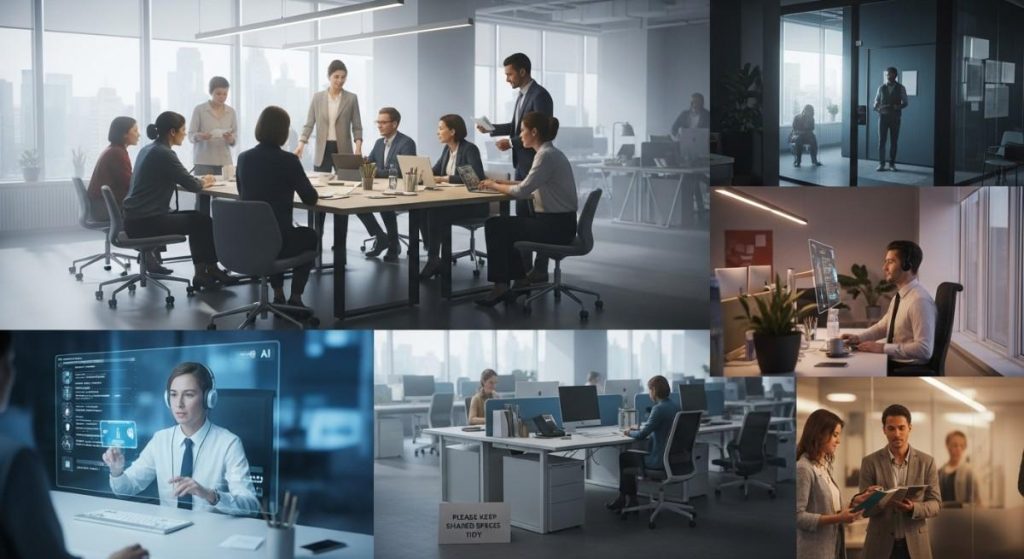
Traditional office spaces are still important in 2026, despite remote work. Office days are great for collaboration, brainstorming, and building relationships. In the post-pandemic era, office etiquette has changed dramatically.
Now that employees spend fewer days on site, open office behavior is under scrutiny. People expect those days to be productive and meaningful, not chaotic. The constant interruptions, loud conversations, and constant socializing can quickly irritate coworkers.
There’s also been a change in personal space awareness. Over the last few years, employees have become more conscious of hygiene, cleanliness, and boundaries. Today, borrowing equipment without asking, leaving shared spaces messy, and ignoring workplace cleanliness standards are seen as negative behaviors.
Another major issue is technology etiquette in the office. Multitasking across apps, carrying multiple devices, and using AI tools during meetings are common among employees. It’s disrespectful to keep checking your phone during a conversation. Digital distractions can indicate emotional absence even when someone is physically present.
AI assistants are also becoming more common in the workplace. Now, employees use AI for scheduling, writing, taking notes, and brainstorming. Transparency, responsible use, and avoiding overdependence are all part of an ethical AI etiquette. If discovered, passing off AI-generated work as human work can damage your credibility.
In 2026, office culture is less about rigid formality and more about mindful collaboration. In shared environments, the best employees know when to socialize and when to focus.
Communication Etiquette Across Generations
There are often four generations working together in modern workplaces. Everyone approaches communication differently, so if etiquette isn’t followed, you might create misunderstandings.
Workers in Gen Z prefer fast, direct communication through messaging platforms, while older employees may prefer detailed emails. The two styles aren’t inherently wrong. When people think their preference is the only professional approach, problems arise.
Authenticity and transparency are also important to young workers. Most people expect managers to communicate openly and casually instead of maintaining rigid corporate formality. If expectations are unclear, older generations might take that casual tone as disrespect.
Gen Z employees are returning to office environments for social connections and mentorship opportunities, according to recent reports. It challenges the stereotype that younger workers only want remote jobs. Additionally, it discusses how etiquette and workplace culture affect emotional well-being.
Cross-generational etiquette requires adaptability. Strong communicators adjust their tone depending on the context. Instead of mocking different communication habits, they focus on clarity and respect.
Successful teams don’t have everyone communicating the same way. Those are the ones where people respect and understand each other’s differences.
Social Media and Professional Reputation
Workplace etiquette goes beyond Zoom calls and office walls in 2026. Professional reputation, hiring opportunities, and workplace relationships can all be influenced by social media.
Online presence is increasingly important to employers when they’re considering promotions or new hires. It doesn’t mean employees have to become robotic online personalities, but it does mean professionalism matters. Credibility can be damaged by offensive comments, aggressive arguments, or disrespectful posts.
LinkedIn has become really important for professional etiquette. We expect our employees to network respectfully, stay away from spammy self-promotion, and participate thoughtfully in industry discussions. You don’t want to come across as insincere if you brand yourself too aggressively.
There’s also a growing problem with oversharing at work. Sometimes employees post internal company stuff, screenshots, or frustrations online without thinking about the consequences. When coworkers or managers realize there’s a problem, even vague complaints can cause tension.
The good thing about social media is that it can help strengthen your professional identity at the same time. Credibility and career opportunities can be built by sharing insights, celebrating team accomplishments, and participating in industry discussions.
Nowadays, professional etiquette includes understanding that digital footprints last forever. Long-term professional perception may be influenced by what seems like a temporary emotional reaction online.
AI and Digital Workplace Etiquette
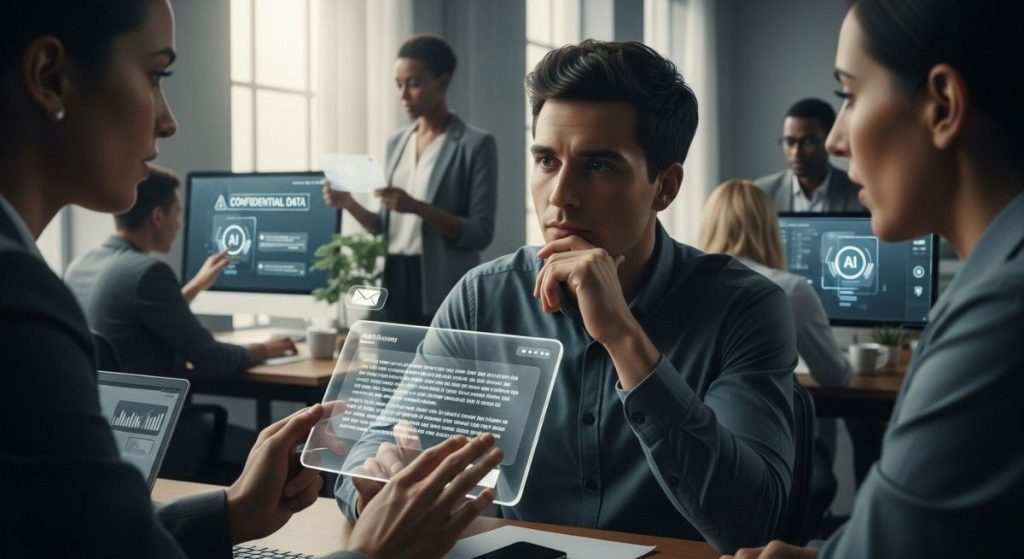
In the workplace, artificial intelligence is becoming more and more integrated. Workers use AI for drafting emails, generating reports, analyzing data, summarizing meetings, and even brainstorming. AI adoption is booming, so etiquette around its use becomes crucial.
Transparency is one of the biggest concerns. Trust can be eroded if employees rely heavily on AI-generated work without reviewing or disclosing it. There’s no question that AI tools are useful, but they still require human judgment. If you copy AI-generated responses without fact-checking, you might spread misinformation.
Authenticity is another issue. Genuine human communication is more and more valued at work. Relationships can feel artificial if you send too robotic or generic messages. While keeping their voice and emotional intelligence, smart professionals use AI to boost productivity.
Privacy matters too. Employees shouldn’t enter confidential company information into unsecured AI systems. In order to use AI ethically, sensitive data has to be protected and organizational policies have to be followed.
AI adoption is accelerating rapidly in hybrid workplaces, especially among younger employees and tech-savvy companies. Workplace relationships need to be strengthened, not weakened, by technology.
In 2026, AI etiquette is less about rejecting automation and more about using it responsibly, transparently, and thoughtfully.
Leadership Etiquette for Managers
Managers set the tone for workplace culture. Team morale, motivation, and psychological safety are shaped by their behavior. Due to communication gaps, leadership etiquette becomes even more obvious in hybrid and remote environments.
Today, responsiveness is one of the most important leadership skills. Employees appreciate managers who communicate clearly, provide feedback consistently, and don’t disappear at critical moments. It’s easy to get confused and anxious when leadership is silent.
Management has also become more empathic. Whether an employee works remotely, on-site, or hybrid, they face different challenges. Loyalty and trust are stronger when leaders acknowledge those realities.
Leadership etiquette mistake number one is micromanagement. Excessive monitoring causes employees to feel distrusted, according to studies. Managers who focus on results rather than constant surveillance are strong.
It’s important to follow recognition etiquette too. Appreciating contributions publicly, including remote employees in praise, and giving credit fairly can boost morale. Managers who make their employees feel valued stick in their minds.
Professionalism feels natural instead of forced when you have great leadership etiquette.
Workplace Etiquette Mistakes to Avoid
It’s surprising how quickly some workplace mistakes hurt your reputation. Poor digital tone is one of the most common. Text-based messages can unintentionally sound rude if they’re short and abrupt.
Ignoring boundaries is another big mistake. Burnout and frustration come from messaging coworkers outside of work hours, requiring instant replies, and scheduling unnecessary meetings. Now it’s considered a core professional skill to respect availability.
Another growing problem is multitasking during meetings. Employees often think nobody notices when they check emails or browse other tabs during calls. Disengagement is evident by late responses and lack of participation.
Workplace chats or meetings can also be uncomfortable if you overshare your frustrations. It’s great to be transparent, but professionalism still needs emotional balance and discretion.
Failure to adapt is perhaps the biggest etiquette mistake. It’s getting harder and harder to keep up with workplace expectations. People who resist collaboration tools, dismiss remote colleagues, or mock younger communication styles have a hard time at work.
Ultimately, professional etiquette is about awareness, about understanding how your behavior affects others.
Building a Positive Professional Reputation
Small, consistent behaviors build a strong reputation, not dramatic achievements. Communication habits, reliability, emotional intelligence, and collaboration style will all affect reputation in 2026.
A thoughtful employee, one who respects others’ time, and one who communicates clearly earns trust. Reliability remains a top workplace quality. It’s nice to have coworkers you can depend on without being nagged.
The importance of kindness is underestimated by many professionals. The modern workplace is stressful, fast-paced, and digitally overwhelming. Employees who stay calm, respectful, and supportive stand out.
The importance of visibility has changed too. To stay connected in hybrid environments, employees need intentional communication. It doesn’t mean you have to promote yourself all the time. Participating actively, contributing meaningfully, and sharing progress is what it means.
Nowadays, professional reputations are like digital echos. Every interaction-emails, meetings, chats, comments, and collaborations-shapes your reputation. It’s important for Echo to reflect professionalism, respect, and trustworthiness.
Conclusion
Good manners in the office aren’t enough for workplace etiquette in 2026. Remote collaboration, hybrid flexibility, digital communication, AI integration, and evolving social expectations are all part of the picture.
Modern professionals need to balance efficiency with empathy, technology with authenticity, and flexibility with accountability. Organizations value employees who master these skills because they’re easier to trust, easier to collaborate with, and more reliable.
One thing remains constant in the workplace: people remember how you communicate, treat others, and make teamwork feel. The workplace may change with technology, but respect will never go out of style.
FAQs
1. What is workplace etiquette in 2026?
In 2026, workplace etiquette refers to professional behavior across virtual, hybrid, and office environments. The skills include communication style, meeting behavior, digital professionalism, emotional intelligence, and respectful collaboration.
2. Why is hybrid work etiquette a priority?
Using hybrid etiquette ensures fairness and inclusion between remote and office workers. This helps teams communicate more effectively and prevents misunderstandings.
3. What are common remote work etiquette mistakes?
Typical mistakes include poor communication tone, multitasking during meetings, ignoring boundaries, sending late-night messages, and not participating actively in virtual collaborations.
4. How does AI affect workplace etiquette?
Using AI in the workplace changes workplace etiquette by introducing ethical usage, privacy, and maintaining authentic human communication.
5. What soft skills matter most in modern workplaces?
In 2026, emotional intelligence, communication, adaptability, empathy, active listening, collaboration, and time management will be important soft skills.