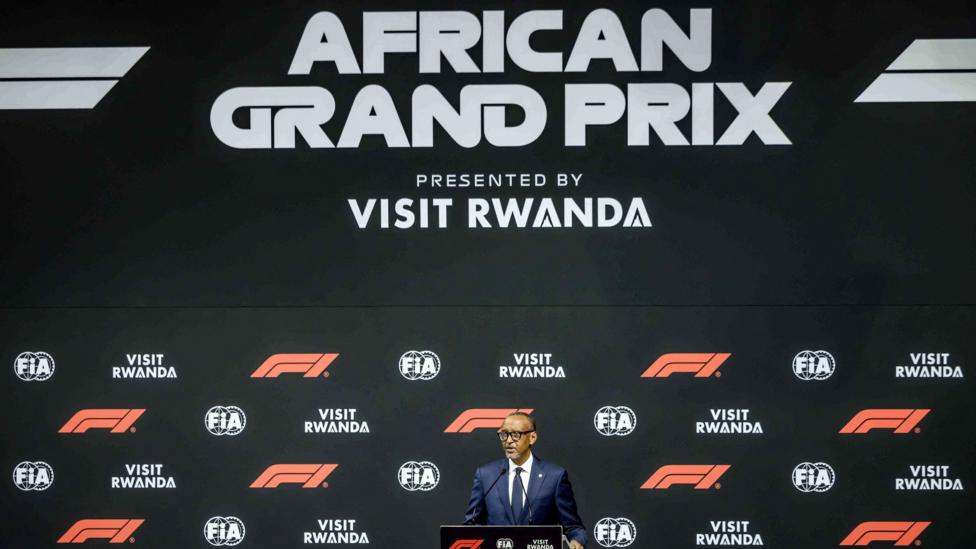
Formula 1 is set to return to the African continent for the first time in nearly four decades. President Stefano Domenicali officially announced a 10-year agreement on Tuesday in Kigali, describing the move as a landmark achievement for the sport. This deal concludes nearly a decade of efforts by Liberty Media, which has aimed to host a race in Africa since acquiring the sport in early 2017. Formula 1 president Stefano Domenicali hailed the new deal to take the sport back to Africa – ending an absence of nearly 40 years – as a “landmark” achievement.
Rwanda secured the hosting rights by presenting a comprehensive and unified plan that addressed the financial and logistical requirements that had previously hindered other nations. While countries like Morocco struggled to secure necessary funding, South Africa faced challenges due to the presence of multiple, competing project proposals spread across three separate locations, including two in Cape Town. Formula 1 deemed these fragmented bids too complex to manage given the high demand for limited slots on an already congested calendar. But the sport’s bosses already recognised the importance of the project.
The new racing facility is currently in the development phase in Bugesera, situated approximately 25 miles south of Kigali. This circuit is being integrated into a broader infrastructure project that coincides with the construction of a new international airport. The development plan encompasses various sectors, including residential zones, entertainment venues, hotels, spas, sports science facilities, and an innovation hub.
Although the site remains a greenfield plot today, developers and industry insiders maintain that the project is on track for completion by 2030, when the African Grand Prix is slated to debut. The initiative has received strong backing from both the Rwandan government and the FIA, with President Paul Kagame and FIA president Mohammed Ben Sulayem joining Domenicali for the announcement.
Domenicali praised Rwanda as a global success story, citing the nation’s resilience and its ability to transform past challenges into a future of opportunity. He emphasized that the country’s vision aligns with the legacy of Formula 1, describing the nation as a destination for international investment and innovation.
Despite the excitement surrounding the sport’s expansion, the decision to hold the race in Rwanda may invite controversy, as the country has previously faced accusations of sportswashing. Nevertheless, the move represents a significant strategic milestone for Formula 1 leadership, fulfilling a long-standing ambition supported by figures such as Lewis Hamilton, who has frequently advocated for the sport to expand its footprint in Africa.