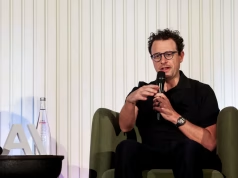



Zimbabwean author Simbarashe Kundizeza has firmly rejected allegations that his short story, The Blue Fighter, was produced using generative artificial intelligence. The piece recently secured the prestigious Caine Prize for African writers, with the official announcement made on October 6. “I look forward to continuing to work with the Caine prize team, and to celebrating this recognition with the people who helped bring this story into the world.
The controversy emerged five days later when journalist Vauhini Vara, writing for The Atlantic, claimed that software called Pangram had identified the story as being almost entirely artificially generated. The only exception identified by the detection tool was an epigraph sourced from an unpublished poem by South African writer Vangile Gantsho.
In her article, titled “Yet Another Literary prize winner Seems to Be AI,” Vara noted that the prose contained linguistic patterns often seen in machine-generated text, such as specific sentence structures, excessive metaphors, and platitudinous aphorisms. She further characterized the work as “maudlin and full of tired tropes,” noting that the author’s style seemed significantly different from his 2021 writing.
Kundizeza issued a direct rebuttal on X, stating, “For the avoidance of doubt, I wrote ‘The Blue Fighter’. I did not use generative AI to write it. It is entirely my own work.” He further countered the stylistic critique, noting that suggesting an author cannot evolve their craft or experiment with new genres over several years displays a fundamental misunderstanding of the writing process. He expressed an intention to continue working with the Caine Prize organizers and to focus on his future writing.
The Caine Prize committee has confirmed it is reviewing the allegations. In an official statement, the organization emphasized its duty to investigate such claims, prioritizing a “human-centred approach” to ensure support for the writers involved. Ensuring that writers are supported and cared for during the process.”, we aim to do this by taking a human-centred approach.
Ellah Wakatama, the prize’s chair, criticized the reliance on AI detection software as a final authority. Appearing on the BBC’s Front Row, Wakatama argued against using such tools to label a winner a “cheater” without proper investigation. She expressed concern that the work of Black writers is being used as a testing ground for technology that remains “rough and ready.” Ellah Wakatama told the BBC’s Front Row radio show: “As someone who chairs a prize, I’m obviously not against AI, but what I am against is it being used as a final arbiter in this case, regardless of what the Atlantic says, because they have already proclaimed our winner to be a cheater without investigating it properly.
While Vara acknowledged to the BBC that independent research on the reliability of AI detectors is limited, she stood by the analysis, pointing to Pangram’s own internal research regarding accuracy and false positives. The debate reflects a growing scrutiny within the literary world, following similar accusations involving other prize-winning works this year. In July, critics on social media challenged the legitimacy of Jamir Nazir’s Commonwealth Foundation short story prize win, while in September, Canadian-Haitian author Thélyson Orélien saw his novel removed from the Goncourt longlist after anonymous claims that it was AI-authored. Including for non-native English speakers writing in English, as well as a peer-reviewed journal article that found Pangram had “strong accuracy” when assessing mock academic papers created fully, partly or with no AI, vara pointed to Pangram’s own research that found that false positives were rare.