


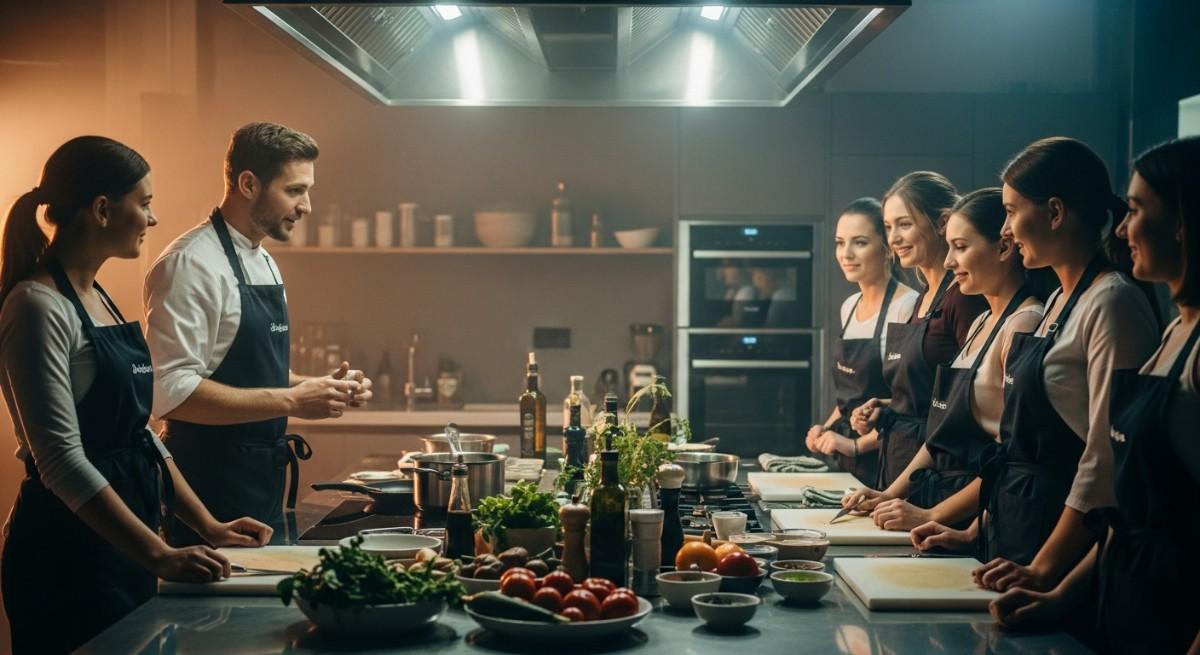
Why Cooking Classes Are More Popular Than Ever
The Rise of Experiential Learning
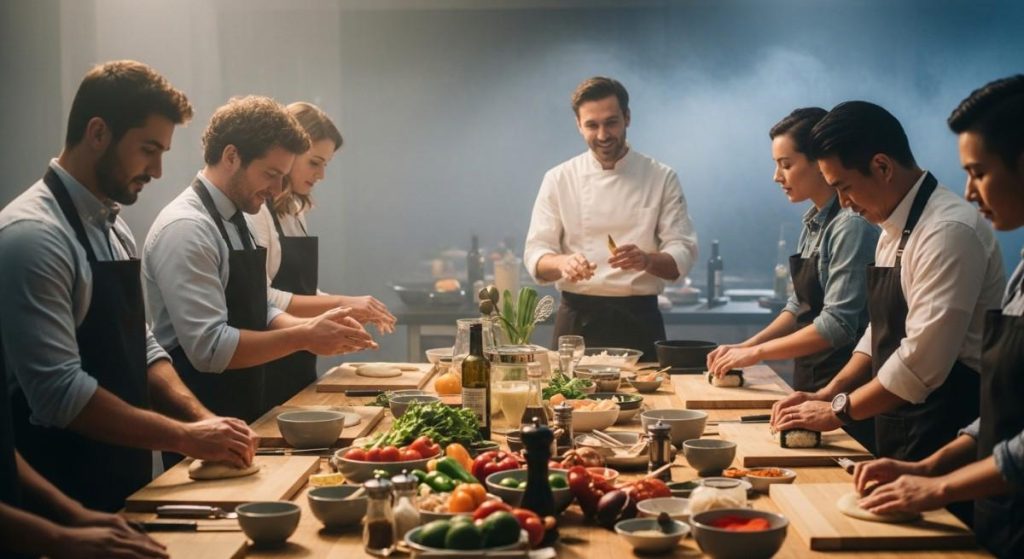
Recipes aren’t enough anymore — people want to live them. Searches for cooking classes near me have exploded in recent years because of that. Today, cooking is a lifestyle experience, not just a household chore. People want to learn about ingredients, explore global cuisines, and enjoy cooking. Like learning music, you can watch tutorials all day, but touching the piano teaches you faster.
The hands-on classes create something digital learning often misses: confidence. A chef shaping sushi rice, kneading dough, or balancing Thai spices in front of you creates a different kind of understanding. People learn faster and remember longer when they get real-time correction. Reddit users discussing whether cooking classes are worth it say the biggest value comes from doing, not just watching.
This shift is also supported by travel trends. Cooking and baking classes are some of the most popular travel experiences for 2026 because travelers want authentic, local food experiences instead of standard sightseeing. There’s no passport without food.
Health, Wellness, and Home Cooking Trends
Local cooking lessons are also great for your health. Ordering fast food is easy, but it doesn’t usually support long-term wellness. Practical skills like meal prep, portion control, healthier substitutions, and ingredient awareness are taught in cooking classes. Long-term, that knowledge can save you money and health.
Cooking education is even being used to combat nutrition problems across the country. A healthy eating cooking class in Beaumont, Texas, tackles obesity and food deserts while teaching residents budget-friendly meals. There’s a lot more to cooking education than gourmet meals—it can literally change lives.
Health cooking classes focusing on plant-based meals, Mediterranean food, brain health recipes, and family nutrition are on the rise. Busy professionals, parents, and retirees who want to improve their daily habits will love these classes. Living sustainably becomes more important than perfection when it comes to cooking.
Types of Cooking Classes Available Near You
Beginner Cooking Classes
Beginner cooking classes are perfect if your current specialty is instant noodles. Students learn knife skills, basic sauces, simple proteins, rice preparation, vegetables, and kitchen confidence. There’s no judgment, no pressure, just practical learning.
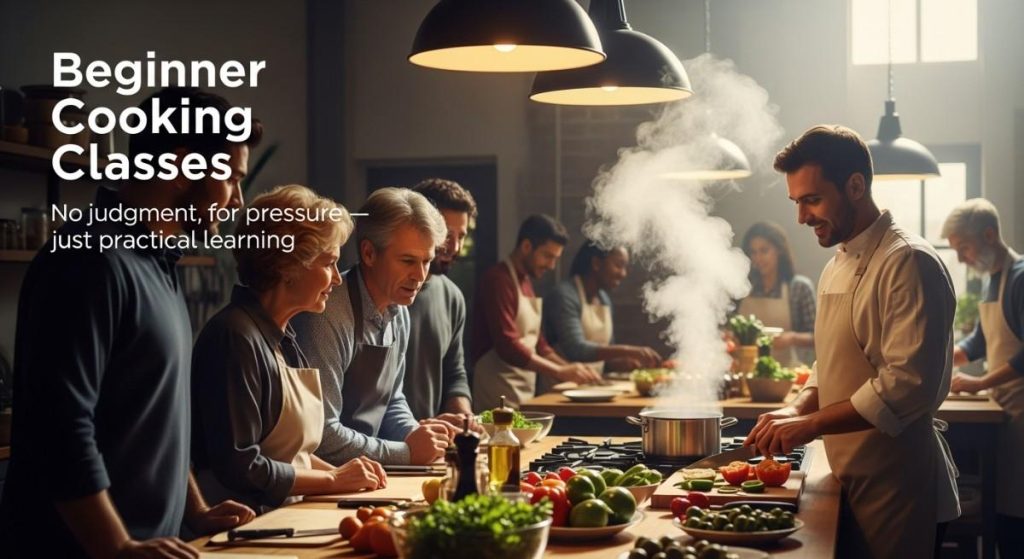
Most beginners find that the hardest part of cooking is not the recipes, but the technique. What causes chicken to dry out? Why does rice get mushy? What makes bread behave like a science experiment? Recipe blogs skip over those questions in beginner classes. Instead of memorizing steps, you understand why they’re important.
Students, newlyweds, and professionals living alone will benefit from these classes. It’s fun to cook with them. Taking lessons saves time and mistakes, just like learning to drive.
Baking and Pastry Workshops
Precision matters when it comes to baking. Baking can punish creativity with flat cakes and broken cookies, unlike cooking, where “a little extra” can work. Baking classes are still one of the most popular specialty courses.
Bakery workshops offer structure and repeatable techniques for making everything from artisan bread to croissants. Reddit users specifically recommend baking classes over general cooking classes since measurement, temperature, and timing are tricky.
These classes are perfect for people who want to start a small home bakery or just make better desserts. And the best part? You usually leave with knowledge and dessert, which is the best homework.
Couples and Date Night Classes
Cooking classes aren’t just educational anymore—they’re social too. Date-night classes are one of the fastest-growing segments, with big increases in bookings in recent years. What’s the point? Making pasta together is more fun than sitting through another dinner reservation.
Classes usually include wine pairings, romantic menus, and collaborative dishes like sushi, homemade pasta, pizza, or desserts. With better rewards, the kitchen becomes a team-building exercise.
Even couples who say they can’t cook enjoy these sessions because the goal isn’t perfection, it’s sharing. When you’re making tiramisu, it’s hard to stay stressed.
Kids and Family Cooking Sessions
Cooking classes are becoming popular because parents want their kids to learn more than just schoolbooks and screens. Having fun helps kids learn independence, safety, nutrition, and creativity.
Family sessions usually include pizza-making, cupcake decorating, pasta workshops, and holiday-themed cooking. Kids feel proud creating something real, and parents get meaningful time together. Honestly, a kid who learns how to make breakfast might become every parent’s best friend.
Picky eaters also benefit from these classes. It’s surprising how willing kids are to eat vegetables they helped make.
How to Search for the Best Cooking Classes Near Me
Using Google Maps and Local Search
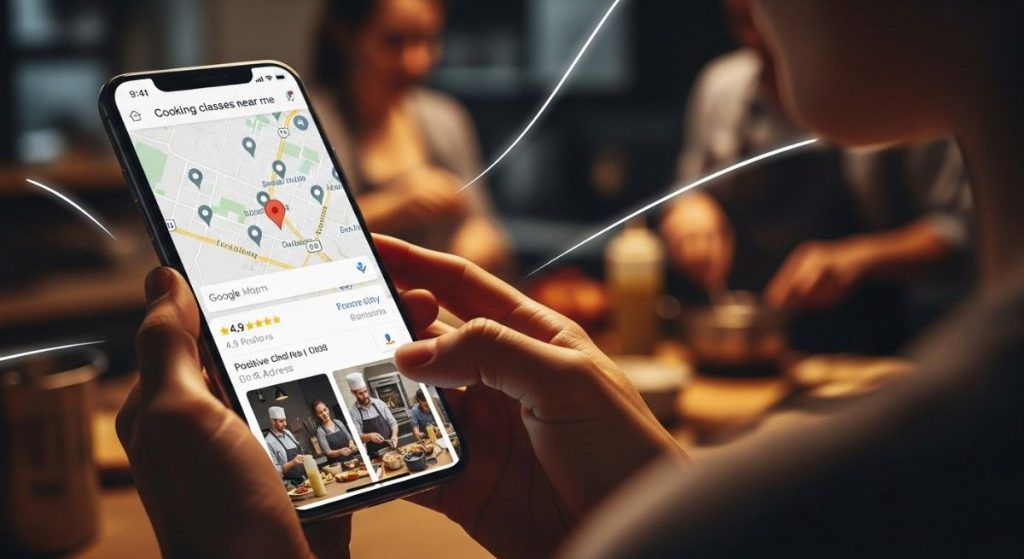
If you’re looking for cooking classes near me, Google Maps is usually the best place to start.
Studies show that 72% of students choose cooking classes based on Google Maps visibility and local search results.
Reviews, location, photos, and updated business profiles are really important.
Search terms like:
- cooking classes near me
- baking classes near me
- couples cooking classes near me
- affordable cooking lessons nearby
- weekend cooking workshops near me
…can reveal local gems you might otherwise miss.
Businesses showing up in Google’s top local results get a lot more traffic and calls than their lower-ranked competitors.
It’s usually a sign of professionalism when a class has solid reviews, updated photos, and active responses.
Checking Reviews and Student Feedback
Reviews tell stories marketing pages can’t. Read what students actually say instead of star ratings. They felt rushed, didn’t they? Did the class have a lot of hands-on time or were there mostly demonstrations? Were they able to take photos on Instagram or did they leave with actual skills?
There’s an excellent tip from a Reddit traveler: check out student photos too. Have you ever wondered if people really cook or if they’re mostly watching? Checking can save you from paying premium prices for what’s really just dinner theater.
See if you can find any repeating patterns. It’s a big green light if multiple people mention great instructors, clean kitchens, and practical takeaways.
What Cooking Classes Usually Cost
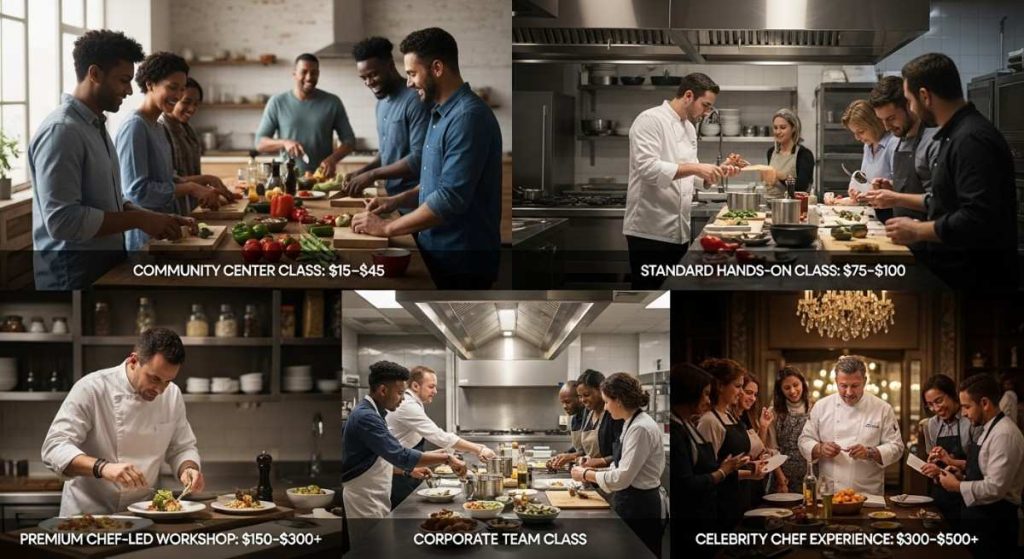
| Class Type | Average Price Range |
|---|---|
| Community Center Class | $15–$45 |
| Standard Hands-On Class | $75–$100 |
| Premium Chef-Led Workshop | $150–$300+ |
| Celebrity Chef Experience | $300–$500+ |
| Corporate Team Class | $75–$150 per person |
Budget-Friendly Community Options
There aren’t always luxury prices for cooking classes. Cooking classes are often free or affordable at libraries, community colleges, and YMCAs. Non-credit college classes may be even cheaper than basic community classes.
These are perfect for beginners who want skills without breaking the bank. There won’t always be a celebrity chef, but you’ll get practical teaching and a friendly environment.
There are also affordable classes that focus on everyday cooking, like meal prep, healthy lunches, and budget-friendly dinners, which many people need more than restaurant-style meals.
Premium Chef-Led Experiences
Premium cooking classes, on the other hand, are like stepping into your own culinary paradise. Imagine polished copper cookware, professional ovens, chefs fixing your knife angle, and restaurant-quality ingredients on hand. So that’s what chef-led workshops are all about. Most classes cost $150 to $300, and celebrity chef sessions can cost up to $500.
For example, Skillette in Georgetown is a Julia Child-inspired cooking school that starts classes around $250 and focuses on home cooks looking to up their game. It’s less about recipes and more about mastering techniques like pastry work, sauce making, regional cuisine, and presentation. It makes sense for passionate food lovers, aspiring chefs, content creators, and anyone who sees cooking as more than a hobby to learn how to make restaurant-level risotto without pans. Yes, it’s an investment, but sometimes the best education comes with a price.
Online vs In-Person Cooking Classes
Which One Fits Your Lifestyle
Many people wonder: should I learn in person or online? Your learning style, goals, and schedule all affect the answer. It’s super convenient to take cooking classes online if you’re looking for flexibility. It’s possible to learn sourdough at midnight in pajamas, which sounds like luxury to me.
According to industry reports, the global online cooking class market will reach $2.7 billion in 2026, with virtual classes taking up about 35%. That’s a lot. More people are choosing remote lessons because they save time, reduce travel, and are cheaper.
Busy professionals, parents, and people in smaller towns without strong culinary schools will love online classes. You can also find international chefs and niche cuisines there. How about learning authentic Japanese ramen from a Tokyo chef? That’s possible with virtual classes.
Comparing Learning Results
Even so, convenience doesn’t always beat real experience. In-person cooking classes usually give you better skill development because you get immediate feedback. You’ll know if your dough is too dry if your instructor sees it. They fix your knife grip right away if it’s unsafe. There’s a lot of power in that feedback loop.
Learning online is like learning to swim from YouTube – you get the theory, but the practice is totally different. In-person workshops are great for refining techniques after you start online. Mixing both is usually the best approach.
Flexibility and exploration are two great things about online classes. You’ll be more confident and precise if you take classes in person. When you put them together, you create a stronger learning path.
What to Look for Before Booking
Instructor Experience
There aren’t all cooking teachers the same, and the instructor matters more than the kitchen. You don’t have to be a great chef to be a great teacher. In order to teach, you have to be patient, clear, and able to simplify complicated techniques without making students feel lost.
Look for chefs with real culinary experience, restaurant experience, teaching credentials, or good student reviews. Some of the best teachers aren’t celebrity chefs, but passionate professionals who love helping others. Nervous beginners can be turned into confident ones with a warm instructor. Are you going to have a demonstration only or a hands-on class? Is the chef an expert in the cuisine you want to learn? Do you include recipes afterward? Flashy marketing doesn’t matter as much as these details.
It’s more valuable to have a chef who can explain why garlic burns faster than one who’s famous on TV.
Class Size and Kitchen Setup
Everything changes when you have a big class. An 8-person group feels different than a 30 person group. In smaller classes, you get more personal attention, more practice time, and less time standing around pretending to be busy.
Reddit user mentioned that small private classes are often more educational than large sessions with lots of tourists. Okay, that makes sense. There’s no point in paying for a class if you’re just going to sit in on it.
Don’t forget to look at the kitchen. Does each student cook individually, work in pairs, or just watch and clean? Can you tell if the ingredients are good? Details like these shape the experience more than fancy branding.
You should feel like you’re in a workshop instead of a waiting room when you’re in a class.
Cooking Classes for Career Growth
From Hobby to Professional Skills
It’s funny how cooking classes start as weekend fun and turn into something bigger. Maybe you’ll find out you’re good at pastry. You might become famous among friends for your biryani. You might start getting real orders for your home baking side hustle. It’s not uncommon for cooking classes to bridge the gap between passion and profession.
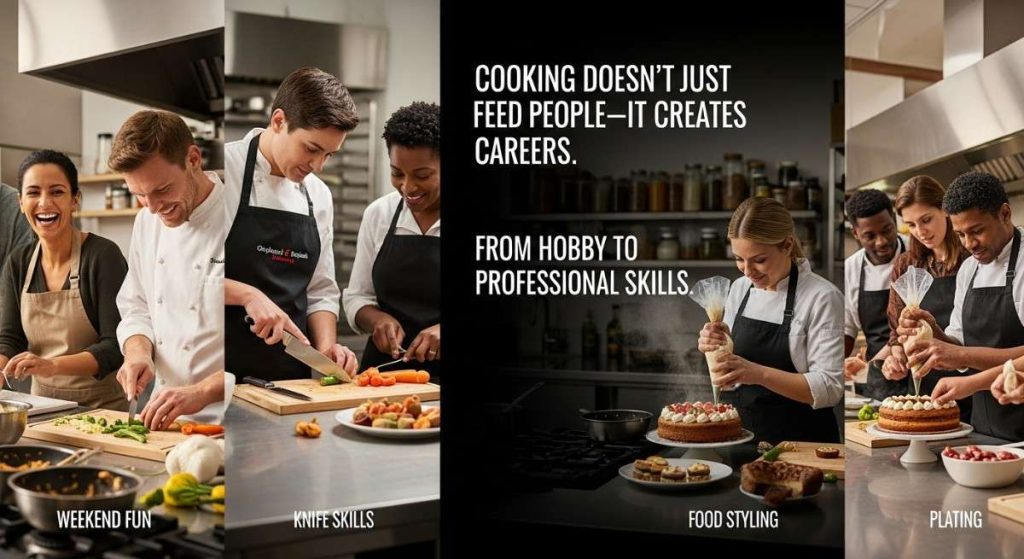
Structured cooking lessons help aspiring chefs build discipline before they go to culinary school. Skills like knife skills, sanitation, timing, plating, and ingredient knowledge are transferable. You can learn a lot from short-term professional workshops, even if you’re a restaurant owner or a café startup.
Classes like baking, food styling, artisan bread, cake decorating, chocolate work, and international cuisine can help your business grow. Before starting catering services or bakery brands, many home-based entrepreneurs start with these classes.
Corporate team-building classes are also growing fast, with companies using culinary workshops to improve communication and collaboration. Eighty-two percent of participating companies say the sessions improved their teamwork. Nothing teaches teamwork like trying not to burn the same pan.
It’s not just about feeding people—it’s about creating careers.
Conclusion
It’s more than finding a local kitchen when you’re searching for cooking classes near me. It’s about discovering confidence, creativity, community, and sometimes even a new direction in life. Whether you want to cook healthier meals, have better date nights, build family memories, or turn food into income, the right class can make a big difference. Sometimes it’s a small neighborhood workshop where someone finally teaches you how to make rice right. The premium chef studio is sometimes where you realize food can be art. Sometimes it’s just a simple baking class that leads to your business.
It’s like a shortcut through years of trial and error. The best way to learn is from experience, both someone else’s and your own. That’s much better.
The next time you type “cooking classes near me,” don’t think of it as a search. It’s the first step to a better kitchen story.
Here’s a FAQ
1. How much do cooking classes near me cost?
Classes at community centers start at $15-$45, while standard hands-on classes cost $75-100. You can get a chef-led workshop for $150-$300+, depending on where you live and what you do.
2. Are cooking classes worth it if I can learn from YouTube?
There are real-time corrections, hands-on practice, and direct instructor feedback in cooking classes. Recipes are taught through videos, but technique and confidence are taught through live classes.
3. What is the right cooking class for beginners?
A beginner cooking class focusing on knife skills, sauces, meal prep, and kitchen basics is a good place to start. Before moving into specialty classes, they build strong foundations.
4. Are online cooking classes as good as in-person ones?
Although online classes are great for flexibility and learning niche cuisines, in-person classes usually provide better technique improvement since instructors can guide and correct you right away.
5. Can cooking classes help me start a food business?
Yes, absolutely. Courses in baking, pastry, food styling, and professional cooking help people start home bakeries, catering services, and small restaurants.