


Introduction to Agriculture
The foundation of human civilization is agriculture. Almost every meal we eat, every grain of rice we eat, every vegetable we eat, and every fruit we eat starts with agriculture. Agriculture remains the most important sector for human survival despite the rise of industries, technology, and digital economies. A society without farming would collapse within weeks because food supply chains are entirely dependent on agriculture.
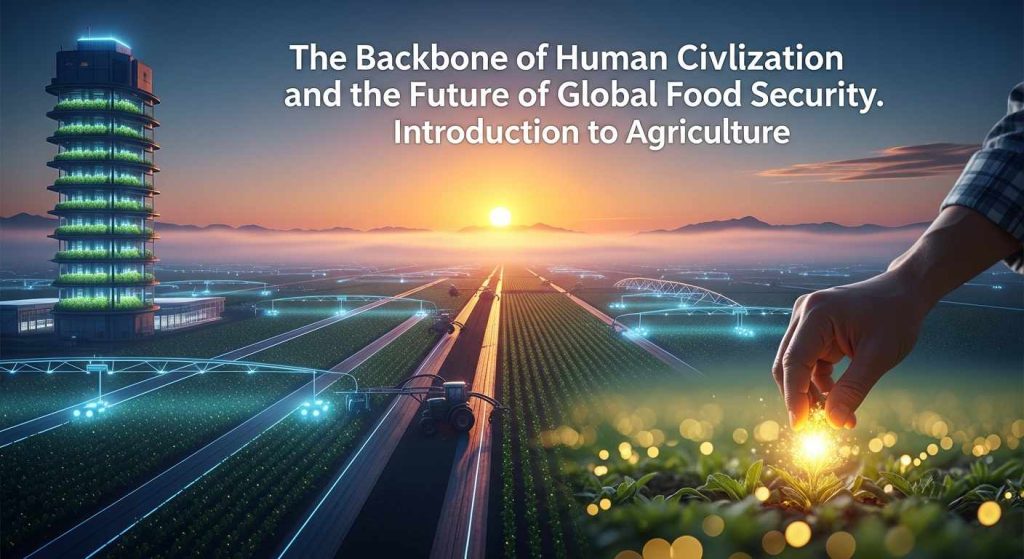
Agriculture isn’t just about food anymore. It’s a massive economic engine. The OECD and FAO predict that global agriculture production will grow significantly over the next decade because of population growth, urbanization, and increasing demand for food.
Today’s agriculture is way more advanced than it used to be. Biotechnology, smart irrigation, climate forecasting, and AI-based crop monitoring are all part of it. The basic goal remains the same: feeding the world.
Why Agriculture Still Matters in the Modern World
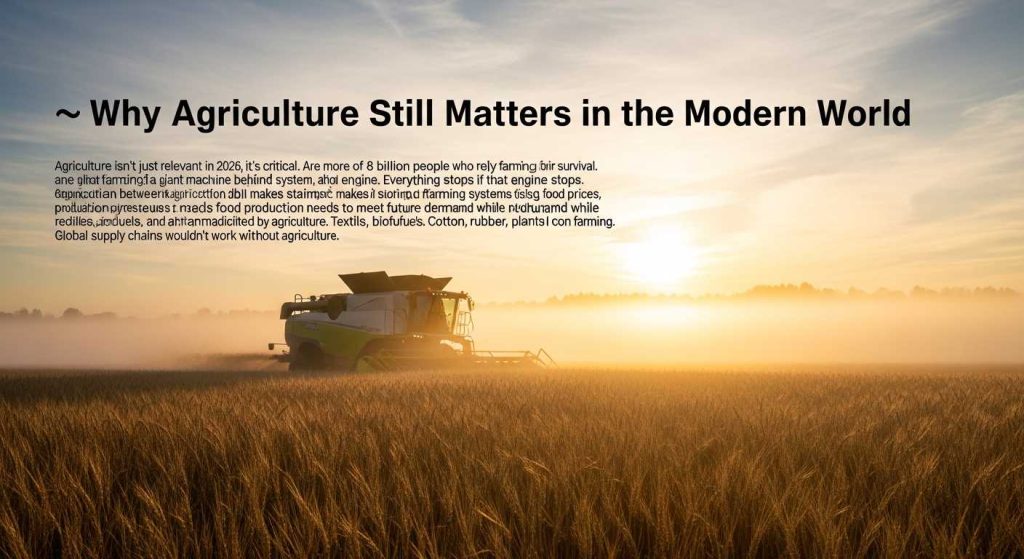
Agriculture isn’t just relevant in 2026; it’s critical. There are more than 8 billion people who rely on farming for their survival. There’s a giant machine behind the global food system, and agriculture is its engine. Everything stops if that engine stops.
The connection between agriculture and global stability makes it so important today. There’s a lot of pressure on farming systems because of rising food prices, climate change, and population growth. Global food production needs to increase steadily to meet future demand while reducing environmental impact.
Textiles, biofuels, and pharmaceuticals are also supported by agriculture. Cotton, rubber, and medicinal plants all come from farming. Global supply chains wouldn’t work without agriculture.
Agriculture and Global Survival
There’s a direct link between agriculture and food security. Food security means having enough safe and nutritious food all the time. Increasing agricultural productivity is key to preventing hunger in low-income regions, according to FAO reports.
Modern studies show that agricultural output will rise by 14% by 2034 because of improved yields and technology adoption.
The challenge isn’t just production; it’s distribution. Hunger still affects millions because of bad logistics, inequality, and waste. The purpose of agriculture isn’t just to grow food, but also to make sure everyone has access to it.
History and Evolution of Agriculture
Agriculture started nearly 10,000 years ago when humans switched from hunting to farming. Planting seeds and domesticating animals created stable food sources for early humans.
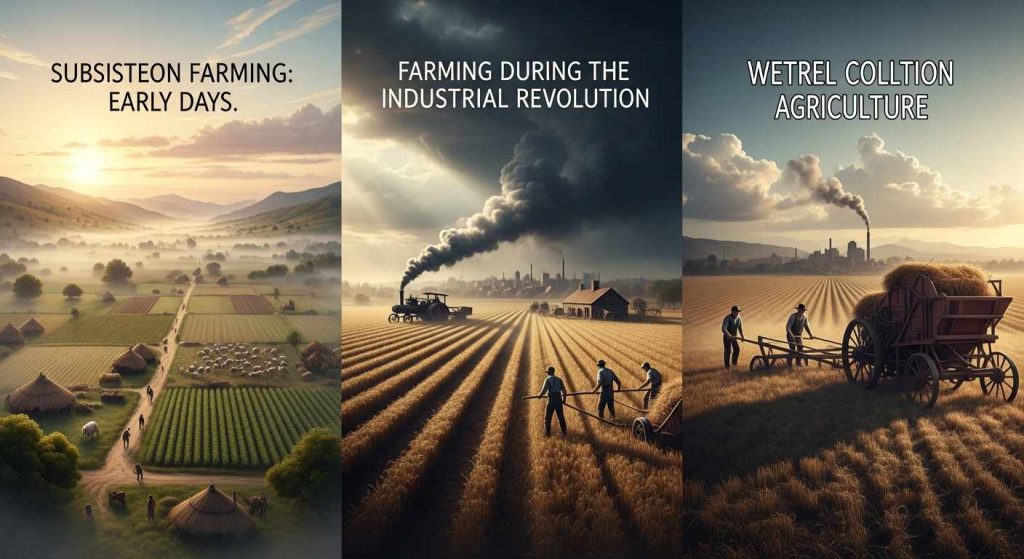
There are three major phases in the evolution of agriculture:
- Subsistence farming in the early days
- Farming during the Industrial Revolution
- Agriculture in the modern age
Every phase changed society. Cities grew, civilizations formed, and economies expanded because of agriculture.
Early Farming Civilization
Agriculture started in Mesopotamia, the Indus Valley, and China. Simple tools were used to grow wheat, rice, and barley. The farming process was labor-intensive and weather-dependent.
There were a lot of communities around fertile lands and rivers. The first stable societies were created by agriculture, and eventually trade, governance, and education followed.
Human civilization wouldn’t exist if it weren’t for early agriculture.
The Green Revolution
Agriculture was drastically changed by the Green Revolution in the mid-20th century. Food production worldwide has increased thanks to high-yield crop varieties, chemical fertilizers, and irrigation systems.
There was a huge increase in wheat and rice production in countries like India and Mexico. In many developing countries, this revolution helped prevent famine.
Modern sustainable farming is now trying to solve issues like soil degradation and chemical dependency.
Types of Agriculture
Agriculture is not a single system. Depending on geography, technology, and purpose, it takes different forms.
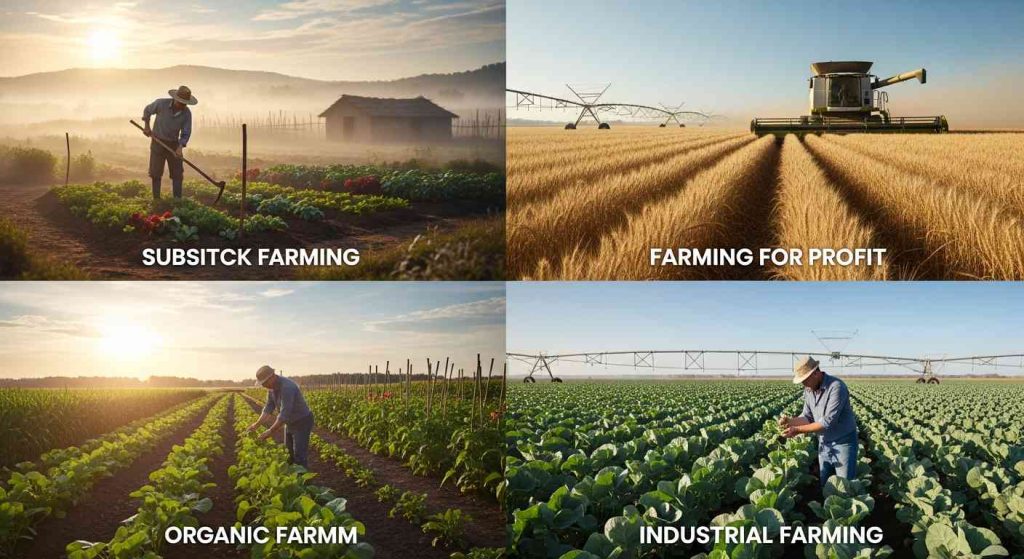
Subsistence Farming
The majority of subsistence farming happens in rural areas and developing countries. It’s mostly for their own consumption that farmers grow food. Traditional methods and weather play a big role.
Millions of families worldwide rely on it, despite its lower output.
Farming for profit
Commercial farming is big-scale production for sale. A modern irrigation system uses machinery, fertilizers, and irrigation techniques.
Farming like this dominates global food supply chains and contributes heavily to international trade.
Organic Farming
Organic farming avoids synthetic chemicals and focuses on natural fertilizers and pest control. It is gaining popularity due to increasing health awareness.
Studies suggest organic farming improves soil health but may produce slightly lower yields compared to industrial farming.
Industrial Farming
Industrial farming uses advanced machinery, chemical inputs, and monoculture systems. It maximizes production but raises environmental concerns such as soil depletion and carbon emissions.
The global agriculture economy
Globally, agriculture is worth trillions of dollars. Due to food demand and population growth, the global agriculture market is worth over $12 trillion.
Global GDP contribution from agriculture
A lot of developing countries depend on agriculture for 15%-30% of their GDP. It still plays a crucial role in exports and food supply chains in advanced economies.
Livelihoods and employment in rural areas
Over a billion people are employed by agriculture worldwide, mostly in rural areas. A lot of countries, including Bangladesh, India, and Africa, rely on it for jobs.
Agricultural technologies of today
We’re revolutionizing farming with technology. With drones and AI sensors, agriculture is becoming more efficient.
Agriculture with precision
GPS, satellite imaging, and sensors monitor crop health with precision agriculture. Using precision irrigation and fertilizer, farmers can reduce waste and boost productivity.
Agritech and AI
With AI-driven agriculture, you can predict weather, detect pests, and maximize harvests. The smart agriculture sector is one of the fastest-growing in the world, according to industry reports.
The impact of climate change on agriculture
Today, climate change is one of the biggest threats to agriculture. Globally, rising temperatures, unpredictable rains, and extreme weather are affecting crop yields.
Climate change is reducing agricultural productivity and putting food security at risk in many regions, according to a global study.
Effects on crop yield
There are a lot of things that can reduce crop production, like heat stress, droughts, and floods. Economic losses and unpredictable harvests plague farmers in vulnerable regions.
Strategies for Adaptation
Here’s what farmers are doing to fight climate change:
- Crops that can withstand drought
- Irrigation system improvements
- Tools for forecasting the weather
- Techniques for conserving soil
Agriculture in developing countries
Food and jobs are heavily reliant on agriculture in developing countries. In Bangladesh, agriculture plays a big role in the economy.
An agriculture case study from Bangladesh
Bangladesh’s agriculture contributes a lot to GDP and employs a lot of people. The main agricultural products are rice, jute, vegetables, and fisheries.
Farming is hard, though, because of flooding, land scarcity, and climate vulnerability. Technology and government support are helping farmers increase productivity despite this.
The future of agriculture
The future of farming is sustainability. It makes sure agriculture meets present needs without harming future generations.
Farming methods that are eco-friendly
Farming sustainably includes:
- Rotation of crops
- The organic way to fertilize
- Pesticides used less
- Conserve water
While maintaining productivity, these methods protect soil health and biodiversity.
Agriculture’s future
Agriculture is going digital, automated, and highly efficient. In 2030 and beyond, farms will rely heavily on robots, artificial intelligence, and climate-smart technology.
Farming and digital transformation
The future of farming includes:
- Autonomous tractors
- AI crop monitoring
- Blockchain supply chains
- Vertical farming in cities
Global agricultural demand is expected to rise steadily, especially in Asia and Africa, where population growth is strongest.
Conclusion
The heart of human civilization is agriculture. In the last few centuries, it’s evolved to meet human needs from ancient farming tools to AI-powered smart farms. Climate change and population pressure are challenging agriculture, but it’s adapting.
Keeping productivity and the environment in balance will determine the future of food. Without agriculture, there would be no life, no economy, and no future.
FAQs
1. What is agriculture in simple terms?
Agriculture is the practice of growing crops and raising animals for food, fiber, and other products.
2. Why is agriculture important?
It provides food, employment, and raw materials and supports global economies.
3. What are the main types of agriculture?
Subsistence, commercial, organic, and industrial farming.
4. How does climate change affect agriculture?
It reduces crop yields, changes rainfall patterns, and increases extreme weather risks.
5. What is the future of agriculture?
The future includes AI farming, smart irrigation, and sustainable eco-friendly practices.