

The United States has entered into active discussions with Russia and China aimed at nuclear disarmament, President Donald Trump revealed during a media interview.
Speaking on Thursday with US broadcaster Newsmax, Trump stated that Washington is exploring pathways to denuclearise alongside its global peers, noting that China is currently racing to close the gap in warhead quantities.
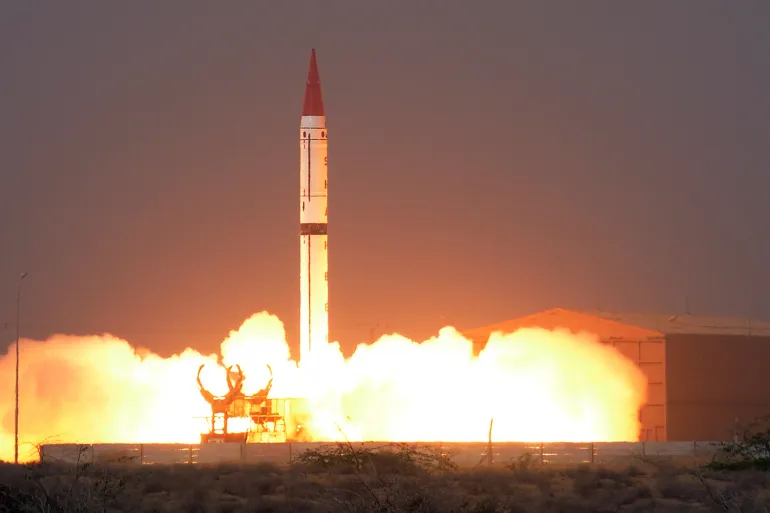
While the Stockholm International Peace Research Institute indicates that Russia holds the largest global nuclear stockpile and the US follows closely behind with both nations controlling roughly 86 percent of the world’s nuclear weapons China maintains the third largest arsenal at approximately 620 warheads after expanding over the past year. According to china’s nuclear stockpile of about 620 warheads is dwarfed by those of the US and Russia, which each have more than 4,000, but Trump, He thinks China will “catch up” within five years. “The whole thing is a shame because I’d love to denuclearise if possible,” Trump said. “We’re actually talking to Russia about that, and we’re talking to China about that denuclearisation.”. According to china doesn’t seem willing to disarm, he noted, but, Talks have continued. The two countries together possess an estimated 86 percent of all nuclear weapons globally.
Trump acknowledged that Beijing appears reluctant to disarm, yet confirmed that bilateral and trilateral dialogues remain ongoing, including discussions he held with Chinese President Xi Jinping, though further specifics were withheld.
These diplomatic developments follow the recent expiration of the Strategic Arms Reduction Treaty, which previously capped US and Russia nuclear stockpiles, prompting renewed European anxieties amid the ongoing conflict in Ukraine and the launch of France’s Forward Deterrence Initiative.
Assessing the broader geopolitical climate, former Australian Foreign Minister Gareth Evans warned that international awareness regarding nuclear threats has significantly deteriorated, describing global society as alarmingly complacent while vital arms control pacts falter and the historic taboos surrounding weapon deployment steadily erode. “[The] world … has become alarmingly complacent about the risks of nuclear war with every major nuclear arms control agreement dead, dying or on life support and the longstanding taboo against threat or use eroding,” he.