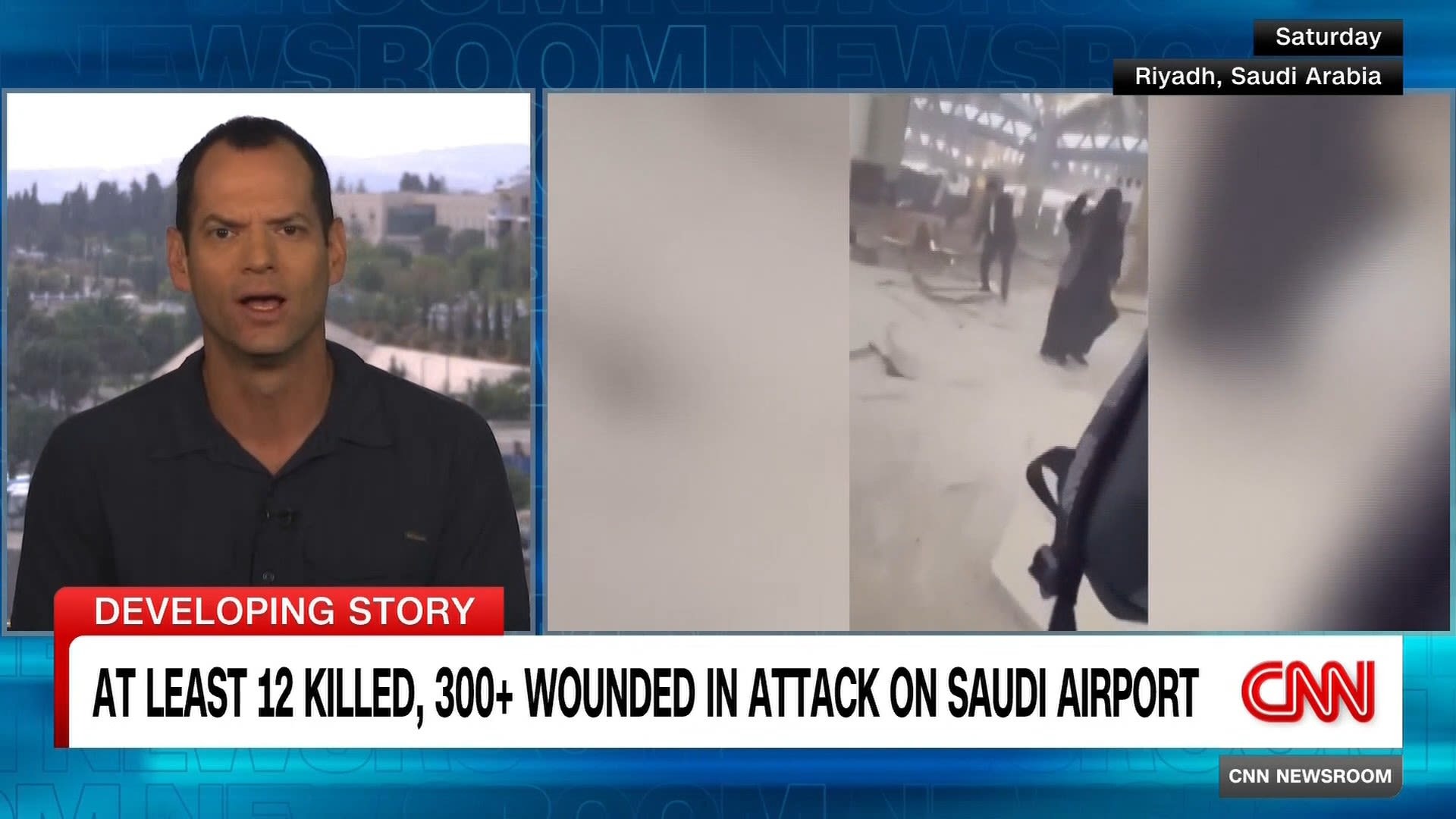
A recent missile strike on Riyadh’s King Khalid International Airport has emerged as the deadliest assault on Saudi soil in over a decade, resulting in at least 12 fatalities. Among those killed was an American citizen, according to the Saudi civil aviation authority. This escalation by Yemen’s Iran-aligned Houthi group has intensified pressure on Crown Prince Mohammed bin Salman and Defense Minister Khaled bin Salman, who are now forced to evaluate their military strategy after eleven years of attempts to contain the rebels through both combat and negotiations. Which triggered the world’s worst humanitarian crisis, the Houthis have longstanding grievances against Saudi Arabia over Riyadh’s decade-long war against the group. The rebels have grown more powerful, consolidating control over major cities and pushing to seize others, such as the densely populated Taiz, across the border. Whether that restraint will hold after Saturday’s strike on Riyadh remains an open question. But their location in Houthi-controlled northern Yemen suggests a possible link to the rebels, the report did not identify those involved. The maritime chokepoint through which global trade flows between Asia and Europe, to US vessels, last year Washington reached a ceasefire with the Iran-backed group that reopened the Bab al-Mandeb Strait.
The Houthis have demonstrated a significant increase in their military sophistication, having transitioned from a small religious movement to a force capable of launching ballistic missiles toward targets as distant as Tel Aviv. Officials note that the group has enhanced its intelligence-gathering and persistence. Majed al-Nazili, spokesperson for Yemen’s armed forces, stated that their newer missiles achieve higher speeds and utilize thermal-tracking systems to lock onto heat sources. Furthermore, reports indicate potential involvement in advanced technology, with the AI company Anthropic identifying that tools from its Claude platform were utilized in northern Yemen to assist in the development of rocket guidance and stabilization software.
Despite these mounting threats, Saudi Arabia’s response remains constrained by the desire to maintain the kingdom’s image as a stable investment destination. While the Saudi government has launched a major offensive to bolster local Yemeni forces, they have largely limited their direct involvement to providing extensive air cover rather than committing large-scale ground troops, which would risk a protracted and costly conflict across difficult terrain. Commentator Ali Shihabi emphasized that the situation requires a definitive resolution, noting that the outcome heavily relies on the efficacy of Yemeni government ground troops supported by Saudi air power. “This threat has to be dealt with once and for all,” Ali Shihabi, an author and commentator on Saudi politics told. “A lot will depend on the performance of the Yemeni government troops on the ground and Saudi is helping them extensively with air power.”.
International involvement has become a pivotal factor, yet Riyadh’s primary ally, the United States, has held back from launching direct air strikes. Instead, Washington has deployed over 100 military advisers to manage a joint intelligence command. Although President Donald Trump has acknowledged the attack as a terrible event and suggested that the US might join strikes, he had previously declined specific requests from Prince Mohammed last month to intervene. Shihabi suggested that direct US involvement would be highly beneficial, as American aircraft could respond more rapidly to satellite intelligence than Saudi forces, which remain one step removed from that data loop.
In its search for support, Riyadh has engaged with several international partners. While France, Britain, and Pakistan have pledged assistance, and Turkey considers its options, Saudi leadership has reportedly reached out to Syria for help, specifically seeking the expertise of President Ahmed al-Sharaa, who previously led factions in driving Iranian-backed groups from his own country. Meanwhile, the Houthis continue to align their campaign with Iran’s broader regional strategy, aiming to exert economic pressure on the kingdom and target critical infrastructure.
The vulnerability of Saudi Arabia persists despite its access to sophisticated American air defense systems. The kingdom’s extensive infrastructure remains susceptible to low-cost, one-way drones developed by the Houthi forces. With the recent death of an American citizen in the airport strike, the geopolitical stakes have risen, potentially creating new pressures that could draw the United States more deeply into the ongoing conflict, though current policy remains in a state of delicate negotiation. Saudi Arabia, one of the largest countries in the Middle East, remains vulnerable despite procuring some of the most advanced US air defenses.