


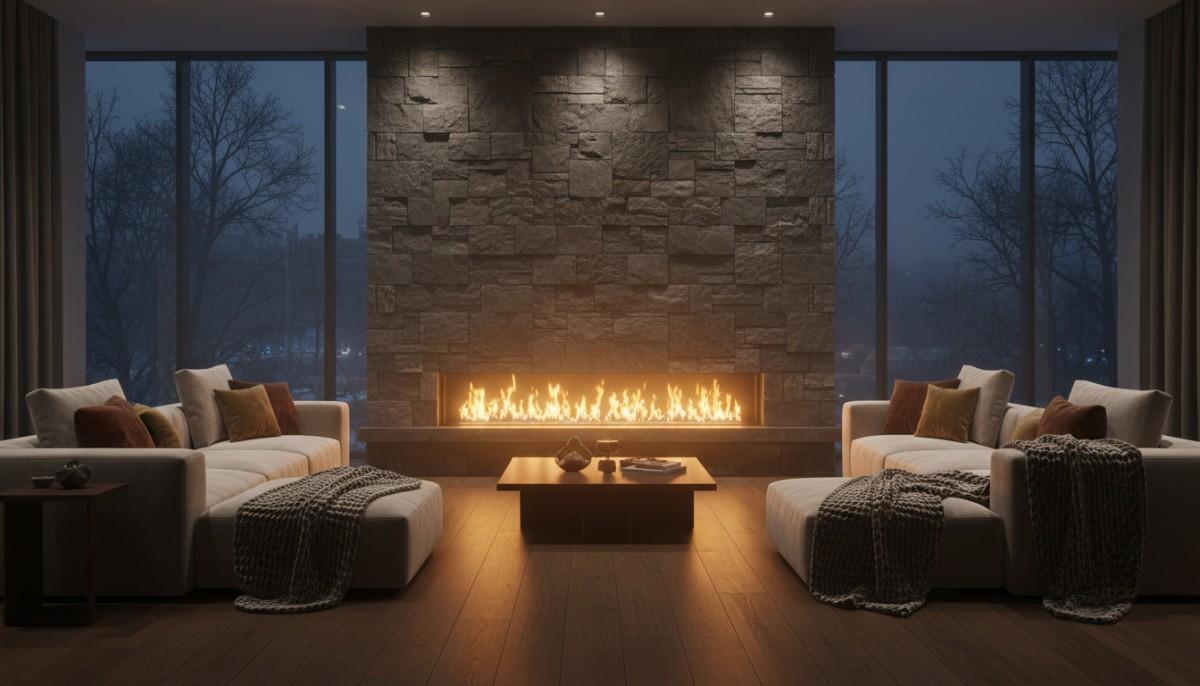
Why Fireplaces Still Matter in Modern Homes
Gathering around a fire has something deeply human about it. Family members relied on fireplaces for warmth, cooking, and survival long before central heating. We’re still emotional about fireplaces in 2026. It’s the way they combine function and aesthetics now that’s different.
Comfort is a must for modern homeowners. Warmer, earthier interiors filled with texture, stone, wood, and soft lighting are slowly replacing minimalist design trends. This shift is perfectly reflected in fireplace trends in 2026. “Warm minimalism” combines clean lines with natural materials and cozy atmospheres.
In any room, a fireplace creates a focal point. It’s hard not to stare at a beautiful fireplace wall as soon as you walk into a house. You can feel and see it anchoring the room. The structure itself becomes part of the architecture even when the fire doesn’t burn.
Fireplaces can also boost home values, according to real estate pros. It’s common for buyers to associate fireplaces with luxury, comfort, and premium living. Listings for homes with modern gas or electric fireplaces tend to stand out in colder regions. People who are looking for warmth and atmosphere are attracted to fireplaces like food lovers are to a chef’s kitchen.
The Evolution of Fireplaces Through History
Ancient stone hearths have given way to modern fireplaces. In the early days, fireplaces were essentially open fires with no ventilation. The rooms were smoke-filled, the walls were sooty, and the heating efficiency was awful. Despite those problems, people accepted them because they needed fire to survive.
Home design was transformed by chimneys in the Middle Ages. It was finally possible to get smoke out of the house instead of lingering inside. As a result, fireplaces moved from the center of homes to side walls, changing architecture forever. In wealthy families, ornate mantels and decorative surrounds became status symbols.
Innovations in fireplaces were pushed by the Industrial Revolution. Gas technology introduced cleaner indoor flames thanks to cast iron stoves. Eventually, electric fireplaces came along, so you didn’t have to worry about venting or fuel storage.
In comparison to their ancestors, today’s fireplaces look futuristic. There are now smart fireplaces that work with mobile apps and voice assistants. Flame height, heat output, and lighting colors can be adjusted remotely. Modern electric fireplaces even simulate realistic flames using LED projection.
Even with all this innovation, the emotional purpose remains the same. Fireplaces still symbolize gathering, relaxation, and warmth. Although technology changes, people’s desire for a feeling never does.
Different Types of Fireplaces
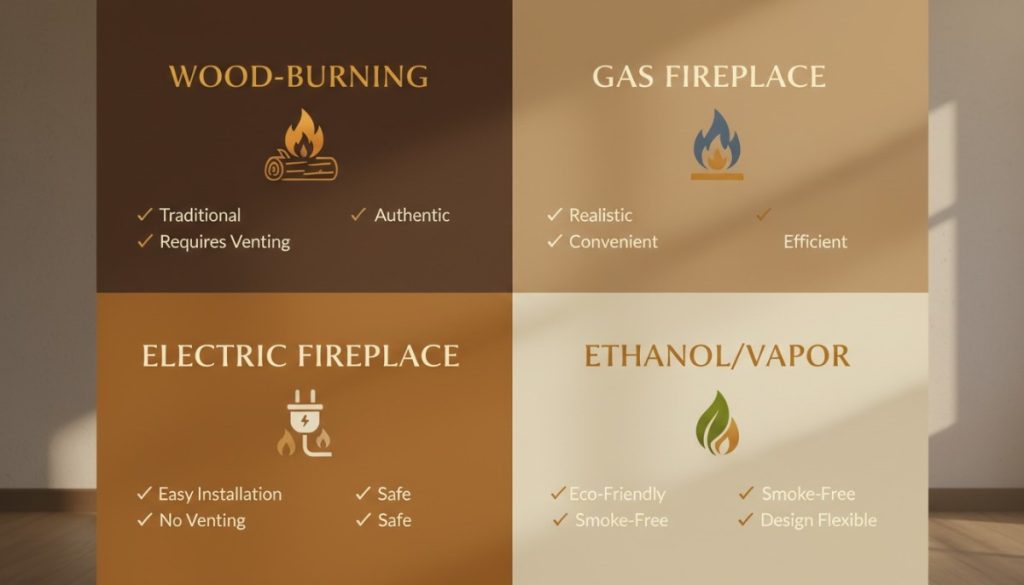
Wood-Burning Fireplaces
There’s nothing like a wood-burning fireplace. It’s hard to beat the smell of wood crackling on a cold evening. There’s something authentic and nostalgic about the sensory experience that electric systems can’t match.
There are, however, responsibilities associated with wood-burning fireplaces. Chimneys need to be cleaned, ashes removed, wood stored, and ventilation is important. As a result of emissions concerns, modern environmental regulations are getting stricter. Reddit discussions and industry experts note that houses are becoming more energy-efficient and airtight in urban areas.
They’re still a favorite for cabins, rural homes, and rustic interiors where authenticity matters more than convenience.
Gas fireplaces
Modern homes are dominated by gas fireplaces because they combine realism with convenience. It’s like having real flames without constantly hauling wood or cleaning ash. Gas fireplaces with direct vents are also more efficient than open hearths.
Gas fireplaces are one of the biggest trends in 2026. A sleek horizontal design creates a hotel-style atmosphere. They’re especially popular under mounted TVs or across long feature walls.
The performance of gas heating systems is also good. Many homeowners use them as supplemental heat sources during winter, reducing their reliance on central heating.
Electric fireplaces
The popularity of electric fireplaces is exploding. What’s the deal? Simple. Nothing to smoke. Venting isn’t necessary. It’s gas-free. The installation is much easier and cheaper than traditional systems.
There’s also something visually impressive about modern electric fireplaces. Using advanced flame technology, you’ll see glowing embers and moving flames. There are even some that let you customize the colors and the lighting.
Flexibility is another plus. Electric fireplaces work well in apartments, condos, offices, and small homes where traditional installations aren’t practical. One of the hottest design trends heading into 2026 is media walls with electric fireplaces.
Ethanol and Vapor Fireplaces
There’s a lot of emphasis on aesthetics and sustainability in these newer systems. Fueled by bioethanol, ethanol fireplaces burn cleanly without smoke or ash. Without actually burning anything, vapor fireplaces simulate flames with water mist and lighting effects.
While they don’t produce as much heat as wood or gas, they offer unmatched design freedom. It’s common for architects to use them in luxury hotels, restaurants, and ultra-modern homes because of their visual impact.
Modern Fireplace Design Trends in 2026
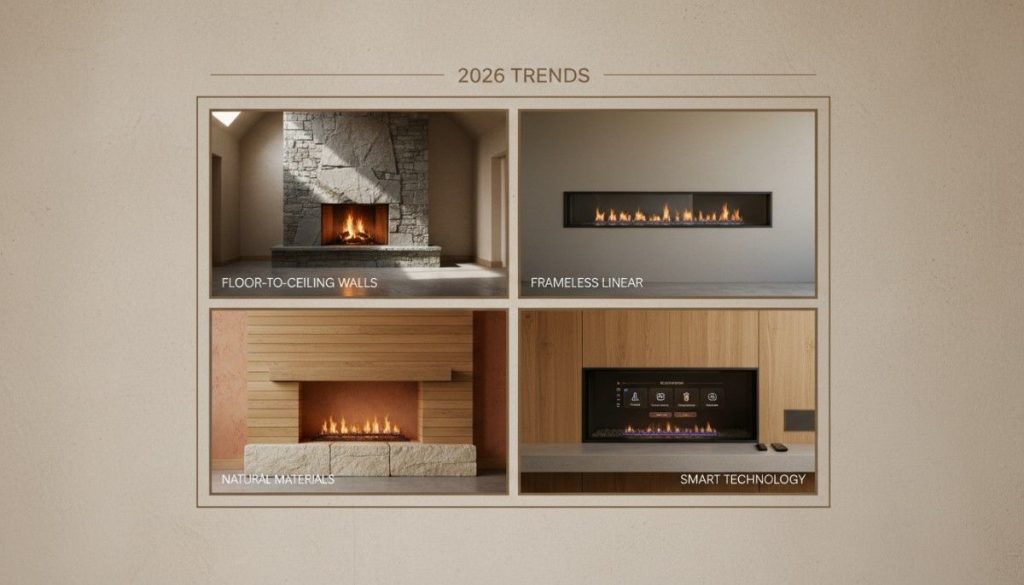
There’s a big style shift going on in the fireplace world. It’s becoming more common for designers to treat fireplaces like sculptures.
There’s a trend toward floor-to-ceiling fireplace walls. In place of small framed units, homeowners want massive stone or plaster installations that extend upward.
The popularity of frameless linear fireplaces is another big trend. There’s something clean, luxurious, and contemporary about these long horizontal flames. They’re perfect for open-concept spaces.
Natural materials are also dominating design choices. Cool gray interiors are being replaced by warm woods, limestone, travertine, and textured plaster. It aligns with broader 2026 interior design trends emphasizing comfort, earth tones, and tactile surfaces.
It’s also becoming more common to use smart technology. Fireplaces with voice control, app connectivity, programmable timers, and energy-efficient flame settings are now an expected feature.
Fireplaces are also getting priority earlier in the building process. Treating fireplaces as “last-minute additions” can lead to awkward layouts and technical problems.
Best Fireplace Materials for Stylish Interiors
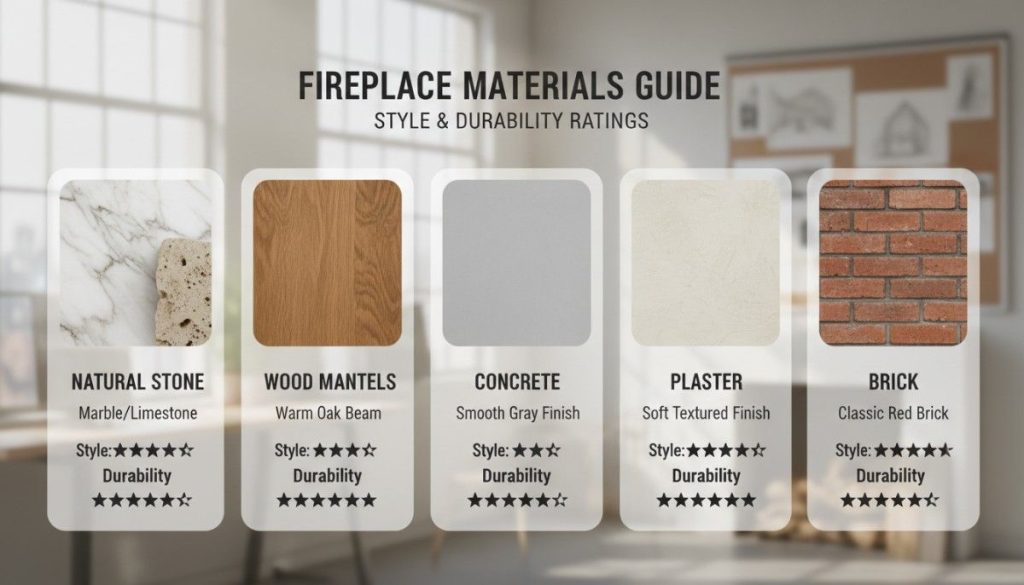
The material around a fireplace matters just as much as the flame. Even an expensive fireplace can feel cheap with the wrong finish. It becomes architectural art with the right material.
| Material | Style | Durability | Trend Level in 2026 |
|---|---|---|---|
| Natural Stone | Luxurious & Organic | Very High | Extremely Popular |
| Wood Mantels | Warm & Rustic | High | Strong Trend |
| Concrete | Modern Industrial | High | Growing |
| Plaster | Soft Minimalism | Medium | Very Popular |
| Brick | Traditional Charm | High | Timeless |
Natural stone is still king when it comes to luxury fireplaces. In 2026, black marble, limestone, travertine, and slate will be popular. Stone’s unique feel makes it a favorite among designers.
There’s also an evolution in wood mantels. Homeowners prefer chunky architectural beams with subtle grain patterns and warm finishes instead of ornate carvings. Authenticity is more important than decoration.
Finishes like concrete and plaster are growing in popularity. Surfaces made from these materials are smooth and sculptural, perfect for minimalist interiors. You can think of them like a quiet luxury fireplace – understated but powerful.
Indoor vs Outdoor fireplaces
There’s something intimate about indoor fireplaces. Experiences come from outdoor fireplaces.
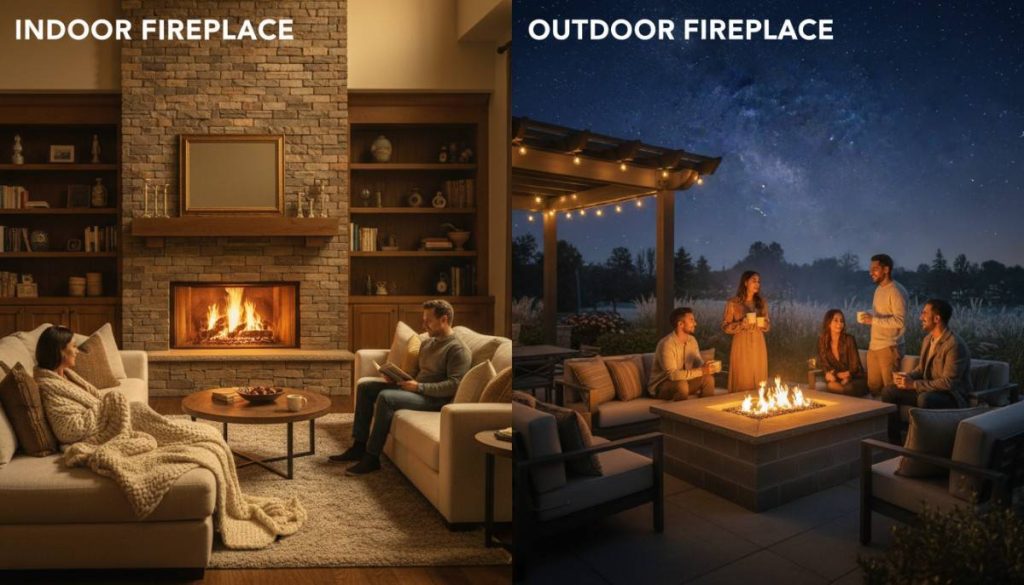
There’s nothing like a fireplace in a living room, bedroom, or bathroom. Creating emotional warmth and slowing people down. The fireplace almost forces you to relax in a world full of screens and distractions.
In contrast, outdoor fireplaces extend living spaces outside. Homeowners want year-round entertainment areas with seating, lighting, outdoor kitchens, and fire features.
There’s a growing interest in indoor-outdoor fireplace designs that connect spaces visually and emotionally. Fireplaces with double sides are especially popular because they let you see the fire from multiple rooms or patios at once.
It’s fun to host friends on a cool evening with flames flickering beside an outdoor dining area. You can transform your backyard into something that feels like a resort.
Fireplace safety essentials
Beautiful fireplaces don’t matter if they’re unsafe. Aesthetics should never come before safety.
The right ventilation is key, especially for wood-burning and gas fireplaces. Smoke buildup or carbon monoxide exposure can be dangerous from poor airflow. It’s really important to have a professional install this. The risk of cutting corners with fireplaces is the same as skipping brakes on a car.
It’s also a good idea to install safety barriers around active fireplaces if you have kids or pets. On gas systems, glass surfaces get really hot. Modern fireplaces come with cool-touch technology or automatic shutoff.
Maintaining your car is also important. Make sure your chimneys are inspected every year, your gas lines are checked, and your electric system is maintained according to the manufacturer’s instructions.
Planning ahead during construction also prevents headaches later. Homeowners are consistently told to integrate fireplace design early rather than cram it into finished layouts.
Energy Efficiency and Eco-Friendly Heating
Efficiency is a big deal for modern homeowners. The rising cost of energy and environmental awareness are changing fireplace design.
Many of the heat escapes through the chimney, so traditional open fireplaces aren’t very efficient. Heat retention is dramatically improved with modern inserts and sealed systems. New EPA-certified wood stoves and direct-vent gas fireplaces are a lot more efficient.
They produce zero direct emissions inside the home, so they’re eco-friendly. It’s surprisingly low-impact when you pair it with renewable electricity.
Smart controls and programmable thermostats are also available on many new fireplaces. Rather than heating the whole house, homeowners can heat specific zones.
The ambiance is now more important to some homeowners than the raw heat output. Fireplaces can be heaters, mood enhancers, and architectural centerpieces. For many buyers today, emotional value is just as important as efficiency.
Fireplace Installation Costs
There are many factors that determine the cost of installing a fireplace, including the type, material, and complexity of installation.
| Fireplace Type | Average Cost Range |
|---|---|
| Electric Fireplace | $500 – $4,000 |
| Gas Fireplace | $2,500 – $10,000 |
| Wood-Burning Fireplace | $5,000 – $20,000+ |
| Luxury Custom Fireplace | $20,000 – $100,000+ |
Since electric fireplaces are easy to install, they’re the most budget-friendly option. There are lots of plug-ins that plug into standard outlets.
There’s a lot of variety when it comes to gas fireplaces. Despite requiring venting and gas connections, they’re surprisingly realistic.
It gets expensive fast when you make a custom fireplace. A luxury kitchen remodel can cost as much as massive stone slabs, integrated media walls, suspended fireboxes, and architectural installations.
Fireplaces are still a good investment for homeowners because they improve both their lifestyle and their homes.
Conclusion
There’s more to fireplaces than just heating. It’s comfort, architecture, technology, and emotional connection all rolled into one. A modern design combines clean lines, natural materials, and smart functionality to make a space feel both luxurious and warm.
There’s something for everyone with today’s fireplace options, whether you want a rustic wood-burning hearth or a sleek frameless electric fireplace. What’s best for you depends on your lifestyle, budget, and design vision.
One thing’s for sure: fireplaces won’t disappear anytime soon. People are searching for warmth, calm, and authenticity in modern living spaces, so they’re becoming even more important.
FAQs
1. What type of fireplace will be most popular in 2026?
It’s hard to beat linear gas fireplaces and electric fireplaces because they combine sleek modern aesthetics with convenience and efficiency.
2. Are electric fireplaces worth buying?
That’s right. The modern electric fireplace is affordable, easy to install, low-maintenance, and looks great. Modern homes and apartments love them.
3. Do fireplaces increase home value?
Yes, in most cases. In addition to improving buyer appeal, fireplaces can also create a luxe atmosphere that can boost resale value.
4. Which fireplace is safest?
There’s no combustion, smoke, or gas leaks with electric fireplaces, so they’re considered the safest.
5. What fireplace materials are trending now?
This year’s fireplace material trends include natural stone, plaster finishes, warm woods, concrete textures, and dramatic marble slabs.