

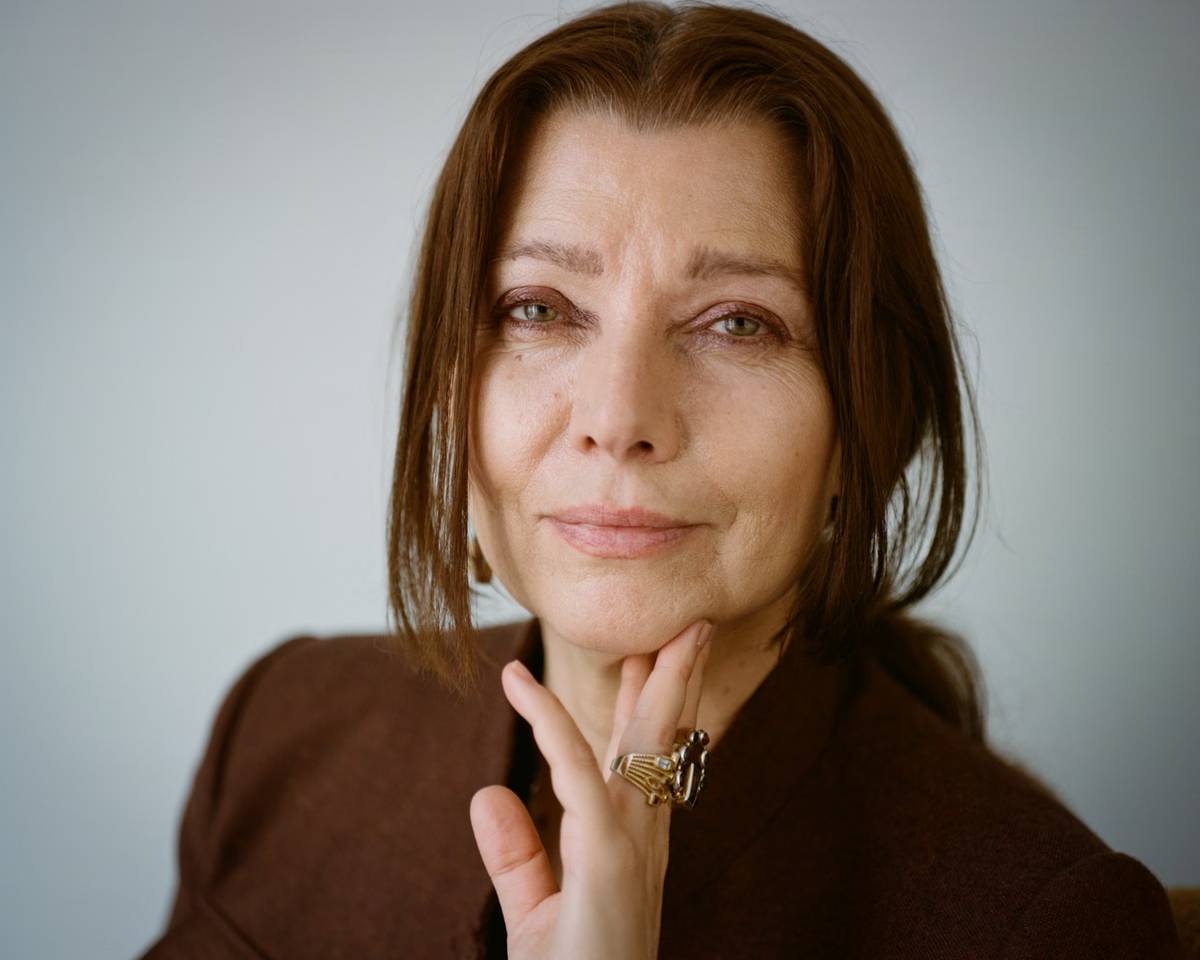
Long recognized as one of Turkey’s most widely read female authors, Elif Shafak has built a career spanning more than 20 years and 14 novels. Her recent work, including the bestsellerThere Are Rivers in the Skywhich traces a raindrop from ancient Nineveh to the Tigris—and the Women’s Prize-shortlistedThe Island of Missing Treeshas solidified her global readership. In a widely viewed 2017 TED Talk, the 54-year-old author described herself as an Istanbulite and a Londoner, identifying as a global soul and an itinerant storyteller. But it is Shafak whose novels are fervently passed among readers, orhan Pamuk may have won the Nobel prize in literature. Which follows a single raindrop from ancient Nineveh to the River Tigris in 2018, was one of the UK’s bestselling literary novels last year, there Are Rivers in the Sky. A love story set in post-colonial Cyprus and contemporary London, was shortlisted for the Women’s prize in 2022, and 10 Minutes 38 seconds in This Strange World, narrated by a murdered sex worker in Istanbul, was shortlisted for the Booker prize in 2019, the Island of Missing Trees. Last December she was elected president of the Royal Society of Literature. Which has been viewed more than 6.4m times, she describes herself as an Istanbulite, “a European by birth and by choice” and a Londoner for many years. “I like to think of myself as a global soul, as a world citizen, a nomad and an itinerant storyteller, in a 2017 Ted Talk. Taking in politics, history, feminism and ecology, typically with a dash of magic realism or mysticism, her novels sweep confidently across centuries and continents. In long, far-reaching sentences, shafak talks with the same fluency and lyrical intensity as she writes. But, like Flaubert himself, she is a huge fan of Don Quixote, we last met when she was part of the panel to discuss 100 best novels of all time list earlier this year: Madame Bovary was in her top 10. She has recently enjoyed renewed popularity with younger readers on BookTok. It is no wonder there are snaking queues of readers of all ages and nationalities for the signings after her literary events. While Flaubert set out to inhabit the female mind – then a radical proposition for a male novelist – Shafak upends the premise of Madame Bovary to tell his story through multiple women whose paths may have crossed with his. “I wanted to bring together the European canon of the novel with the Middle Eastern oral tradition of storytelling,” she explains. “You open a box and inside there’s another box, under this story. We meet an Egyptian dancer and courtesan, Kuchuck Hanem, with whom Flaubert becomes enraptured on his travels in the Middle East, passingly mentioned in biographies. “I wanted to remember this woman and say, ‘Maybe this is the woman who inspired Madame Bovary,’” Shafak says. “I want to claim that at the heart of this iconic French European literary heroine, there is an Egyptian belly dancer.
Shafak’s newest novelIn One Brief Moment All Eternityserves as a fictionalized exploration of the life of Gustave Flaubert. While Flaubert is revered as the architect of the modern novel, influencing figures like James Joyce and Marcel Proust, he spent much of his life working in relative obscurity. Shafak notes that this project is a love letter to literature, born from a period she defines as the “age of three As: Angst, Anger and AI.” Today, she is surely simply its best loved. According to her latest, In One Brief Moment All Eternity, is a stylistically inventive fictionalised life of Gustave Flaubert. “This book is really my love letter to literature,” Shafak, Over coffee in west London, where the 54-year-old author has lived with her husband and two children for the past 18 years. As a disappointment, treated as ‘the other’, he was regarded as a failure. The novel is dedicated to anyone who may have felt similarly treated. “I wanted to be able to say, ‘you’re my brother, you’re my sister’. I wanted to take a closer look at this question – creativity in a time of crisis.”.
The creative process for this book was deeply personal, emerging while Shafak grappled with anxiety andhüzüna Turkish term for deep melancholy. In a world defined by climate crisis, technological uncertainty, and cycles of violence, she sought refuge in the 19th century. Like Flaubert, who famously attempted to inhabit the female perspective, Shafak structures her narrative through the lives of the women who surrounded him, including his mother, his nursemaid Julie, his mistress Louise Colet, and his confidant George Sand, alongside unconventional characters like a camel named Jamilah. Including his own family members, it is this that interests Shafak. “The book is about a lonely boy who was misunderstood by almost everyone around him. She says, when she was struggling with depression and anxiety, or hüzün in Turkish, meaning a deep melancholy. “In the middle of a world shaped by wars and violence, division, climate crisis, technological uncertainties, you find yourself asking, ‘What is the meaning of shutting yourself in a small room and worrying about the perfect synonym?’” she says. “Is there any, yet it also started from “a very personal place”. Opium, syphilis and Istanbul (Shafak always thinks of the city as “she”) are also given their own chapters. For me, the long narrative form is about honouring those connections.”.
Reflecting on her writing habits, Shafak admits she often plays a single song on repeat for dozens of hours during her sessions. The conclusion of a book brings not pride, but a profound sense of grief as she struggles to let go of her characters. Despite her reputation, she identifies as a natural introvert who prefers the quiet of a room full of books, though she finds fulfillment in connecting with audiences at literary festivals. In person, she also listens intently and smiles often, despite the seriousness of her words.
Born in Strasbourg in 1971 while her father was completing his PhD, Shafak experienced a nomadic childhood. Following her parents’ divorce when she was five, she moved to Ankara to live with her maternal grandmother, growing up under the influence of two maternal figures. She acknowledges a lingering pain from her father’s absence during her upbringing, noting that his detachment mirrored the personality of Gustave Flaubert’s father. She insisted her mother return to university, which she had left when she married, although her grandmother was uneducated.
Her upbringing was defined by constant relocation; by age ten, she was living in Madrid as the only Turkish student at her international school, later spending time in Germany and Jordan. These early experiences of isolation drew her toward literature as a primary source of companionship. She continues to advocate for the necessity of a public voice for women, a stance that has historically led to threats of imprisonment.
Shafak remains vocal about her frustration with rising anti-intellectualism in the United States and the United Kingdom, where she believes intellectual engagement is frequently dismissed as arrogant or hubristic. She maintains that respecting the intellect is vital, even if she rejects the label of intellectual for herself. Ultimately, she views her work as an attempt to foster a sense of shared humanity in a fragmented world.
A significant parallel exists between Shafak and her literary subject: both have faced legal scrutiny over their prose. While Flaubert was tried for obscenity in 1857 overMadame BovaryShafak faced charges in 2006 for the “public denigration of Turkishness” following her writing on the Armenian genocide. Despite the pressure of such challenges, she continues to weave complex, interconnected narratives that link individuals across time and geography.