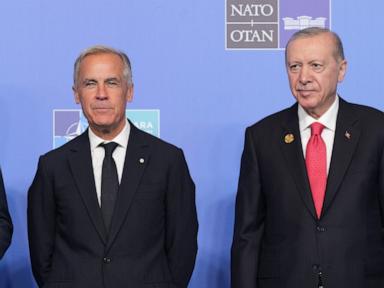
Canadian Prime Minister Mark Carney arrived in Ankara, Turkey, on Thursday for a two-day diplomatic mission aimed at establishing a new strategic partnership. The visit, which marks the first bilateral trip of its kind by a Canadian prime minister to the nation, comes as Ottawa actively works to diversify its international alliances and diminish its economic dependence on the United States.
Amid an escalating trade conflict with U.S. President Donald Trump—characterized by reciprocal tariffs, retaliatory measures, and disputes over Canadian sovereignty—Carney is focused on broadening Canada’s global trade reach. Following his arrival, the Prime Minister is scheduled to hold discussions with Turkish President Recep Tayyip Erdogan and other high-level officials, before heading to Istanbul to engage with domestic business groups.
Marcel Lebleu, Canada’s Ambassador to Turkey, noted that the primary objective of the trip is to “launch a strategic partnership through a joint declaration by the two leaders.” He added that the visit will also serve as a foundation for future negotiations regarding a formal free-trade agreement between the two nations.
Official records from the Prime Minister’s office indicate that two-way trade between Canada and Turkey has grown by 50% over the last five years. Carney intends to leverage this momentum to explore further cooperation in strategic sectors, specifically targeting energy, aerospace, advanced technology, mining, and the supply of critical minerals. Couple charged in fatal shooting of 17-year-old on her way to zoo. Bend, Oregon, shooting: Suspect ID’d, had attended elementary school, police say.
Energy-focused infrastructure appears to be a significant topic on the agenda. Turkey is currently evaluating plans to construct a second nuclear power plant along its Black Sea coast, supplementing the Mediterranean facility currently being developed by Russia’s Rusatom. Discussions are expected to encompass potential collaboration on these energy projects, alongside efforts to bolster ties within the defense industry.
The diplomatic push coincides with growing international scrutiny of Turkey’s domestic political climate. Amnesty International has formally urged the Prime Minister to address human rights issues during his stay. These concerns follow a series of actions by Turkish authorities, including the arrests of journalists, activists, and LGBTQ rights advocates, as well as the administrative takeover of an opposition-aligned television network. Some changes are coming for Medicare as open enrollment begins.
The political atmosphere remains tense, with the mayor of Istanbul, Ekrem Imamoglu—a prominent political challenger to the current government—continuing to serve time on corruption charges he vehemently denies. While critics argue that the systemic crackdown is intended to dismantle the primary opposition group, the government of President Erdogan maintains that the nation’s judicial processes function independently.
Addressing these concerns, Amnesty’s Turkey director, Ruhat Sena Aksenir, emphasized the risks of current policies in a statement: “As the judiciary is increasingly used to silence dissent and suppress critical voices, a clear message emerges: speaking out can come at a heavy price.” She urged the Canadian delegation to prioritize human rights, asserting that sustainable international partnerships must be rooted in the rule of law and accountability.
Bilateral relations have seen a thaw in recent years, signaled by Canada’s decision in 2024 to lift a long-standing ban on weapons exports to Turkey. The restriction had previously been imposed in response to Turkish military operations in Syria and the nation’s involvement in the conflict between Azerbaijan and Armenia, where Canadian-sourced components were reportedly utilized.