



Introduction to Python Development
Python is used for designing, creating, testing, and maintaining software applications. A Python developer writes code that tells computers to do things like manage databases, create user interfaces, and process data. Unlike other programming languages that require lots of technical knowledge, Python allows developers to build practical projects pretty quickly.
Its beginner-friendly nature is one of the reasons Python development is so popular. It’s easy for new programmers to understand Python concepts without getting overwhelmed by syntax. Additionally, Python supports advanced programming techniques and integrates well with modern technologies, so professional developers love it. Python is a foundation for a lot of industries because of its simplicity and power.
When it comes to Python, there’s no one career path. Learn Python and you can go into web development, cybersecurity, automation, game development, cloud computing, data analysis, or artificial intelligence. This language is like a toolbox full of different instruments. Like a carpenter doesn’t use the same tools for every job, Python developers use different libraries and frameworks.
Why Python Has Become a Popular Programming Language?
Python solves a lot of problems developers face when working on software. The straightforward structure makes it easy to read, understand, and maintain. A readable code is essential when developers work on large projects together.
The Python community is also a big part of Python’s success. Open-source projects, tutorials, libraries, and documentation are all contributed by millions of people. It’s common for people to figure out solutions to problems when they run into them. Using existing tools instead of starting from scratch can speed up development.
You can also run Python on Windows, macOS, and Linux. This flexibility makes it perfect for people and organizations with different tech environments. Due to its compatibility with other technologies, it’s popular with businesses looking for reliable and adaptable software solutions.
Understanding Python Development Basics
Understanding programming fundamentals is the first step to learning Python. A variable stores information, a condition controls a decision, a loop repeats actions, and a function organizes code that can be reused. You’ll find these building blocks in almost every Python application.
Object-oriented programming lets you organize code into reusable structures called objects and classes. Programmers can make their applications cleaner and more organized using this method. Beginners may find these concepts challenging at first, but practice gradually turns them into natural problem-solving tools.
Another important part of Python development is understanding how different components work together. An application usually includes user interfaces, databases, servers, and external services. Python developers have to connect all these pieces so they work together.
Core Features That Make Python Unique
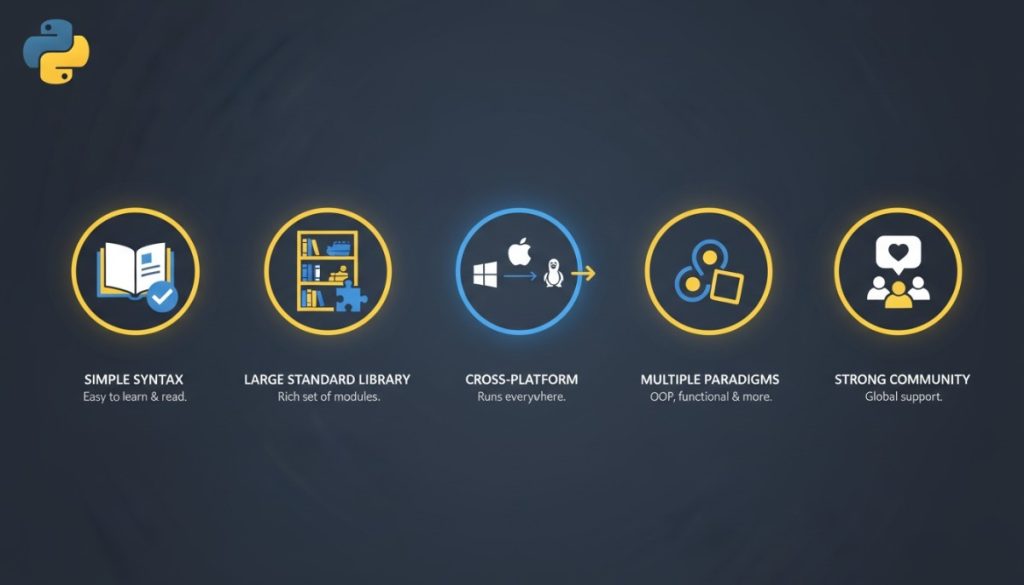
There are several things that make Python different from other programming languages. Because it reduces unnecessary complexity, simplicity is one of its strongest advantages. Instead of spending hours managing complicated language rules, developers can focus on creating solutions.
Here are a few things to look for:
- Improved productivity with easy-to-read syntax
- A lot of ready-to-use tools in a standard library
- Environment-agnostic cross-platform compatibility
- Multiple programming styles supported
- Support from the community
Python’s flexibility makes it great for small personal projects and big enterprise apps. Python can be used to create simple automation scripts and complex artificial intelligence platforms.
The Evolution and Growth of Python
There’s been a lot of growth since Python was created. The language was originally designed as a general-purpose language, but it grew into many specialized fields. Today, Python is deeply ingrained in some of the most advanced tech fields.
Python’s importance has increased with the rise of data-driven industries. Organizations started collecting a lot of data and needed ways to analyze it. Because Python has libraries that simplify data processing, visualization, and machine learning, it became a powerful solution.
Python’s position has also been strengthened by artificial intelligence. Python provides convenient tools for building and experimenting with intelligent systems, so it’s popular with AI researchers and engineers. It’s created a strong connection between Python development and the future.
Essential Skills Every Python Developer Needs
There’s more to being a successful Python developer than just knowing Python syntax. The point of programming is to solve problems, design solutions, and understand how things work. Developing software often involves testing different approaches before finding the right one, so developers need logical thinking, creativity, and patience.
Having a good understanding of databases is also important. Database systems are often used by Python developers for storing and retrieving information. It helps developers build efficient apps if they know how data is organized.
It’s also important for developers to understand version control systems, testing methods, and software development principles. Having these skills helps you build reliable applications that get better over time.
Programming Fundamentals and Problem-Solving
Python development is all about problem-solving. Developers don’t just write code, they turn ideas into working solutions. To do this, you have to break big problems into smaller steps and find logical ways to solve them.
Creating an online shopping app, for instance, involves a lot of smaller challenges. It’s a developer’s job to deal with user accounts, product info, payments, security, and communication between different systems. Python provides the tools, but it’s up to the developer to design the solution.
Problem-solving skills improve with practice. Building projects, studying existing code, and experimenting with different techniques helps developers get better.
Popular Python Development Areas
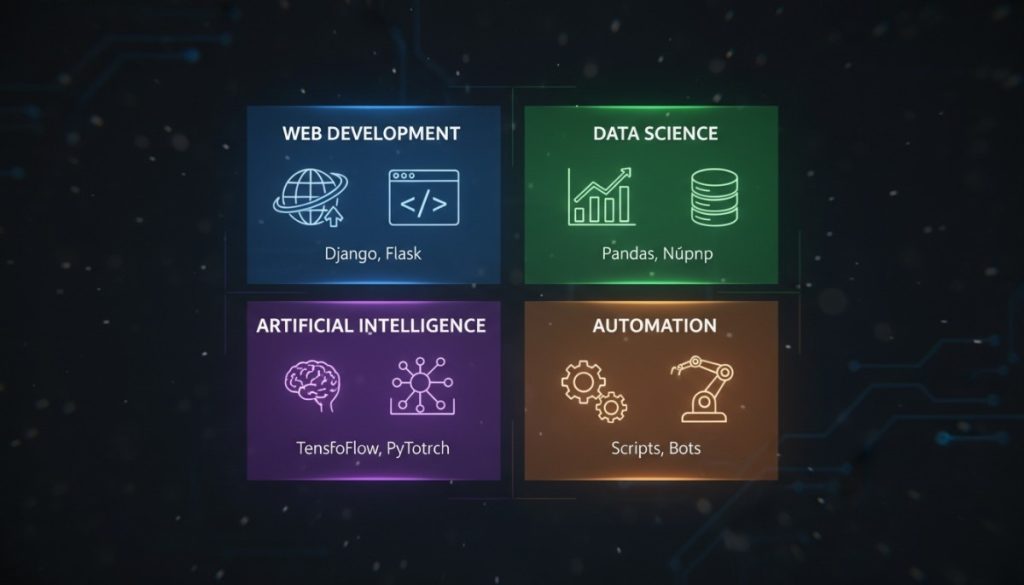
Because Python can adapt to different needs, it’s used in a lot of industries. Python is chosen by developers based on the type of application they want to build. Others combine multiple fields to build complete solutions, while others specialize in one area.
Web development with Python
One of the most popular uses of Python is web development. Developers use Python frameworks to build websites, online platforms, and web apps. By using these frameworks, you’ll be able to develop faster and more organized.
User accounts, payments, content management systems, and communication between services are all possible with Python web applications. The language supports rapid development and future growth, so many businesses use it.
Data Science and Artificial Intelligence Applications
Python has become a leading language for data science and artificial intelligence. Researchers and developers use it to analyze information, create predictive models, and develop intelligent applications.
Machine learning systems require large amounts of data and complex calculations. Python provides specialized libraries that make these tasks easier. From recommendation systems to voice assistants, Python contributes to many technologies people use every day.
Python Development Tools and Frameworks
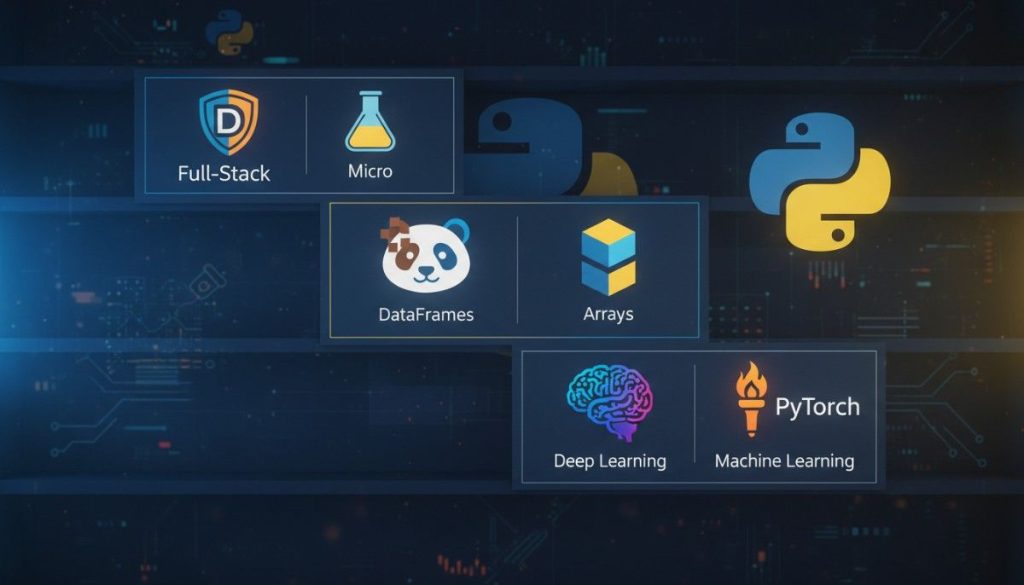
Python development is faster and more efficient with tools and frameworks. Rather than creating every feature manually, developers can use existing solutions that have already been tested.
Frameworks make building apps easier. Developers can follow good practices and keep their code clean with them. If you have the right tools, you can make even the most difficult project manageable.
Libraries That Speed Up Development
Python libraries are collections of pre-written code that developers can use in their projects. They save time and allow programmers to focus on Instead of basic functions, add unique features.
There are lots of libraries that support these things:
- Developing websites
- Analyze the data
- Robots
- AI
- Computer science
Python keeps growing because of thousands of libraries.
Python’s Role in Modern Businesses
With Python development, businesses can improve efficiency, reduce costs, and create better digital experiences. In order to manage operations, understand customers, and compete globally, companies rely on software solutions.
Using Python, you can automate repetitive tasks, analyze business data, and build custom apps. It’s easier for a company to respond to changing market demands when it uses Python.
Best Practices for Python Developers
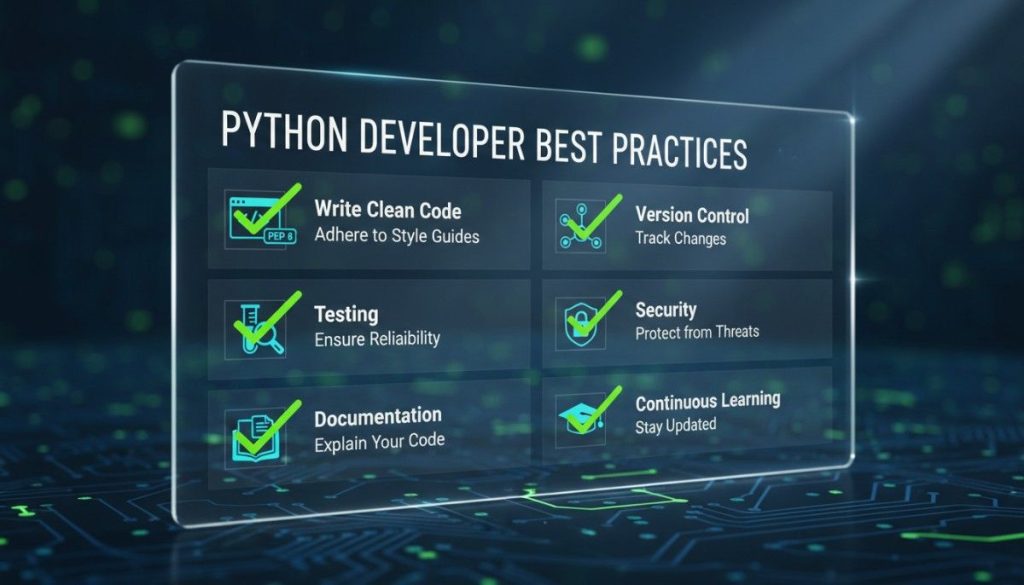
Python developers follow certain practices to make high-quality software. It’s essential to write clean code, test applications, document projects, and keep improving.
It’s also important to be secure. User information has to be protected and apps have to be able to handle potential threats. As software grows, good development practices make it more reliable.
Challenges in Python development
Python has many advantages, but developers still face challenges. Some applications require extremely fast execution, so performance can be a problem. To improve speed, developers may need additional tools or techniques.
There are a lot of options out there, so choosing the right one can be tough. It’s hard for beginners to decide what to learn first in Python because there are so many libraries and frameworks.
Because technology changes so fast, you need to stay on top of it. For developers to stay competitive, they need to update their knowledge regularly.
The future of Python development
Technology keeps advancing, so Python development looks promising. In the future, Python developers will have more opportunities thanks to AI, automation, data science, and cloud computing.
Businesses will keep adopting digital solutions, so demand for developers will keep growing. With Python’s simplicity, flexibility, and powerful ecosystem, it’s likely to stay important for a long time.
Conclusion: Why Python Development Matters
Python development has revolutionized software development. Simple design, powerful features, and a wide range of applications make it one of the most valuable programming skills today. No matter if you’re just starting out or building advanced tech solutions, Python’s got you covered.
As a result of its support for AI, automation, and data-driven decision-making, the language continues to influence the future of software development. It’s not just about learning a programming language; it’s about being able to turn creative ideas into practical ones.
FAQs About Python Development
1. Is Python development easy for beginners?
Python’s simple syntax and clear structure make it one of the easiest programming languages for beginners. You can start creating useful projects as soon as you understand the basics.
2. What can I build with Python?
Many types of software can be built with Python, including websites, mobile apps, automation tools, artificial intelligence systems, data analysis solutions, games, and much more.
3. How long does it take to learn Python development?
It depends on how much you practice and what you want to learn. Programming basics can be mastered in a few months, but becoming a pro takes years.
4. Is Python suitable for a career?
Python skills are useful in tech careers like software development, data science, cybersecurity, and AI.
5. What makes Python different from other programming languages?
Because Python has simplicity, flexibility, a large community, and powerful libraries, it stands out.