


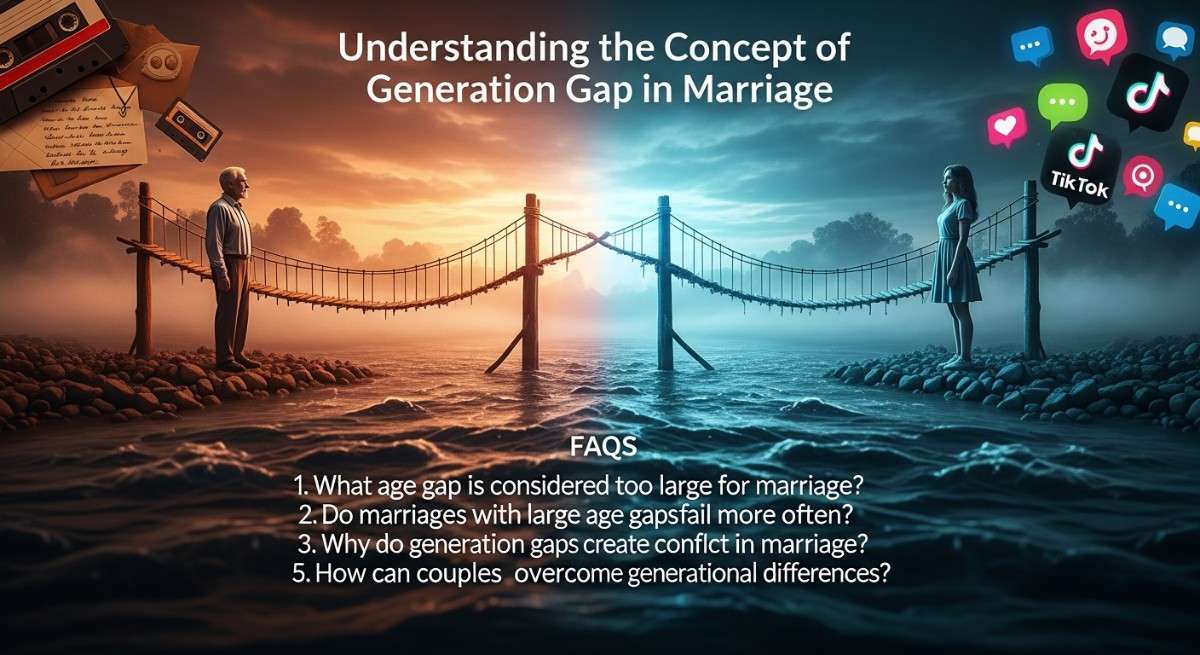
Understanding the Concept of Generation Gap in Marriage
Couples who belong to different age groups with different values, habits, and worldviews have a generation gap. There’s more to this gap than numbers. It’s easy to ignore a five-year difference, but a fifteen-year difference can change everything. Imagine two people standing on opposite riverbanks trying to build a bridge. Both sides need effort, patience, and understanding to connect.
In many cultures, older husbands married younger women used to be normal. In today’s world, relationships are changing. Nowadays, people value emotional compatibility, shared goals, and lifestyle alignment more than traditional expectations. Because they often share similar cultural experiences and life stages, couples closer in age are becoming more common.
Even so, age-gap marriages continue to get attention because they challenge social norms. Some people think they’re romantic and adventurous. Some people view them with suspicion, especially if one partner has more power, wealth, or emotional influence. As a result of social media, private relationships have become public discussions filled with judgment and assumptions.
The issue gets more complicated when couples realize they’re not just dealing with age differences. Different music tastes, different technology, different childhood memories, different career timing, different emotional expectations, even different definitions of happiness. When one partner dreams of retirement and peace, the other is still building a career and exploring life. Conflicts between these priorities often lead to divorce.
It’s often said that marriage is a partnership built on love, trust, and understanding. What happens when two people come from completely different generations? While one partner remembers cassette tapes and handwritten letters, the other grew up with TikTok and instant messaging. It might seem exciting at first, even romantic. Eventually, the generation gap in marriage can create tension that quietly grows.
The average age difference between married couples is relatively small, according to recent studies. According to Pew Research Center, the average age gap in U.S. marriages is around 2.2 years. Communication, financial control, lifestyle expectations, and long-term compatibility often face greater challenges in marriages with age gaps of 10 years or more.
Others struggle with conflicts that seem impossible to resolve despite a large age difference. It’s simple: age isn’t always a bad thing. Having different life experiences, priorities, emotional maturity, and social expectations is the real challenge. Couples with a wide age gap sometimes spend years trying to understand each other.
What Defines a Large Age Difference in Marriage?
An age gap of 10 years or more is generally considered a significant age gap marriage. Recent relationship studies show couples with smaller gaps often communicate better and have similar long-term goals.
It’s hard to predict success or failure based on numbers alone. In contrast, a relationship between a 30-year-old and a 40-year-old might feel balanced, whereas a relationship between an 18-year-old and a 28-year-old might have major emotional and developmental differences. A person’s age doesn’t matter as much as when they’re born.
Why Modern Relationships Change
Emotional connection is more important than rigid traditions to today’s generation. There’s more financial independence for women, more emotional expression for men, and more flexibility in relationships than ever before. Age-gap relationships are more visible now than ever before because of this cultural shift.
Despite this, modern couples are under more pressure to respect each other. Because younger generations expect partnership over hierarchy, relationships built on financial dependency or authority tend to struggle.
Psychological Impact of Age Differences
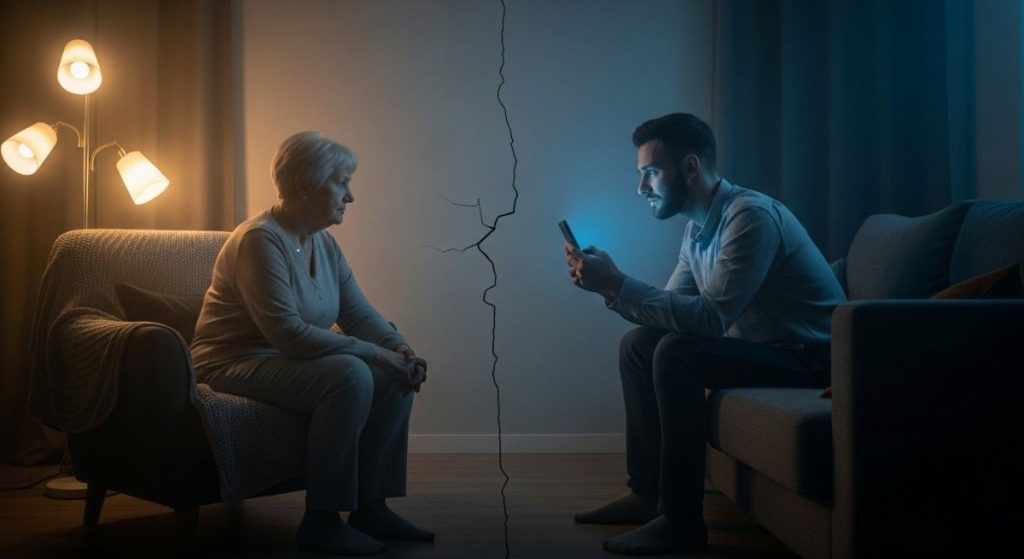
Outsiders don’t always realize how complicated age-gap marriages are. The age of a person doesn’t matter when it comes to falling in love. The reason they fall in love is because of chemistry, comfort, attraction, and emotional connection. After a few years of pressure, psychological differences slowly surface like cracks in a wall.
There’s a lot of pressure when it comes to emotional timing. It’s possible that an older partner knows who they are and what they want. It’s normal for a younger spouse to be exploring identity, career ambitions, or personal freedom. Having this imbalance can be frustrating. There’s one partner who wants stability, and the other who wants discovery.
Early on in a relationship, couples with larger age gaps often feel more satisfied because their differences feel exciting and complementary. As life-stage differences become harder to manage, satisfaction may decline.
There’s also a big difference in communication styles between generations. There’s a good chance your older partner prefers direct conversation and traditional roles. It’s common for younger spouses to prioritize emotional openness, mental health discussions, and digital communication. Because of these differences, small disagreements can seem bigger than they really are.
Emotional maturity and life stages
It’s not just age that determines maturity, but also life experiences. After a divorce, career setback, or financial hardship, someone might approach marriage cautiously. It’s possible for a younger partner to still see relationships through an idealistic lens.
Mismatches can lead to misunderstandings. Older people might think the younger spouse is irresponsible, while younger people might think the older partner is controlling or emotionally distant. There’s nothing wrong with either perspective. They’re just coming from different backgrounds.
Different communication styles
Communication in age-gap marriages can feel like using two different operating systems. One partner likes face-to-face conversations. Other people may express their feelings through texting or social media. Different people express themselves in different ways, even when it comes to humor and emotion.
Over time, small differences become symbolic. Social media arguments may actually be about respect, privacy, or emotional attention. The same fights are repeated by couples who don’t recognize this hidden layer.
Common Causes of Conflict in Age-Gap Marriages
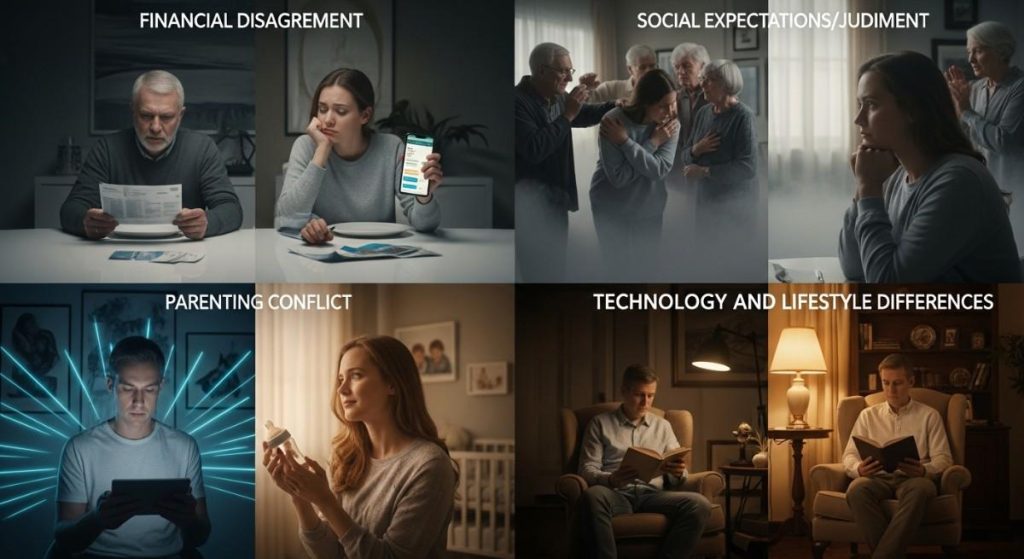
There’s usually a gradual development of conflict in marriages with large age gaps instead of an explosion. Initially, the age gap might seem cute and harmless. Each spouse admires the other’s maturity, while the younger spouse feels energized by the younger’s enthusiasm. Real-life responsibilities creep in after the honeymoon phase fades, like heavy furniture in an empty room.
There are a lot of financial disagreements. The older spouse may have savings, investments, or an established career, while the younger partner may be still learning. Power struggles can happen unintentionally because of this imbalance. It’s been shown in relationship studies that the older partner controls more financial resources, which could influence decision-making.
There’s also tension caused by social expectations. It’s possible that friends and family will question your relationship’s authenticity. Others think the older spouse wants control or validation, while others think the younger spouse wants money or security. The constant criticism from outside can exhaust couples, especially if they’re already fighting internally.
It’s another major battleground when it comes to parenting. It’s possible for one spouse to want kids right away, while the other doesn’t feel ready emotionally or financially. There are cases where the older partner already has kids from a previous relationship, adding to the emotional complexity. Many couples underestimate how much patience it takes to blend families across generations.
There’s also a conflict between technology and lifestyle habits. While one spouse might enjoy quiet evenings and traditional routines, the other might thrive on social media trends, online communities, and fast-changing cultural habits. While these differences may seem minor on their own, together they slowly change how you live.
| Common Conflict Area | Typical Challenge |
|---|---|
| Finances | Unequal income or financial control |
| Communication | Different emotional expression styles |
| Parenting | Opposing timelines and expectations |
| Social Life | Different interests and friend circles |
| Technology | Contrasting digital habits |
| Health | Aging concerns appearing earlier for one partner |
Financial Priorities and Spending Habits
Values are reflected in money, and they differ between generations. Security, property ownership, and retirement planning might be top priorities for older spouses. Experiences, travel, and flexible careers may be important to younger partners.
Having a clash like this can feel like driving opposite directions in the same car. The more you don’t compromise, the more resentment you’ll have.
Social and cultural expectations
People have strong opinions about age-gap relationships, especially if they’re over ten years apart. It’s common for couples to feel judged at family gatherings, social events, or even online. Partner’s can feel emotionally isolated and defensive when they’re constantly criticized.
Parenting and Family Planning Conflicts
The more biological or emotional differences there are between partners, the harder it is to plan a family. Some couples want freedom and exploration before settling down, while others feel pressured by time.
Technology and lifestyle differences.
Whether it’s entertainment choices or sleep routines, generational differences matter. One spouse might like quiet weekends, while the other likes social events and digital engagement. Leisure activities can become frustrating over time.
How Society Views Age-Gap Relationships
It’s common for society to treat age-gap marriages like public property. People stare, gossip, and assume they know the couple without knowing anything about them. Assumptions like these create invisible emotional pressure that many marriages can’t handle.
It’s especially obvious when there are double standards. When older men marry younger women, they’re normalized, but when older women marry younger men, they’re criticized. As a result of social media, relationships have become viral debates full of stereotypes and moral judgments.
There’s also a generational influence on public opinion. In relationships, younger generations are more cautious about power imbalances. It’s common for online discussions to focus on emotional manipulation, maturity gaps, and dependency issues.
However, public opinion doesn’t determine how good a relationship is. Couples who navigate these pressures successfully build strong communication and don’t let outside voices define them.
Gender-Double Standards:
It’s common for society to label an older man successful for dating a younger woman. The criticism gets harsher and more personal when the roles are reversed. When couples already have generational differences, these unfair standards make it harder to get along.
Social Media Judgment and Public Pressure
The online culture has changed how we view relationships. It’s common for viral comments and relationship “experts” to simplify complicated marriages. Just because strangers don’t approve can make couples doubt themselves.
The Hidden Power Dynamics in Large Age Gaps
Power imbalances are one of the most sensitive topics in age-gap marriages, as they often hide beneath affection and romance. Your older partner may be more financially secure, have more life experience, be more stable professionally, or be more confident emotionally. All of these qualities aren’t bad on their own, but together, they can create an unequal power dynamic.
Imagine a dance where you always lead and your partner struggles to catch up. It might even happen that the follower stops expressing opinions altogether. In these situations, emotional dependence grows silently, especially if the younger spouse relies heavily on the older one for money, guidance, or validation.
Age-gap relationships sometimes face higher risks of financial control and unequal decision-making. There’s nothing wrong with age-gap marriages. It just means couples should protect equality and respect each other.
Balance is key to healthy relationships. A younger spouse needs to feel empowered to disagree, grow independently, and maintain his or her identity. It’s important that the older partner doesn’t act like a parent or a control freak. When one person feels small, love can’t thrive.
Financial control
When one spouse earns significantly more or owns most of the assets, money can become a subtle influence tool. This risk can be reduced by financial transparency and joint decision-making.
Dependence on emotions
Sometimes big age gaps create mentor-like dynamics instead of equal partnership. The younger spouse can lose confidence and independence over time.
Benefits of Marriages with Age Differences
Many age-gap marriages work out beautifully despite the challenges. Sometimes, the differences make the relationship stronger. The opposites can balance each other out like fire and water, creating steam powerful enough to move an engine.
It’s usually easier to deal with emotional resilience when you’re with an older partner. You’ll probably find your spouse is more spontaneous, optimistic, and adaptable if they’re younger. Respect and emotional awareness can complement each other when both people stay respectful.
Some couples report stronger communication because they talk about differences instead of making assumptions. Early on, they learn compromise is necessary, so they’re honest.
Marriages with age gaps can also challenge rigid social expectations. The couple learns to focus on emotional connection instead of public approval. A shared resilience can sometimes create a strong emotional connection.
Stability and experience
During stressful times, older spouses are often a source of emotional stability. Couples can navigate conflict more calmly and realistically with life experience.
Emotional balance and growth
Younger partners may encourage flexibility, openness, and curiosity. Maintaining a balance can help older spouses stay active and social.
Real-Life Challenges Couples Often Face
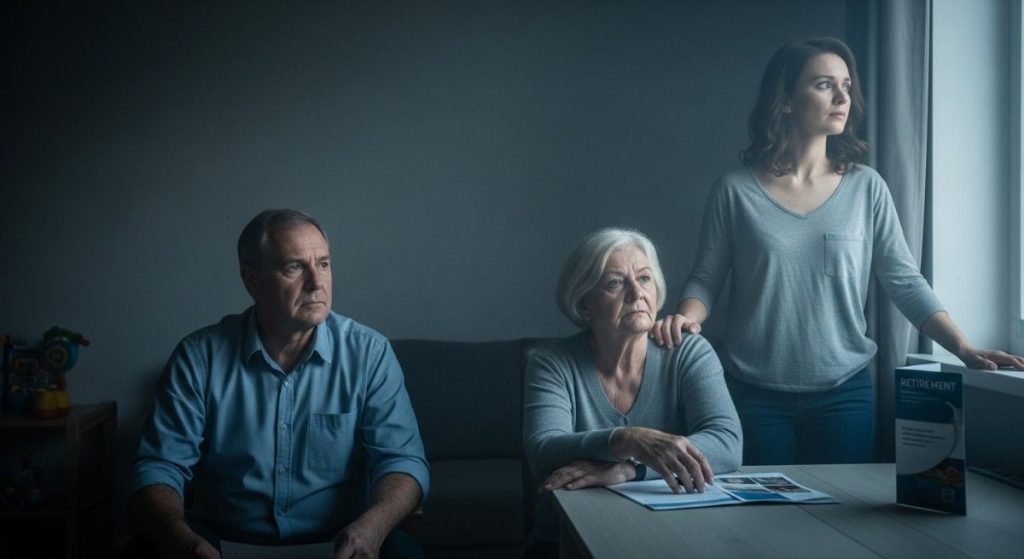
As time passes, practical realities become harder to ignore. It’s common for older spouses to have health issues earlier, creating anxiety for both of them. You might be thinking about retirement while your partner is focused on career growth and raising kids.
There can be loneliness in a marriage when there’s this mismatch. Caregiving responsibilities may catch up with the younger spouse sooner than expected. It’s possible that the older partner doesn’t want to be a burden.
It’s also different how social circles evolve. Friends of the older spouse might talk about retirement plans, while friends of the younger partner might talk about nightlife, career changes, or parenting young kids. Sometimes couples feel disconnected from both generations at the same time.
Health and Aging Concerns
The aging process affects energy levels, health priorities, and physical intimacy. Couples who don’t talk about these changes may create emotional distance.
Career and retirement differences.
It’s common for priorities to differ at different career stages. While one spouse might want adventure and professional growth, the other might want peace and stability.
How Couples Can Reduce Generational Conflict
It doesn’t happen by accident that age-gap marriages work. Both partners need to be intentional about communicating, empathizing, and being emotionally mature. People who thrive tend to focus less on age and more on shared values.
You have to respect each other. It’s important that the older spouse doesn’t treat the younger one like a child, and the younger one shouldn’t dismiss their experience. It’s more important to be equal than to be old.
It’s also important to be brutally honest in communication. Before resentment develops, couples have to talk about money, kids, health, aging, and long-term goals. It’s dangerous to be silent because assumptions grow quickly in the dark.
It’s important to keep healthy boundaries with your family and on social media. No one should have more influence over the relationship than the people living there.
Building Respect Instead of Control
Both partners can grow individually without fear or dominance when they respect each other. Emotional safety is destroyed by control, and trust slowly erodes.
Communication Strategies That Work
It’s good for couples to check in regularly, listen actively, and set clear expectations. Having honest conversations may feel uncomfortable at first, but avoiding them creates bigger problems in the long run.
Can Love Truly Overcome the Generation Gap?
A genuine emotional connection can help couples survive extraordinary challenges, but it can’t solve every problem. Only couples who ignore, deny, or refuse to adapt to the generation gap become dangerous.
You don’t have to have the same personality or experiences to have a successful marriage. We’re building a shared emotional world despite our differences. There are some couples who do this beautifully. There are others who fail because they expect attraction alone to keep them going.
In an age-gap marriage, both partners need to be emotionally flexible, self-aware, and willing to grow together. You can’t shield yourself from conflict with love. Over time, it’s like a bridge that needs maintenance, work, and constant rebuilding.
It’s not about whether age differences cause conflict. Most of the time, they do. There’s a deeper question: Are two people mature enough to handle their conflicts honestly, empathetically, and respectfully?
Conclusion
Marriages with generation gaps can be both beautiful and challenging. There’s a lot of contrasting perspectives, lifestyles, and emotional needs in a relationship when there’s a big age difference. In the beginning, these differences might spark excitement, but eventually they’ll demand patience, communication, and compromise.
Research shows that couples prefer smaller age differences because shared life stages reduce conflict. Even though there’s an age gap, many marriages still work because of emotional compatibility.
Relationships that are healthy aren’t built on control, dependency, or public approval. Mutual respect, emotional honesty, and a willingness to evolve together build them. Only if both people commit to understanding each other beyond the calendar can love bridge generations.
FAQs
1. What age gap is considered too large for marriage?
Relationships with an age gap of 10 years or more are commonly considered big age gaps. It’s more about maturity, shared goals, and emotional compatibility than anything else.
2. Do marriages with large age gaps fail more often?
Large age gaps may increase divorce risk because of lifestyle differences, communication challenges, and unequal power dynamics. It’s still possible to maintain a healthy marriage for a long time.
3. Why do generation gaps create conflicts in marriages?
Different generations have different views on money, technology, parenting, communication, and lifestyle. If couples don’t communicate openly, these differences can cause misunderstandings.
4. Can age-gap marriages be healthy?
That’s right. When both partners respect each other, maintain equality, and share similar long-term values, many age-gap marriages work.
5. How can couples overcome generational differences?
By communicating honestly, empathizing, sharing goals, being flexible, and respecting each other, couples can reduce conflict. You can also protect your relationship by avoiding judgment from others.