

History of the World Health Organization
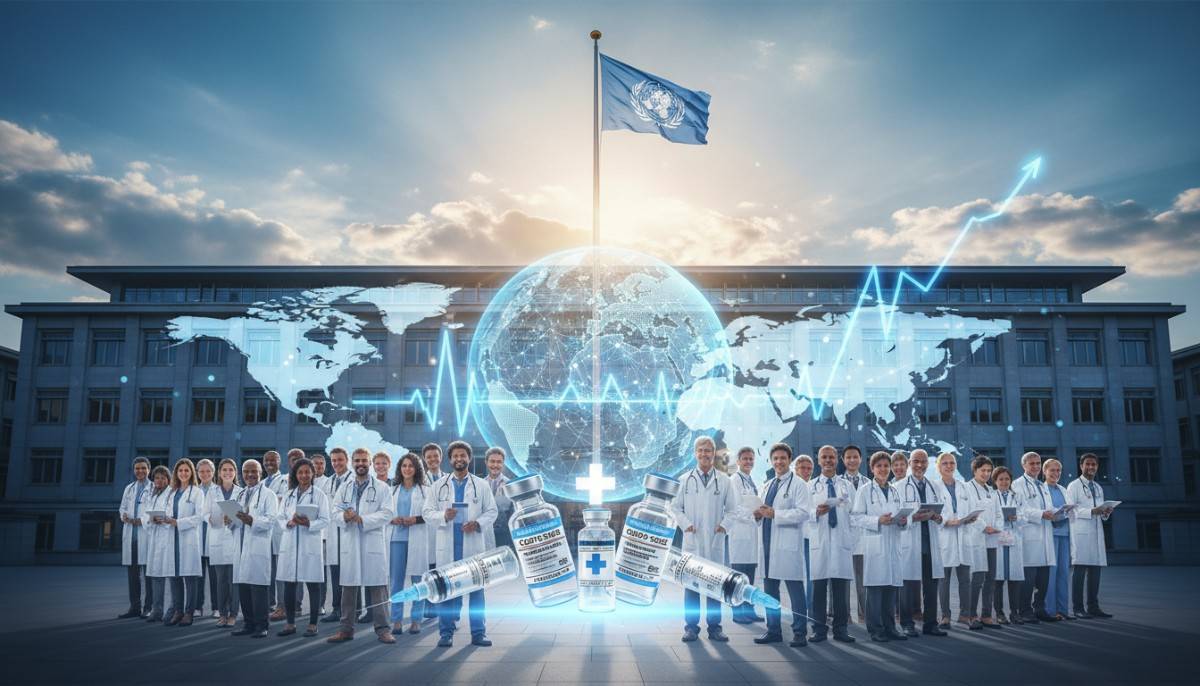
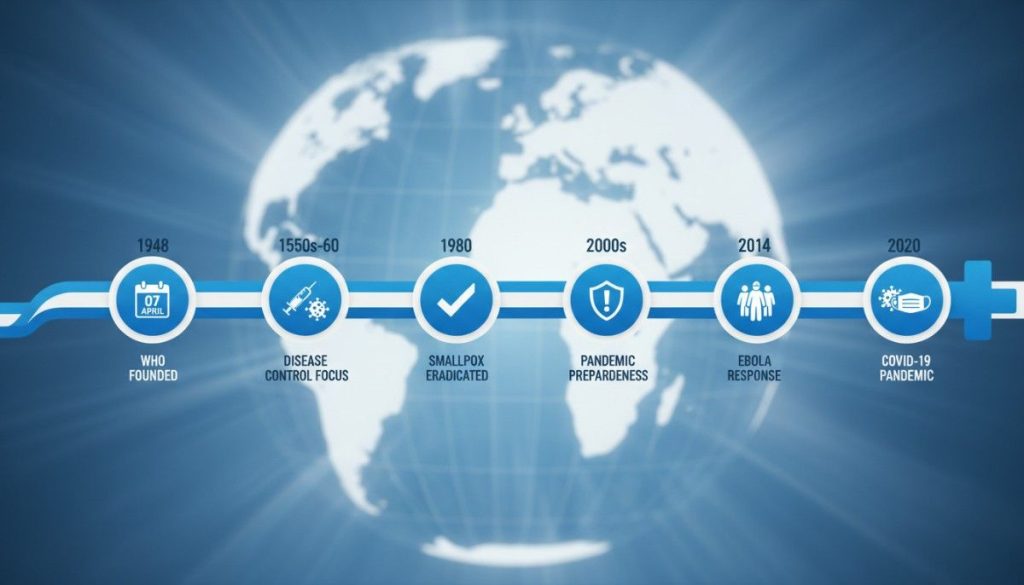
On April 7, 1948, the World Health Organization was officially founded. World Health Day is now celebrated every year on this date. To address international public health issues, WHO was created under the United Nations.
A global health authority was urgently needed after World War II to coordinate medical efforts around the world. Wars, disease outbreaks, and poor healthcare infrastructure highlight how important international collaboration is.
The WHO started out controlling infectious diseases like malaria, tuberculosis, and smallpox. Its responsibilities have expanded to include mental health, maternal health, nutrition, vaccination campaigns, emergency response, and environmental health.
World Health Organization works with governments, health institutions, scientists, and humanitarian organizations in more than 150 countries.
The World Health Organization, also known as WHO, is one of the most important international organizations for health and medicine. With its founding in 1948, the organization has improved healthcare systems, controlled infectious diseases, and promoted healthy lifestyles.
World Health Organization continues to influence global healthcare through fighting deadly pandemics and providing medical aid to developing countries. Each year, it benefits millions of people with its programs, policies, and research initiatives.
Healthcare challenges no longer remain confined to a single country in today’s interconnected world. The spread of diseases can be rapid across borders, so international cooperation is essential. Health security and access to healthcare are improved by the World Health Organization, which acts as a bridge between nations.
Main Objectives of the World Health Organization
World Health Organization has several core goals to improve global health. Some of them are:
1. Disease Prevention and Control
World Health Organization prevents and controls infectious diseases. Health crisis response is coordinated by the organization, which monitors outbreaks, gives medical advice, and provides medical guidance.
2. Health promotion.
Getting people to live healthier lifestyles is another important goal. Physical activity, balanced diets, mental health awareness, and tobacco control are all promoted by WHO.
3. Universal healthcare access
In order for everyone to have access to quality medical care, WHO advocates universal healthcare.
4. Emergency health response
Delivering medical supplies and technical support during natural disasters, pandemics, wars, and humanitarian emergencies is what they do.
5. Research and Innovation
In order to improve treatment methods and healthcare technologies, WHO supports scientific research and medical innovation.
Structure of the World Health Organization
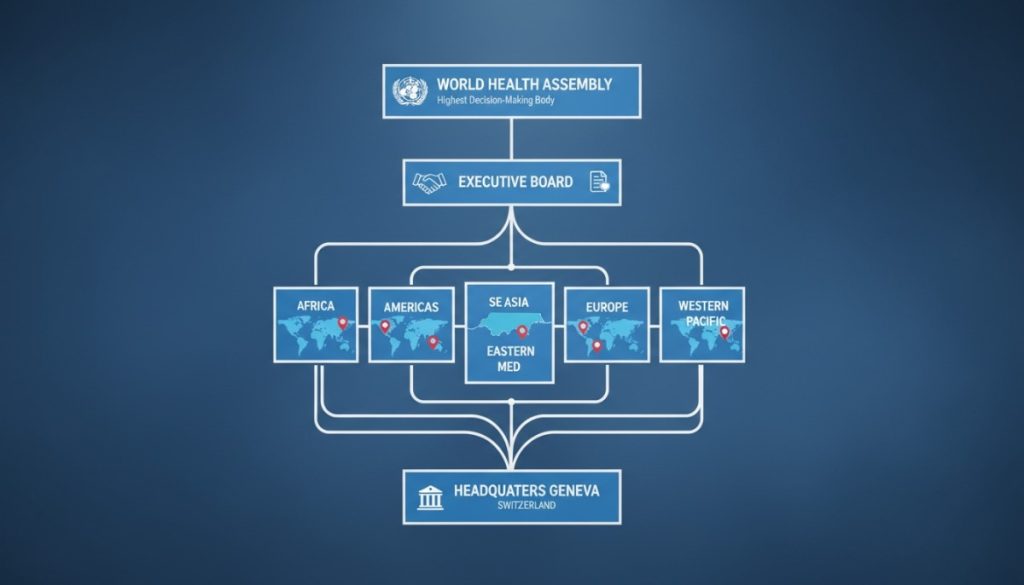
The WHO has a well-organized structure that makes it easy to manage global health programs.
World Health Assembly
Within WHO, the World Health Assembly is the highest decision-making body. Representatives from member countries gather annually to discuss health priorities and approve budgets.
Executive Board
WHO’s Executive Board consists of health experts from different countries who help implement its policies.
Regional offices
There are six regional offices for WHO. They’re in Africa, Europe, the Americas, Southeast Asia, the Eastern Mediterranean, and the Western Pacific.
Headquarters
Geneva is where the organization’s headquarters are.
Importance of the World Health Organization
Health systems around the world rely on the World Health Organization. Health education, medical research, and policy development are all affected by its influence.
International coordination during pandemics and health emergencies would be much weaker without WHO. When outbreaks happen, the organization helps countries share information quickly.
The WHO also sets international health standards that guide medical professionals and healthcare institutions. Vaccine quality, patient safety, and disease surveillance are all improved by these standards.
Furthermore, WHO provides medical resources, training, and funding to low-income countries. To improve their healthcare infrastructure, many developing nations rely heavily on WHO help.
WHO and the Pandemic Response
World Health Organization’s most visible role is responding to global pandemics.
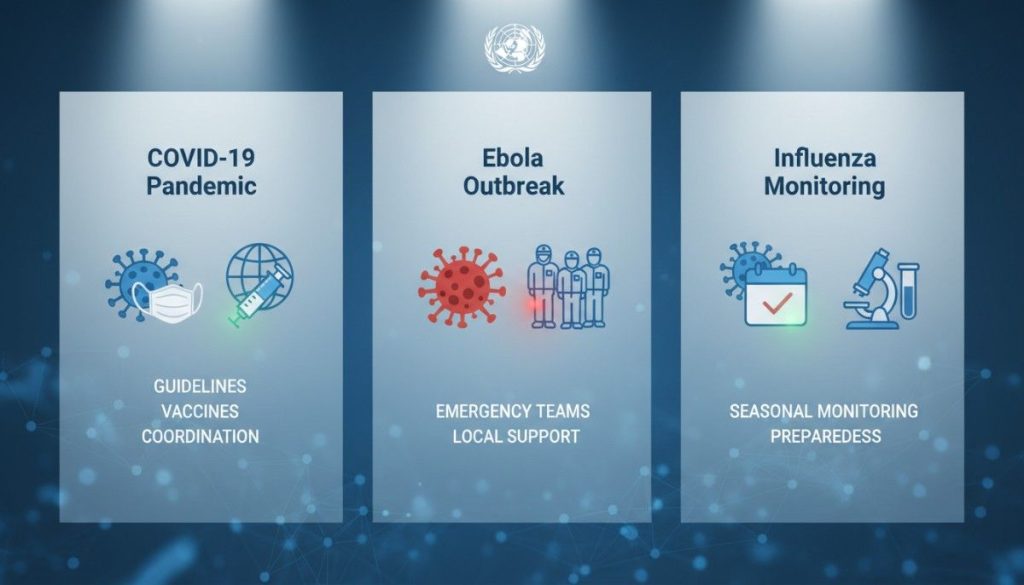
COVID-19 Pandemic
Globally, WHO provided information, medical guidelines, and coordination support during the COVID-19 pandemic. Monitoring virus transmission and recommending prevention measures was done with the help of scientists and healthcare experts.
Furthermore, WHO helped distribute vaccines and medical equipment to countries with limited resources.
Ebola Outbreak
During the Ebola outbreaks in Africa, WHO deployed emergency medical teams and supported local healthcare workers.
Influenza monitoring
In order to prepare for seasonal outbreaks and potential pandemics, the organization monitors influenza viruses continuously.
WHO’s Role in Vaccination Programs
The WHO has been instrumental in global immunization efforts, which remain one of the most effective public health tools.
Smallpox Eradication
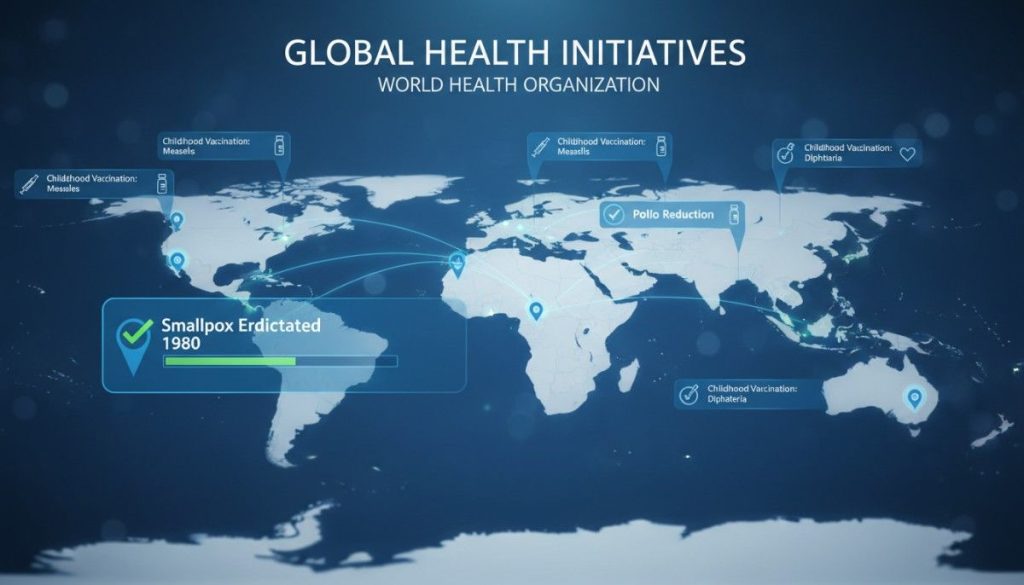
The eradication of smallpox in 1980 was one of WHO’s biggest achievements. It was the first time a disease was eliminated through a coordinated global vaccination campaign.
Polio reduction
Mass immunization initiatives continue to work toward eliminating polio worldwide.
Childhood Vaccination
Children are protected from diseases such as measles, hepatitis, and diphtheria through vaccination programs.
World Health Organization and Mental Health
WHO has become increasingly focused on mental health. Organizers recognize the importance of emotional and psychological well-being.
The WHO promotes depression awareness, anxiety prevention, and stress management. It encourages governments to improve mental health services and reduce stigmas surrounding mental illness.
As millions of people experienced stress, isolation, and emotional struggles during the COVID-19 pandemic, mental health support was crucial.
WHO and the Global Health and Equality
There’s still a problem with healthcare inequality around the world. There are still millions of people without access to clean water, clean medicine, and proper medical care.
By supporting vulnerable populations and promoting fair healthcare policies, WHO helps reduce these inequalities. Among the things the organization focuses on:
- Health of mothers
- Nutrients for kids
- Access to rural healthcare
- Drinking water you can trust
- Low-income countries’ disease prevention
It’s a basic human right that everyone should have access to.
Challenges Facing the World Health Organization
Although WHO has made a lot of progress, it still faces a lot of challenges.
Funding limitations
A lot of WHO’s funding comes from member countries and donors. An organization’s ability to respond to emergencies can be affected by limited funding.
Political pressure
Political disagreements among countries can complicate WHO’s decision-making process as an international organization.
Emerging diseases
Infectious diseases and viruses keep emerging, putting global health at risk.
Climate change
In addition to heatwaves and food insecurity, climate change makes public health management more difficult.
The World Health Organization’s Future
The future of global healthcare depends heavily on international cooperation, and WHO will remain a key player.
Medical innovation, artificial intelligence, and telemedicine are going to transform healthcare systems everywhere. In terms of ethical healthcare development and ensuring equal access to medical advances, WHO will play a key role.
To prevent future global health crises, the organization is also supposed to strengthen pandemic preparedness programs.
With healthcare challenges evolving, WHO’s mission to improve human health and well-being will be even more important.
Why the World Health Organization Matters
By vaccinating, preventing diseases, responding to emergencies, and educating people, the WHO has saved millions of lives.
Every person on the planet benefits from its work, whether it’s safer medicines, cleaner environments, or better healthcare.
WHO keeps humanity healthy and safe by promoting international cooperation and scientific research.
It reminds the world that health isn’t just a national issue, but a shared global responsibility. One of the most important institutions dedicated to protecting human life in an era of rapid globalization and increasing health threats is the World Health Organization.
Conclusion
The World Health Organization leads global healthcare. The World Health Organization has done a lot for public health on a global scale, from fighting deadly diseases to promoting mental health awareness.
Even though it faces challenges like funding shortages and emerging diseases, its contributions to humanity remain invaluable. As long as the World Health Organization keeps collaborating, innovating, and dedicating itself, generations to come will live healthier lives.
Frequently Asked Questions (FAQs)
1. What is the World Health Organization?
WHO promotes global public health and coordinates international healthcare efforts for the United Nations.
2. When was the World Health Organization established?
World Health Day is celebrated every year on April 7th, the date when the organization was founded.
3. What are WHO’s main functions?
The WHO promotes healthy lifestyles, disease prevention, vaccine programs, emergency response, and healthcare research.
4. Where is the organization’s headquarters located?
Geneva is where the World Health Organization is based.
5. Why is the World Health Organization significant?
Besides helping countries manage health crises, WHO also improves healthcare systems, fights diseases, and protects public health.