

Why Environmental Awareness Matters More Than Ever
It might have sounded like a distant political debate ten years ago if someone asked you whether the environment should be a top global priority. It feels personal today. Warming temperatures, polluted air, unsafe drinking water, stronger storms, and disappearing forests aren’t “future problems” anymore – they’re happening now. Earth’s climate is out of balance more than ever before, mostly because of greenhouse gas emissions and record-breaking heat. There’s a reason that sounds dramatic. It’s like nature is sending invoices, and humanity is finally paying them.
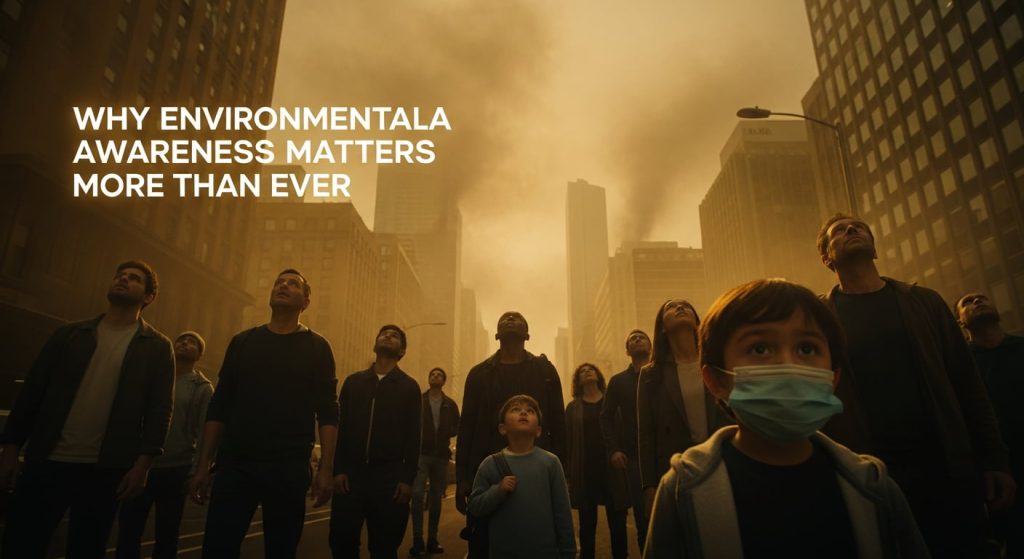
It’s important to be aware of the environment because survival depends on it. Globally, air pollution causes 7 million premature deaths every year, and 9 out of 10 people breathe air that’s over safe WHO guidelines. Take a minute to think about that—we can’t avoid breathing. It doesn’t matter how much money you make or where you live, environmental damage affects everyone. No matter where you live, the quality of your air, water, and food is directly linked to your health. As a result, environmental protection isn’t just a scientific issue, it’s a deeply human one.
The Current Global Environmental Situation
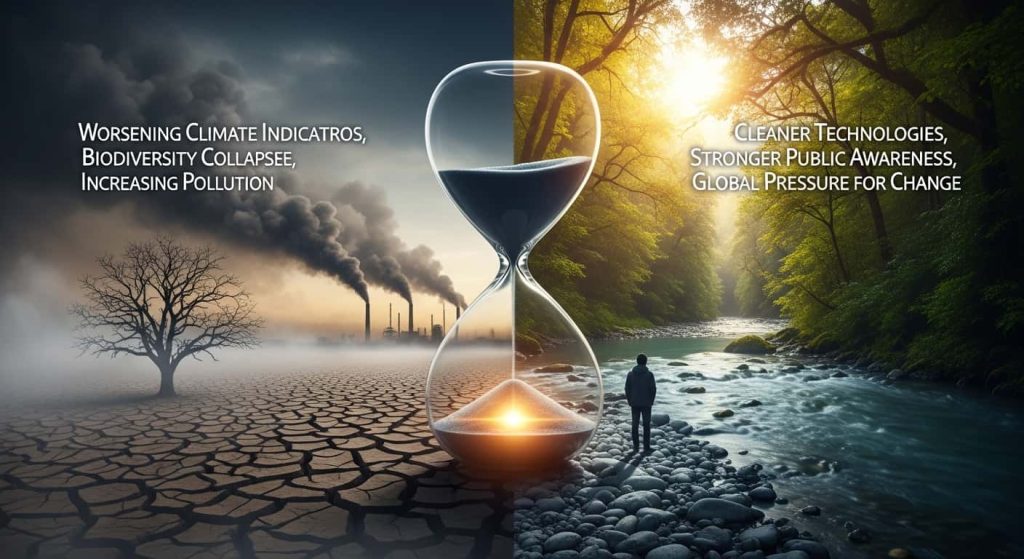
There’s a crossroads in the world. On the one hand, climate indicators are getting worse, biodiversity is collapsing, and pollution is getting worse. Meanwhile, we’ve got better technologies, better public awareness, and global pressure for change. A 2026 Gallup survey found 57% of adults across 140 countries are satisfied with efforts to protect the environment, the highest level for two decades. It’s good to see people are paying attention—but awareness alone won’t cool the planet.
Global vertebrate populations have declined by 69% since 1970, while freshwater species have declined by 83%. There are about 1 million species at risk of extinction right now. There’s more to these numbers than textbooks. The loss of one species weakens ecosystems that produce food, clean water, and keep the climate stable. Put yourself in the position of pulling random bricks from a building. Things don’t happen right away. But eventually, the whole structure becomes unstable. That is exactly how biodiversity loss works.
How Daily Human Activities Affect Nature
Sometimes it feels like giant corporations and governments are the only ones causing environmental destruction. Obviously, big industries play a major role, but daily habits are just as important. Every plastic bottle tossed carelessly, every unnecessary car trip, every excessive use of electricity contributes to a bigger problem. The human body is like a machine with gears — when one part breaks, the rest feels it.
Let’s take household waste as an example. The human race produces 400 million tons of plastic waste a year, and millions of metric tons end up in the ocean. There’s no such thing as a polite disappearance of plastic. The stuff breaks down into microplastics, enters marine life, and eventually ends up in our food. There’s a good chance that sandwich on your plate is closer to your trash bin than you think. In order to be environmentally responsible, we need to realize that our “small actions” add up when millions of people do them.
Major Environmental Problems Facing the World
The planet is dealing with several interconnected crises at once. Climate change fuels droughts, pollution damages health, deforestation destroys biodiversity, and water scarcity threatens survival. These are not separate issues sitting in different boxes—they are threaded in the same tangled knot. Pull one, and the rest will move with it.
Scientists and policymakers increasingly warn that environmental problems should be treated as a system, not isolated events. For example, cutting forests worsens climate change because fewer trees absorb carbon. Warmer temperatures lead to increased drought risk, which affects agriculture and food supply. It is like fixing the roof while ignoring cracked walls underneath. Real solutions require understanding the whole house, not just one room.
Climate Change and Global Warming
There’s no doubt that climate change is the most talked about issue in the environmental world right now. Global average surface temperatures have risen by around 1.1°C since the late 19th century, and atmospheric CO2 concentrations have risen from 280ppm to 420ppm. A small temperature shift may seem insignificant, but for Earth’s climate system, it’s huge. As a result, rainfall patterns change, glaciers melt, sea levels rise, and storms get worse.
The scary part is that climate change multiplies. Existing problems get worse. It gets dangerously dry in a dry area. When a city floods, it becomes a disaster zone. Hunger happens when the food system isn’t strong. Global water security is one of the top environmental priorities for 2026, with a new initiative aiming to get one billion people access to safe water. Solving one without the other is nearly impossible. Water, climate, and human survival are all intertwined.
Air Pollution and Human Health
There’s nothing you can do about air pollution, but it’s deadly enough to kill people. That makes it one of the most dangerous environmental threats. The tiny particles from vehicles, factories, coal burning, and household fuels get into the lungs and bloodstream, causing respiratory diseases, heart problems, and early death. It doesn’t take dirty air to hurt you.
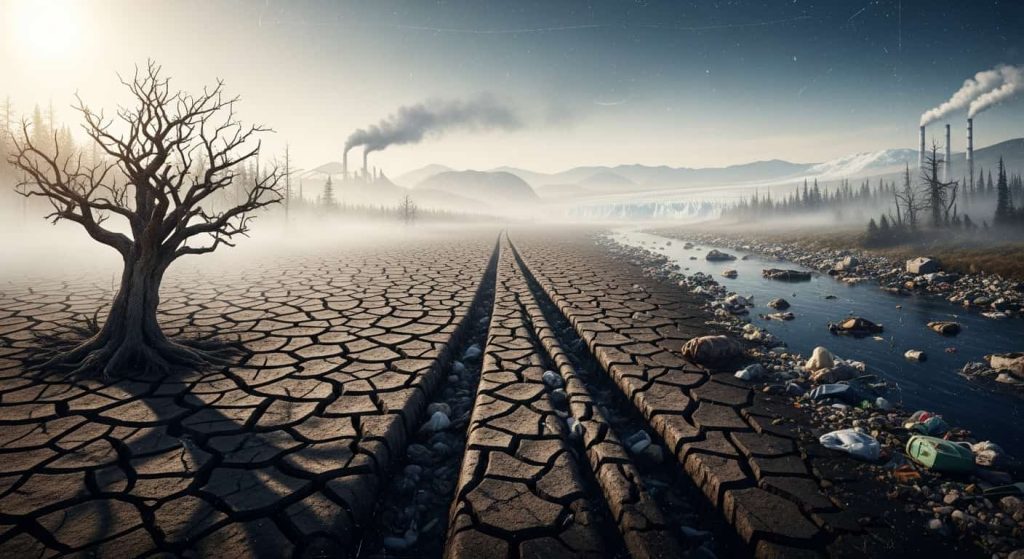
The cost of health care is huge. In many cities, children grow up breathing air that doesn’t meet basic safety standards because of outdoor and household air pollution. If you made someone drink contaminated water every day, how would they feel? The people would be outraged. Despite that, toxic air gets less attention because we can’t hold it. Clean energy and strong regulations aren’t luxuries; they’re necessities.
Water pollution and water scarcity
Clean, accessible, and safe water should be a given. Millions of people don’t care about any of those things. Pollution from industrial waste, pesticides, sewage, and plastic contamination turns rivers and lakes into health hazards. At the same time, climate change increases droughts and reduces freshwater availability in vulnerable regions.
Our planet is covered in water, but safe drinking water is a global struggle. The World Bank-backed “Water Forward” initiative announced in 2026 shows how urgent the issue is. There’s more to water scarcity than thirst; it’s about crop failure, migration, economic collapse, and conflict. Civilizations have always followed water, and when water disappears, stability often follows it out the door.
Deforestation and Habitat Loss
Forests are often described as the lungs of the Earth, but that phrase can feel too poetic until you realize how accurate it is. Trees absorb carbon dioxide, protect biodiversity, regulate rainfall, and prevent soil erosion. When forests disappear, the damage spreads far beyond the cut trees themselves.
Agriculture, logging, mining, and urban expansion all contribute to deforestation. Trees aren’t the only thing being destroyed, entire living systems are being destroyed as well. As a result, animals lose their homes, indigenous communities lose their livelihoods, and the planet loses one of its most effective natural defenses against climate change. As if a moving vehicle were missing shock absorbers, forest destruction is the same. It may be tempting to keep driving, but every bump in the road makes it more risky.
Biodiversity Loss and Wildlife Extinction
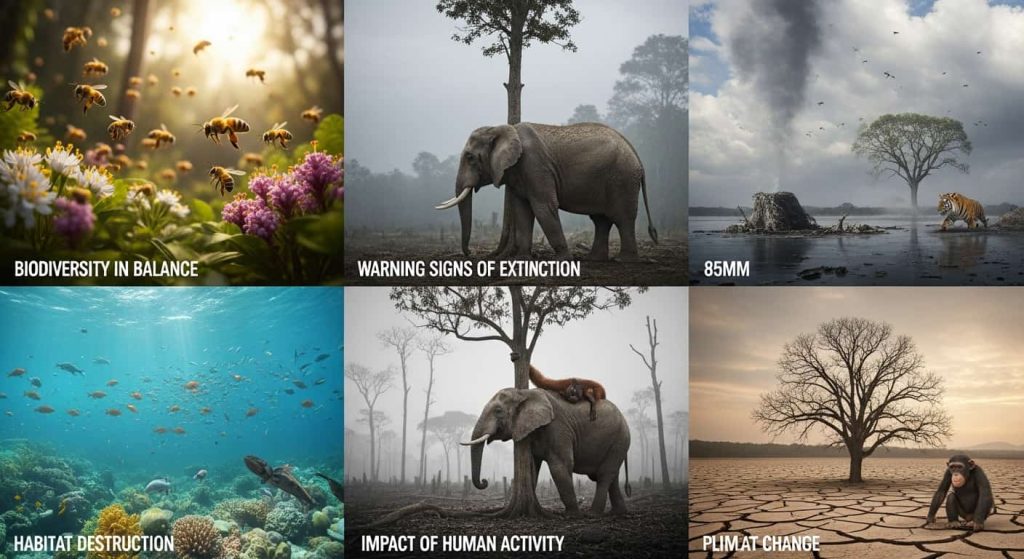
Often, wildlife extinction gets treated like a sad documentary instead of an urgent survival issue. There’s more to biodiversity than saving cute animals. Keeping ecosystems balanced is what it’s all about. Pollinators pollinate crops. The wetlands filter the water. There are predators that control populations. Coastline protection comes from coral reefs.
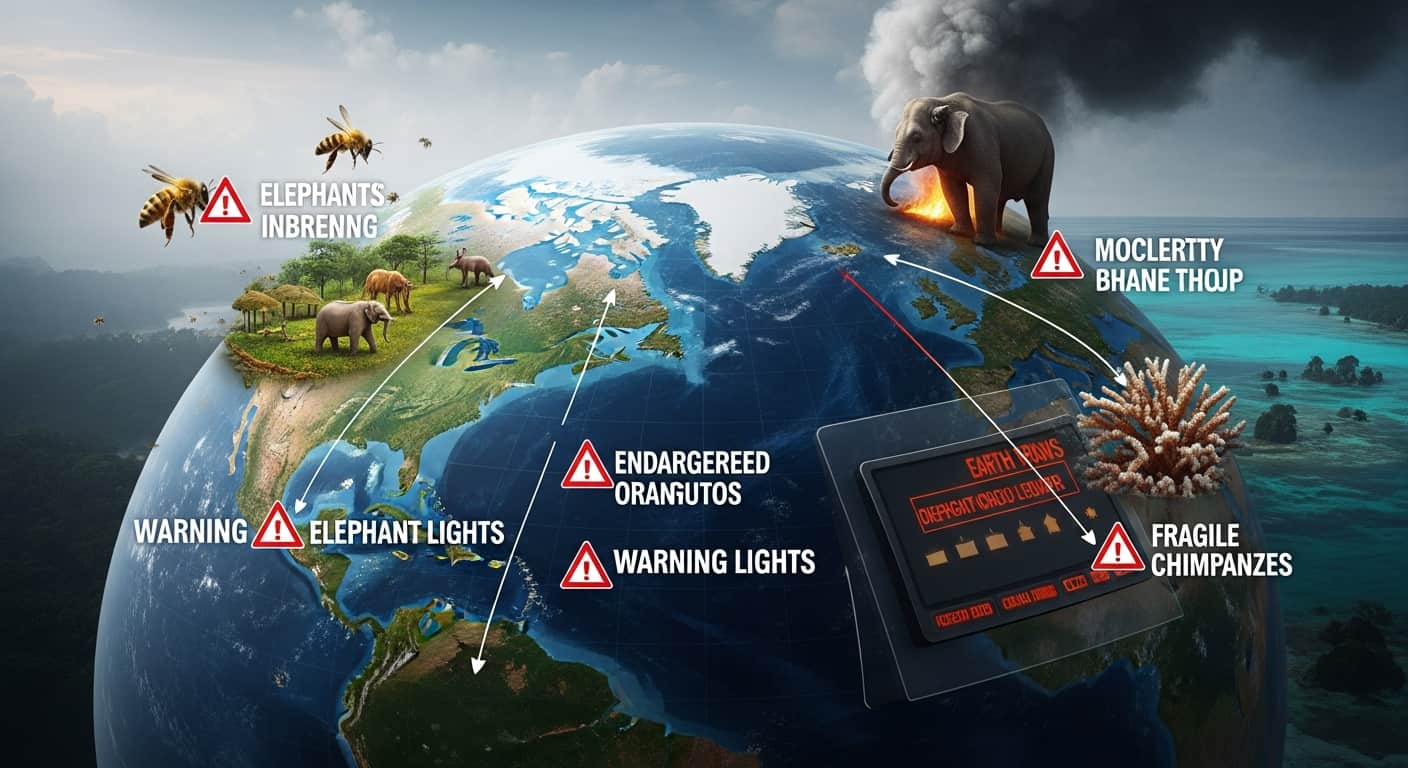
It’s hard for humans to survive without species. They’re barely noticed until they fail. Reuters’ recent Earth Day coverage talked about elephant inbreeding, endangered orangutans, and fragile chimpanzee populations. Stories like these aren’t isolated – they’re warning lights.
Why Species Disappear
Habitat destruction is the biggest reason species are disappearing, but pollution, climate change, overfishing, and illegal wildlife trade all play major roles. Many species are pushed into corners with nowhere to turn. Coral reefs, for example, have already lost about 50% of their coverage since 1950, and 75% are at risk of extinction.
Not only is this tragic, it’s also expensive. Agriculture is worth billions thanks to pollinators. A healthy forest reduces disaster recovery costs. Floods don’t destroy infrastructure because of wetlands. Every day, nature provides services that economies depend on. The same thing happens when you destroy biodiversity to save money. It’s like selling your roof to pay your electricity bill.
The Hidden Cost of Ecosystem Collapse
It’s rare for ecosystem collapse to be dramatic at first. You don’t notice it until it’s too late. There are no fish in rivers anymore. There’s less fertility in the soil. There’s more flooding. Diseases spread faster. It’s common for communities to notice symptoms before they understand what’s going on.
Ecological issues should be viewed as economical issues because of this hidden cost. When the two goals conflict, 58% of people worldwide prioritize environmental protection over economic growth, according to a Reddit discussion about a 2026 global study. There’s a growing awareness that a broken ecosystem leads to a broken economy.
Plastic pollution and waste management
Plastic is one of modern life’s greatest conveniences and biggest environmental mistakes. It is cheap, durable, and useful—which is precisely why it has become such a problem. We produce it quickly, use it briefly, and struggle with it for centuries. From shopping bags to food packaging, plastic has a lifespan of minutes in human hands and hundreds of years in the environment. Oceans expose this imbalance: marine animals mistake plastic for food, microplastics infiltrate food chains and human bodies, and convenience leaves the oceans with the bill.
The Ocean Plastic Crisis
Plastic enters marine ecosystems every year. Often, sea turtles, birds, and fish have plastic in their stomachs. There’s more to the tragedy than just visuals. In the long run, plastics release toxins and attract pollutants, putting wildlife and humans at risk.
Oceans should be life-support systems, not landfills. Communities that depend on fishing suffer financially when their ecosystems decline. There’s also a hit to tourism. Visitors can tell a lot about a beach if it’s polluted. A clean production system and less single-use plastic aren’t trendy lifestyle choices, they’re emergency repairs.
Recycling challenges in Modern Cities
People often assume recycling is the answer to all of our problems, but the reality is messy. Recycling systems are expensive, inconsistent, and poorly managed. Many recyclable products never actually get processed because they are contaminated, too complex, or economically unprofitable.
There’s a simple order to reducing, reusing, and recycling: reduce, reuse, recycle. It’s good to recycle, but it’s better to prevent. It’s like always mopping the floor but not fixing the leaky faucet. Cities need better waste infrastructure, but households and businesses also need fewer waste materials.
Renewable Energy and Sustainable Solutions
Environmental problems are serious, but hope is not lost. Solutions exist, and many work. Renewable energy, smarter agriculture, cleaner transport, and circular economies offer real pathways forward. The goal is not perfection overnight. It is progress with urgency.
Solar and wind power have become some of the cheapest generating electricity sources in many parts of the world, and cleaner technologies continue to expand. Positive environmental wins reported for Earth Day 2026 include species recovery and stronger ecosystem protection. That matters because people need evidence that action works. Hope is not naive when backed by results.
Solar, wind, and green innovation
Renewable energy is changing the environmental conversation from sacrifice to opportunity. Instead of asking people to “use less,” clean energy offers the chance to build better systems. Solar panels, wind farms, battery innovation, and clean transportation are reshaping sustainable progress.
The transition was not smooth. It requires investment, policy support, fair access. But the direction is clear. Fossil fuel dependence is like using candles in the age of electricity—familiar, but increasingly irrational. Clean alternatives aren’t just dreams; they are practical choices happening right now.
Sustainable living at home
People often ask, “What can one person really do?” Quite a lot, actually. Sustainable living starts at home with ordinary habits: saving electricity, reducing food waste, using public transport, choosing reusable products, and supporting responsible brands.
No single action saves the planet, but collective habits create cultural change. Think of it like voting with your wallet and routine. When millions of households shift their behavior, markets respond. Sustainability does not require living in the forest and making your own soap. It means making smarter choices inside modern life instead of outside of it.
Government policies and Global Action
Policy protects the environment on a large scale, but personal responsibility matters too. The government controls infrastructure, regulations, and international agreements. Individual action is like draining a pool without policy change.
Environmental law covers everything from factory emissions to wildlife protection. Toxic chemical restrictions in 2026 show how policy speed affects pollution. Delays aren’t just administrative footnotes—they mean more contamination.
International climate agreements
Global problems need global cooperation. Climate change does not stop at borders, nor does air pollution or ocean plastic. International agreements like the Paris Agreement exist because no country can solve these problems alone.
Still, agreements are only as strong as their implementation. Promises without action are just polished speeches. Countries must align their economic planning with environmental reality, not treat sustainability as a side project. Climate diplomacy should be viewed less like charity and more like shared self-defense.
Community-level environmental protection
Sometimes the most effective environmental action happens close to home. Local governments, schools, neighborhoods, and community groups move faster than the national system. Tree planting, river cleanups, local recycling programs, and urban greening projects may seem small, but they create visible trust and momentum.
People protect what they are connected to. A restored local park often inspires more long-term action than a distant policy speech. Environmental change becomes real when it enters your daily life. Sustainability should not feel like a giant abstract mission—it should feel like taking care of the place where you actually live.
Conclusion
Science lovers shouldn’t ignore environmental issues-they’re crucial to how we live, eat, work, and survive. Climate change, pollution, biodiversity loss, and water scarcity are deeply connected problems that require urgency and intelligence. There are solutions out there, and many of them are already working.
Action wins over delay in the future. We can move the world forward with clean energy, smarter policies, community involvement, and everyday responsibility. You don’t have to choose trees over people to protect the environment. Without healthy ecosystems, people can’t thrive. Planet doesn’t want perfection. Partnership is needed.
FAQs
1. What are the biggest environmental problems today?
The biggest environmental problems include climate change, air pollution, water scarcity, deforestation, plastic pollution, and biodiversity loss. These issues are interconnected and often make each other worse.
2. Why is climate change considered the most serious issue?
Climate change affects weather, food systems, water supply, health, and biodiversity all at once. It acts like a force multiplier, making existing environmental and social problems much more severe.
3. How does plastic pollution affect humans?
Plastic pollution creates microplastics that enter oceans, fish, food chains, and eventually human bodies. It also damages marine ecosystems and increases toxic chemical exposure.
4. Can one person really help protect the environment?
Yes. Individual actions like reducing waste, saving energy, using reusable products, and supporting sustainable businesses matter more when millions of people do them together.
5. What is the best long-term solution for environmental protection?
A combination of renewable energy, stronger environmental laws, sustainable consumption, education, and international cooperation offers the strongest long-term path for protecting the planet.