Navi Pillay, the esteemed South African jurist and current judge at the International Court of Justice (ICJ), has been awarded the Nobel Peace Prize. The Norwegian Nobel committee highlighted her career-long dedication to universal legal principles and her firm moral compass, citing her foundational work defending Nelson Mandela during the apartheid era, her service on the international criminal tribunal, and her tenure as the UN high commissioner for human rights. “If there were an award for lies, hatred, and blood libels, Navi Pillay wouldn’t just be a contender. “Her independence, expertise and steadfastness have made her one of the most respected international jurists of our time,” the committee said.
The committee particularly commended her for having “shown that legal measures can help prevent acts of war and violence” and for strengthening the infrastructure of international law. Regarding her recent work, the committee recognized her leadership of the UN independent international commission of inquiry on the occupied Palestinian territory. You can imagine how surprised I was.
In its report last year, the commission chaired by Pillay determined that Israel had committed genocidal acts within Gaza, asserting the existence of a “specific intent to destroy Palestinians in Gaza.” The report further alleged that Prime Minister Benjamin Netanyahu, President Isaac Herzog, and former defense minister Yoav Gallant had actively incited genocide. During the report’s release in September, Pillay stated that the acts identified met the criteria outlined in the genocide convention.
The Israeli foreign ministry strongly denounced the award, characterizing it as a “grotesque weaponization” of the prize to validate prejudice. In a statement posted to X, the ministry claimed the decision rewarded what it labeled the “biggest lie of the 21st century.” Israel, which had refused to cooperate with the commission throughout its tenure, rejected the report as a “scandalous” and biased document.
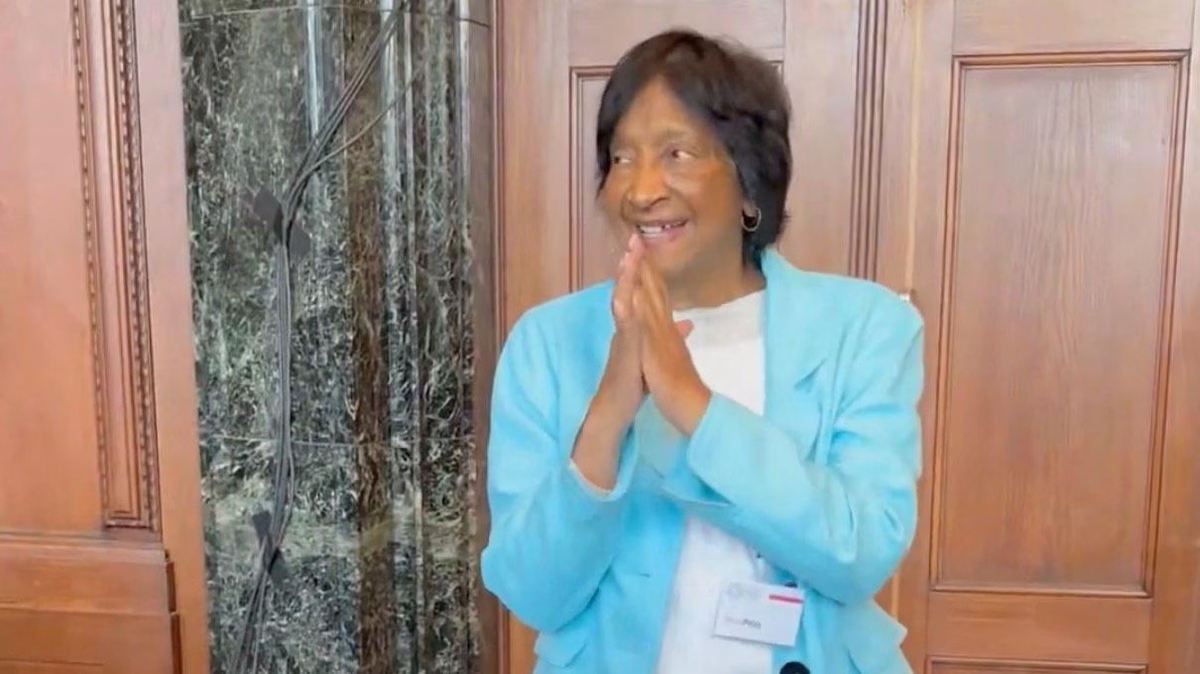
Pillay, 85, was attending a professional gathering of jurists in Nuremberg, Germany—the historic site of post-war trials—when she learned of the award. Colleagues shared the news while she was present at the site, and she initially expressed surprise, noting she wanted to verify the authenticity of the announcement. Reflecting on her work, she stated that interpreting the law remains an impartial process and that she saw no reason why speaking the truth should require special courage.
Currently, Pillay is overseeing a genocide case concerning Myanmar at the ICJ. Her recognition has been celebrated by human rights advocates and officials in South Africa. President Cyril Ramaphosa lauded her contribution to human dignity and peace, while retired constitutional court justice Edwin Cameron noted that the prize reinforces the international aspiration toward understanding and non-violence across borders.
In the wake of the announcement, the Trump administration declared significant new sanctions against the International Criminal Court (ICC), an institution on which Pillay previously served. US secretary of state Marco Rubio announced that the measures aim to prevent the court from prosecuting American citizens. These sanctions, which follow similar actions taken last year by Donald Trump, target the court as an institution, effectively freezing its assets within the US and forcing businesses to cease engagement with the body within six months. According to the committee, It had not been able to locate Pillay before its announcement on Friday morning. The ICJ, a UN body, rules on disputes between states, while the international criminal court (ICC) investigates and prosecutes individuals accused of atrocities and other grave international crimes. And has previously pointed out that it is a court of last resort, unnecessary in the case of countries with effective legal systems. Last year, Donald Trump, who has long coveted the Nobel peace prize, imposed personal sanctions against ICC officials deemed to be involved in investigations of Americans or Israelis, the ICC has not charged any US nationals.
The ICC responded sharply to the development, describing the sanctions as an “assault on the rule of law” and an attempt to obstruct justice. The court emphasized that such actions strike at the foundational principle that no entity is above the law. Human rights lawyer Yasmin Sooka praised Pillay’s recognition as a continuation of South Africa’s advocacy legacy, specifically recalling Pillay’s historic role in establishing that sexual violence can be treated as a weapon of war during the Rwandan genocide tribunal proceedings.