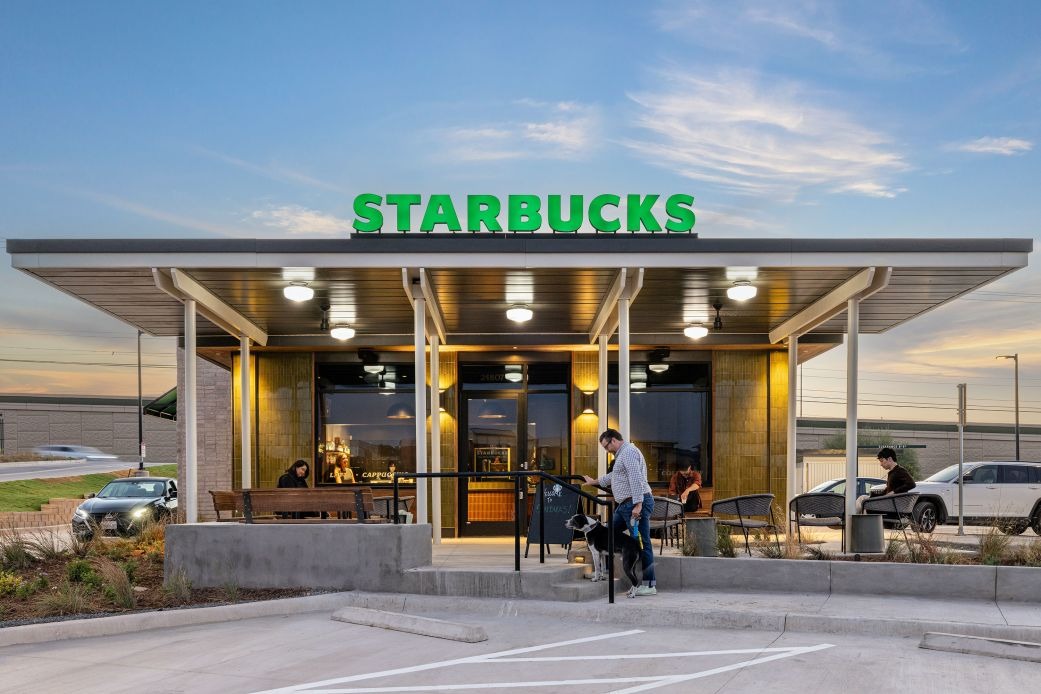
Starbucks is moving to harmonize its physical expansion with a refreshed focus on customer comfort by introducing a compact café prototype. The new design, which recently launched in San Antonio, maintains core coffeehouse elements—including plush seating and visible bakery displays—within a much smaller square footage than standard locations. By utilizing a redesigned counter known as a “folded bar,” the chain can now fit into narrower urban spaces that were previously inaccessible, allowing for more strategic growth in high-cost real estate markets. Starbucks is on a mission to recapture its roots as a place to sit down for a cup of coffee. Like plush seating, bakery treats displayed in a glass case as well as an espresso bar for baristas to make drinks, a new café prototype that opened last month in San Antonio has all the features of a typical Starbucks. Particularly in major cities, the new design helps Starbucks push into areas where real estate is expensive. As well as for a variety of other reasons, including higher prices, longer waits for pickup orders and lackluster food options, sales suffered as a result.
This initiative is central to CEO Brian Niccol’s broader effort to restore the company’s “third place” identity, a concept that emphasizes social connection over rapid turnover. Prior to his arrival in 2024, the company had shifted toward mobile-centric operations, removing approximately 30,000 comfortable seats, installing rigid wooden stools, and deactivating power outlets to prioritize order volume. These changes, coupled with rising prices and service issues, negatively impacted sales. It pulled out 30,000 comfortable seats, installed hard wooden stools and blocked electrical outlets, making cafes a less desirable place to hang out.
In 2025, the firm launched a $1 billion restructuring project to reverse these trends. This recovery strategy focuses on reintroducing cozy seating and amenities while abandoning the failed experiment of “pick-up only” stores. Niccol shuttered those locations in July 2025, characterizing the format as “overly transactional” and lacking the essential human connection necessary for the brand’s health.
Dawn Clark, senior vice president of global concepts and design, emphasized that the smaller format is designed to be highly adaptable. “These particular new formats are really stretching us to be more adaptable to different types of location, different shapes and different sizes, but they still hold all of the aspects of the coffee house experience,” she noted. The design aims to accommodate diverse customer behaviors, as approximately 30% of patrons currently utilize mobile ordering. However, it’s a fraction of the size of a usual location.
The current operational strategy is to offer multiple points of service, including in-person ordering, app-based transactions, delivery, and drive-thru lanes, ensuring the smaller spaces do not restrict customer choice. Having already remodeled around 1,000 existing North American stores, the company is using data from both staff and patrons to refine this new smaller footprint. Six of these prototypes are currently operational, including sites in Manhattan and San Antonio. But it doesn’t think it needs a big footprint to deliver on that promise.
While the business has navigated recent challenges, including the closure of hundreds of underperforming locations over the past two years, the outlook is shifting. Same-store US sales returned to growth in the most recent quarter, and the company intends to open approximately 5,000 additional locations in the coming years. Clark highlighted the success of this approach, describing the revitalization of the coffee house experience as a “symbiotic” improvement that has garnered positive feedback from both employees and customers.