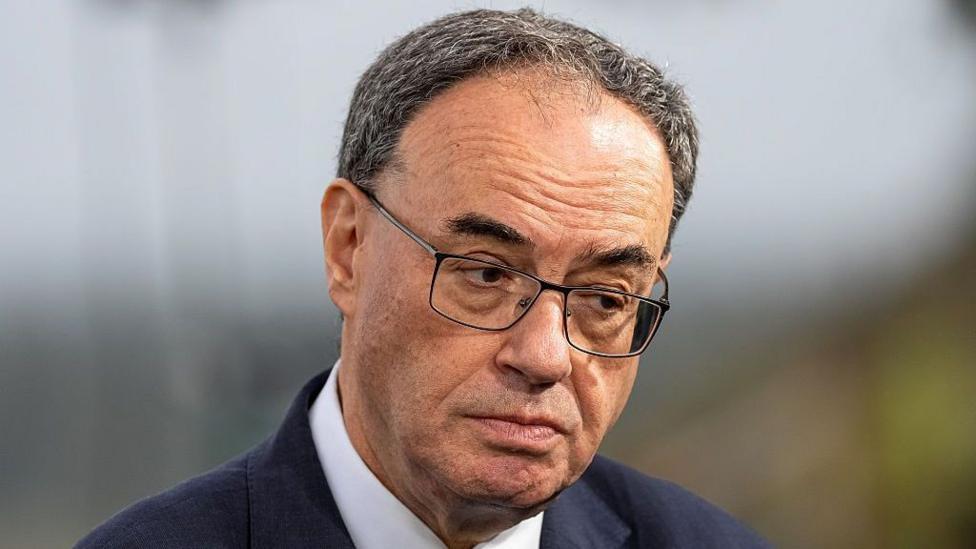
Bank of England Governor Andrew Bailey has cautioned that the rapid surge in artificial intelligence investment could potentially trigger shocks in financial markets. While acknowledging the technology’s capacity to bolster economic growth, Bailey emphasized that the central bank is monitoring the massive capital inflows into the AI sector with extreme vigilance. According to andrew Bailey, The central bank is watching the huge amounts of money being invested in AI “very carefully” and cautioned that “not everybody always wins”. He was speaking exclusively to about what the risks and benefits of AI could be for the UK economy. According to bailey, He believed the technology has “great potential to strengthen growth in our economies”, adding that this was something the country needed. But it also brings with it substantial risks and so we have to be on top of both of those. One such risk is what happens if the big bets being made on AI don’t pay off.
Economic Risks and Potential Market Corrections
- Market Stability: Bailey warned that a correction in asset prices is possible if the significant bets placed on AI companies fail to materialize into actual profits.
- Investment Landscape: Major tech firms, including Alphabet, Amazon, Microsoft, and Meta, are investing hundreds of billions of dollars, while chipmaker Nvidia has reached a market valuation of $5.5 trillion (£4.14 trillion).
- Future Public Offerings: Industry giants Anthropic and OpenAI are preparing for stock market entries, which analysts expect will drive further substantial capital into the sector.
- Historical Precedent: The Governor noted that market history shows not every player succeeds, comparing current hype to past internet-era winners like Netscape that eventually faded.
Bailey stated that the Bank of England is proactively preparing for potential market volatility, stressing the need for financial system resilience. He highlighted that while AI offers opportunities for efficiency—such as assisting the Monetary Policy Committee in analyzing data to set interest rates—it also introduces significant dangers.
Broader Security and Technological Threats
- Cyber Vulnerabilities: The Governor identified AI as a powerful tool for discovering software weaknesses, warning it could function as a dangerous weapon in malicious hands.
- Deepfake Concerns: Bailey described the rise of realistic AI-generated imagery as alarming, citing his own experience in June when fake content depicting him and Nigel Farage circulated on social media.
- Traceability Challenges: He stressed that the tech sector must cooperate more closely with authorities to help track the origins of deceptive AI content.
The warning arrives as sovereign borrowing costs reach multi-decade highs, placing added pressure on public finances globally. On Thursday, the yield on 30-year UK government bonds climbed above 6% for the first time since 1998, while US 10-year bond yields reached 5.34%, the highest level since 2002. These developments signal a wider sell-off in bond markets as central banks maintain elevated interest rates to combat inflation. As bond yields rise, investors increasingly favor high-growth sectors like AI, shifting capital away from government debt in search of higher returns. Despite these systemic shifts, Bailey maintained that the central bank’s primary objective remains ensuring economic stability amidst the ongoing digital transformation. The money that has been spent on and loaned to AI firms over the last few years in the hope of large returns is causing markets to value some of them as multi-trillion dollar businesses. Asked if he believed an AI bubble could burst, Bailey said: “You could see some correction of asset prices at some point. AI chipmaker Nvidia is currently the world’s most valuable listed company, with a market valuation of $5.5tn (£4.14tn), thanks largely to investors who believe in the big profits AI could create.