

Understanding the Modern Technology Generation Gap
Technology has become the invisible engine of modern life. Digital systems now control things that once worked with a button or switch, like smartphones and streaming services. This transition feels natural for younger generations because they grew up with technology. But for older generations, it can feel like society changed overnight. Watching the evening news used to be as simple as turning a knob, but now it takes Wi-Fi passwords, app updates, Bluetooth syncing, and voice commands.
There’s more to the technology generation gap than just age. Confidence comes from experience, exposure, and exposure. You learn a lot by experimenting, especially when you’re young. They tap buttons fearlessly because they think mistakes can be fixed. In general, older adults approach technology more cautiously because they’re afraid of damaging it or losing their settings. The difference in mindset causes frustration on both sides. Trying to explain something that seems “obvious” to you can overwhelm parents, while younger family members get impatient.
Research from Pew Research Center shows that technology has become one of the defining pressures in family life. It’s hard to manage modern life with rapid technological changes, especially when devices keep changing. Smart TVs make the problem even worse because televisions used to be the simplest appliance in the house. In today’s world, they look like giant computers.
What the Generation Gap Really Is Today
The generational gap was mostly cultural a few decades ago. There was a different style of music, different fashion, and a different set of values between the parents. Today’s gap is deeply rooted in technology literacy. Digital ecosystems, apps, passwords, and streaming platforms are almost second nature to younger people. People of older generations often learn technology later in life, after their habits are already deeply ingrained.
Think about how TV worked in the 90s. You pressed the power button, picked a channel, and watched. There you go. The modern smart TV adds layers of complexity. You can switch between HDMI inputs, streaming platforms, subscription accounts, voice controls, and internet settings. You can get lost in the menus even just trying to find a live sports channel. Three different devices may be required to do what used to be done by one remote.
The shift creates emotional tension in families. Sometimes younger people confuse confusion with stubbornness. It’s possible for parents to interpret impatience as disrespect. It’s more nuanced than that. It’s not like older adults spent decades learning systems designed for rapid digital adaptation. When devices were mechanically predictable rather than software-driven, their brains developed habits. There’s a big difference there.
How Smart Devices Changed Everyday Life
Technology doesn’t just make life easier, it changes behavior patterns too. It’s all connected to recommendation algorithms, online accounts, cloud systems, and advertising ecosystems. Now, watching TV involves navigating digital environments, not just watching content. I can’t believe how fast that transformation happened.
Up to 80% of younger generations use smart technology in daily life, such as smart TVs and smart home devices, according to Samsung research published in 2025. Users under 30 treat these systems like extensions of themselves. It’s like an obstacle between them and simple entertainment for older users.
Terminology is also a problem. Younger users understand casting, streaming, syncing, buffering, and pairing because they see them all the time. The vocabulary needed to troubleshoot a problem may not even be familiar to older adults. Try solving a puzzle when the instructions are written in another language. The way many parents experience modern technology is exactly like that.
Why Older Generations Struggle With Smart TVs

One of the clearest examples of technological overload is the smart TV. Once upon a time, television was the most user-friendly device in the house. These days, they combine internet connectivity, apps, operating systems, advertisements, microphones, subscription services, and gaming features. The pursuit of innovation made televisions more complicated instead of simpler.
It’s hard for older adults to use modern devices because features take precedence over usability. It’s assumed that users already understand digital logic. People have to know how to navigate layered menus, manage accounts, and interpret unfamiliar symbols. Many parents are confused before they even use the device because of that assumption.
In a Reddit discussion about aging parents and technology, some seniors get overwhelmed by modern electronics since they didn’t grow up with digital systems. Older users can have trouble using even basic smart TV navigation because hidden settings and icons feel unintuitive. It may sound funny, but these stories reveal a widespread reality affecting millions of families.
The shift from buttons to interfaces
There was a tactile and mechanical element to old electronics. Devices had physical buttons that had obvious functions. The controls were easy to feel and you could predict what would happen when you pressed them. Physical certainty has been replaced with digital abstraction in modern interfaces. Now users interact with icons, gestures, menus, and layers of software.
It’s important because human brains adapt differently depending on where they’re from. A person who’s spent decades operating mechanical devices expects predictable physical feedback. It’s been replaced by changing interfaces that update constantly on smart TVs. After a software update, yesterday’s menu layout might disappear, leaving users confused even if they’ve learned it before.
It’s easier for younger people to adapt to technology because they view it as an evolving environment. It’s common for older adults to expect consistency. I feel like someone rearranged the furniture in my house overnight when the interface changes. Unpredictability creates anxiety and resistance.
Too Many Features, Too Lack of Simplicity
Competition isn’t about reducing complexity, it’s about adding features. Smart TVs come with gaming hubs, fitness apps, voice assistants, online shopping integrations, and social media integrations. Older adults tend to want one thing: to watch TV easily. Younger users may like these additions.
It’s ironic that innovation often reduces accessibility. Reviewers may like a device that’s packed with features, but average users might not like it. A lot of parents get trapped in confusing settings screens when they accidentally open menus they don’t understand. You might feel embarrassed and intimidated by that experience.
Modern devices don’t come with comprehensive printed manuals anymore, which makes the problem worse. There are instructions hidden online or inside digital help menus that confused users may not know how to access. It’s common for tech companies to assume customers’ will figure it out, but not everyone learns well through experimentation.
The Psychology Behind Technology Frustration
It’s not just about intelligence or capability when it comes to technology frustration. It has a lot to do with psychology, confidence, and emotion. Quite a few older adults can learn modern systems, but fear and anxiety make it hard. Someone’s ability to absorb information drops dramatically when they feel embarrassed or overwhelmed.
People also process unfamiliar information differently as they age. Due to constant digital stimulation early in life, younger users tend to multitask comfortably between apps, notifications, and menus. It’s possible that older adults prefer slower, linear instruction. When too many choices appear at once, digital interfaces can cause cognitive overload.
Fear of breaking the device
Fear is one of the biggest reasons parents hesitate around technology. They’re worried about pressing the wrong button, deleting important stuff, or damaging expensive stuff. Because they learned through experimentation, younger users don’t share this fear. The mistake is assumed to be reversible.
There are a lot of communication problems caused by this difference. Younger people may say, “Just click around until you find it,” while older people hear, “Risk ruining the whole system.” That emotional disconnect often leads to frustration for everyone.
Learning speed is also slowed by fear. Learners with confidence explore naturally. Learners who are nervous avoid experimentation entirely. You can’t learn to swim if you’re constantly worried about drowning. Progress is limited by that tension. Many older adults face similar emotional barriers because of technology.
Cognitive overload and digital anxiety
We’re bombarded with information in today’s interfaces. TVs with smart features display ads, recommendations, notifications, streaming services, profile selections, and software alerts at the same time. Digital ecosystems can be mentally exhausting for people who aren’t used to them.
Many adults experience digital fatigue and screen-related stress, according to studies and online discussions. It can be overwhelming to be constantly connected, even for younger generations. Due to their lack of accumulated digital habits, older adults may feel this pressure even more intensely.
When family members respond impatiently, technology anxiety gets worse. You can’t learn effectively if you feel judged or rushed. A frustrated sigh from a younger relative can instantly break an older learner’s spirit.
How the younger generation learns technology faster,
Younger generations are often described as “digital natives.” They developed alongside technology rather than adapted to it later. Games, social media, and smartphones started their learning process early.
Today’s kids interact with touchscreens before they can even read. Early exposure builds intuitive understanding. In time, they learn patterns unconsciously, recognizing icons, gestures, and interface structures.
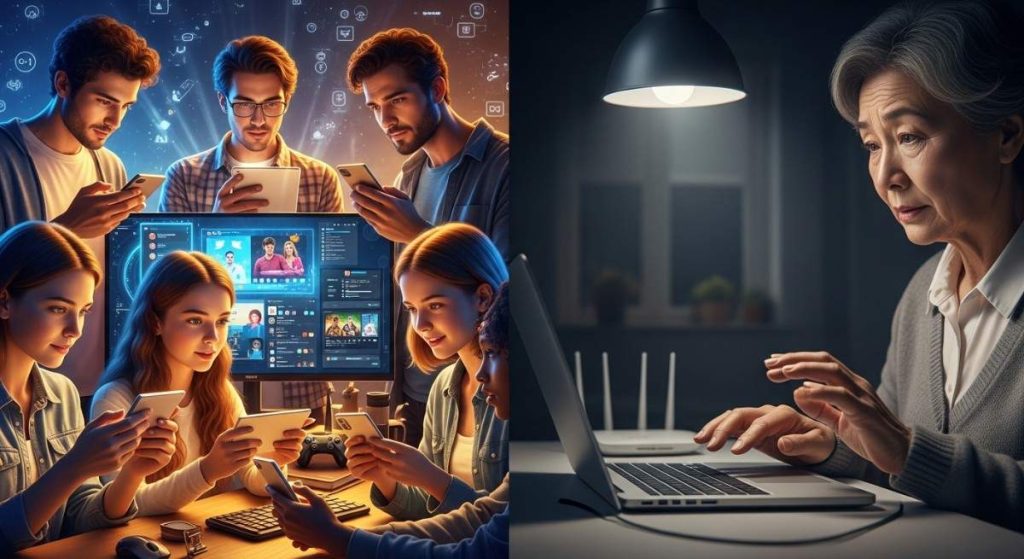
Growing Up With Screens
Problem-solving behavior changes when you’re exposed to technology. Younger people learn more through curiosity than formal instruction. The keep clicking, swiping, testing, failing, and retrying. You’ll build digital confidence fast with this trial-and-error approach.
In the past, older generations were taught to avoid mistakes, especially with expensive electronics. There’s a huge difference in learning style because of that. Teenagers reset routers without a second thought. There’s a chance a parent won’t touch settings at all out of fear.
Researchers and online discussions are challenging the idea that all younger users are tech-savvy. According to some experts, younger generations are good at using apps but don’t necessarily understand technology. Even so, they’re more comfortable with digital experimentation than most older adults.
Trial-and-Error Learning Habits
The younger generation treats technology like a playground. It’s assumed that answers can be found online quickly. Instant support is available through video tutorials, forums, and AI assistants. Some older adults may feel uncomfortable searching for help online because even finding the right information takes technical knowledge.
There’s a fascinating paradox here. Younger people tend to learn technology informally without structured instruction, while older adults prefer step-by-step instructions. It’s not that one is better than the other, but they work differently. The problem arises when one generation expects the other to learn the same way.
Why Smart TVs Are Especially Confusing ?
TVs with smarts combine every source of confusion into one. Connect to the internet, use streaming platforms, require subscriptions, and rely on multiple devices simultaneously. It’s not uncommon for even the most experienced users to have trouble with input settings or apps.
It can feel like moving to another country where the language changed overnight when you move from traditional TV to streaming. There are no channel numbers anymore. Apps now compete for attention on crowded home screens.
Multiple remotes and Hidden Menus
Parents often complain about the overwhelming number of remotes. Cable boxes, streaming devices, sound systems, and gaming consoles may all need their own controls. Inputs can be switched or audio can be disabled if you press the wrong button.
There’s something hilarious and maddening about this problem. Families often spend twenty minutes troubleshooting only to find someone accidentally changed the HDMI source. The younger crowd laughs because they recognize the problem right away. Older users feel confused because the system itself seems illogical.
Frequently, Reddit users describe handwriting guides for parents and grandparents to explain smart TV basics. It shows how poorly many modern systems communicate with average people.
Streaming Apps Versus Traditional Channels
The structure of traditional television was predictable. There were numbers on every channel. That logic was completely disrupted by streaming services. It’s now up to viewers to understand subscriptions, profiles, internet connectivity, and app ecosystems.
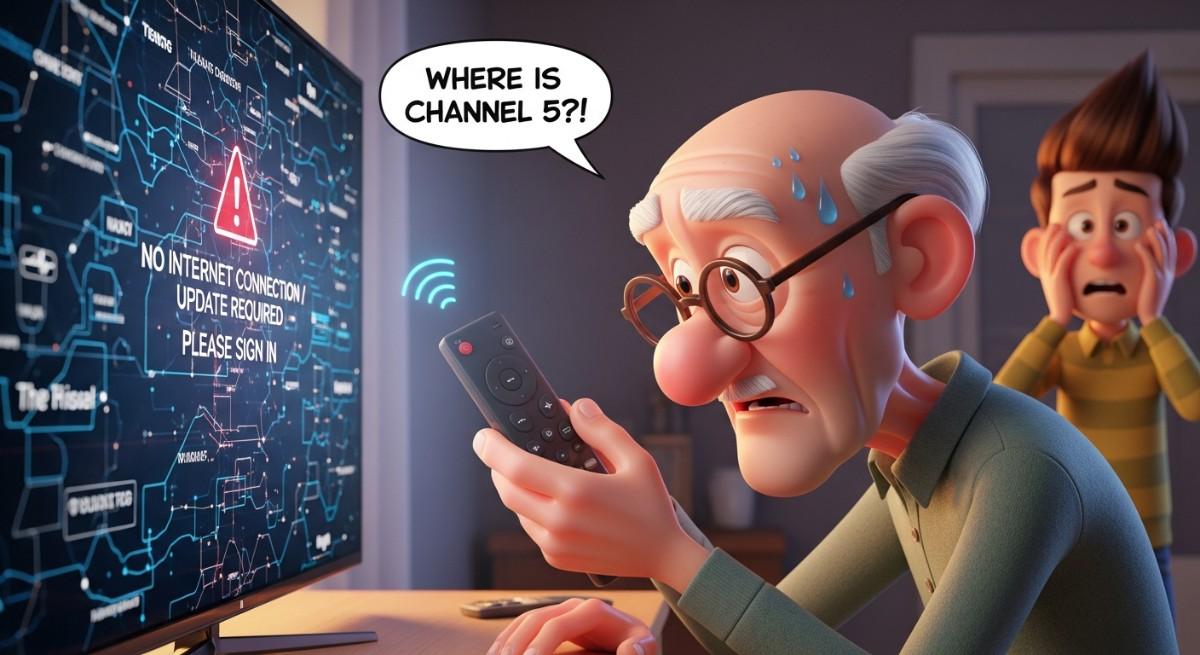
It’s common for parents to ask kids: “Where did Channel 5 go? What’s the point of having an account just to watch TV? That’s a deeper shift in how entertainment works. Television has transformed from broadcasting into software.
That transformation happened astonishingly quickly. People who spent fifty years using one system suddenly faced an entirely different model. Expecting instant adaptation ignores how deeply habits shape human behavior.
The Emotional Side of Tech Struggles
It’s rare that technology problems are just technical. Especially within families, they carry a lot of emotional weight. It can be embarrassing for older adults to ask for help repeatedly. It can be exhausting for younger relatives to provide constant support. It doesn’t take long for frustrations to turn into emotional problems.
Technology now influences independence in an emotional way. It’s easy for older adults to feel left behind in a digital age when they have trouble using their devices. Digital competence is becoming more important for watching TV, paying bills, and communicating with family.
Embarrassment and dependence
There are a lot of parents who hate needing help with things their kids do effortlessly. People who once taught their kids how to navigate life can feel humiliated when they have to ask their kids how to turn subtitles on.
There’s a change in family dynamics when expertise is reversed. Parents are used to providing and solving problems. They can suddenly find themselves in dependent roles, which can make them defensive or frustrated.
Younger family members often underestimate how vulnerable these moments can be. Simple comments like “I already showed you this” may reinforce feelings of inadequacy.
Family Frustrations During Tech Support
Family members have all experienced the classic tech support moment: someone shouting from another room because the TV’s stopped working. Younger relatives arrive to find the device muted or disconnected from Wi-Fi.
They become running jokes because they’re so common. There’s real communication difficulty beneath the humor. Generation Y thinks digitally. It’s common for older generations to think mechanically. Problems are described differently and troubleshooted differently.
It’s all about patience. Empathy is key to teaching technology effectively. Nobody likes feeling incompetent, especially in front of family.
The Role of Tech Companies in the Problem
Technology companies deserve part of the blame for the widening generation gap. There are a lot of products that prioritize innovation, aesthetics, and data collection over simplicity and accessibility. Many designers assume all users have the same level of digital literacy.
Millions of older people are excluded from that assumption. Companies compete for engagement instead of ease of use, so user interfaces get more complex. There are more ads, recommendations, and cross-platform integrations on menus.
Poor user interface design
Confusion shouldn’t be created by good design. Some smart TVs bury essential features under layers of menus. Often, volume settings, input selection, and accessibility tools are hard to find.
It’s hard for older adults to navigate because interfaces aren’t consistent. There are different terminology, layouts, and remote designs for different brands. Understanding one system doesn’t necessarily help users understand another.
Clarity would win over novelty in a truly user-friendly design. Not just seniors would benefit from big text, simplified menus, and predictable navigation.
Constant software updates
Another problem is software updates. After an automatic update, older adults may finally learn how a device works only for the interface to change. Menus disappear or move.
Millennials are used to constant change, so they adapt quickly. Users who spent years learning systems may feel betrayed. Exhaustion and discouragement result from this cycle.
As technology evolves, devices become obsolete fast. Every few years, families replace their TVs, phones, and streaming systems, so older adults have to learn everything again.
Bridging the Technology Generation Gap
It’s not impossible to bridge the technology generation gap. Digital experiences for older adults can be dramatically improved with patience, empathy, and thoughtful design. There’s no denying the importance of families and companies.
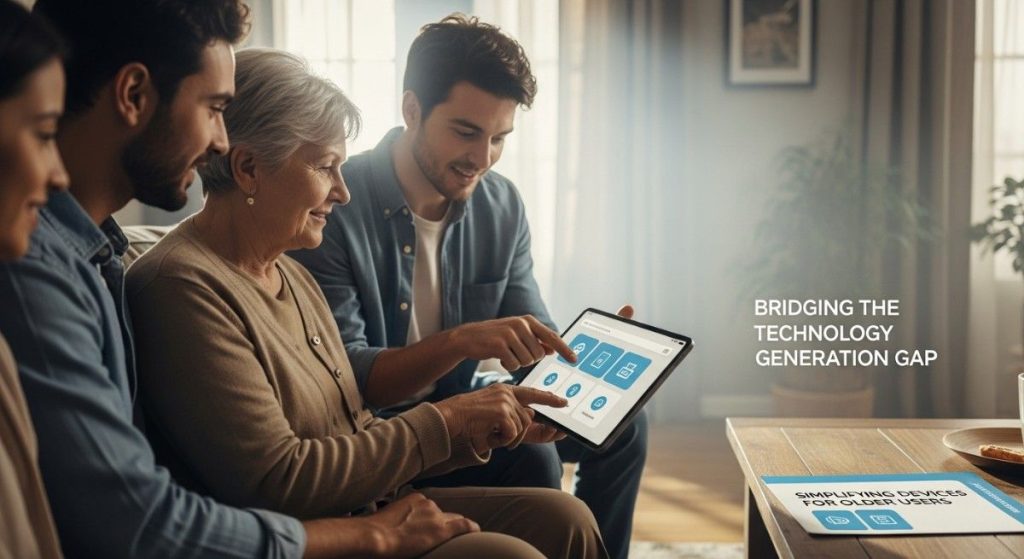
There’s nothing wrong with technology itself. Communication problems and inaccessible designs are bigger problems. Older adults can become surprisingly proficient with modern devices when teaching approaches match their comfort level.
How to teach parents without getting frustrated
It’s best to teach technology slowly and respectfully. Avoid jargon-filled explanations. Don’t multitask. Confidence grows through repetition.
It helps a lot to have written instructions. There are a lot of older adults who prefer physical reference guides they can look at on their own. Step-by-step notes work better than rapid verbal explanations.
Patience is also key. Feeling rushed or criticized makes learning hard. Respecting parents during tech support builds confidence, not anxiety.
Simplifying Devices for Older Users
Simplification of technology setups can help families. Keep remotes organized, remove unnecessary apps, and enable accessibility settings. Also, voice assistants can make navigating systems easier for older adults.
There are some families who create custom TV setups with simplified screens and labelled buttons. Technology can be manageable with these little tweaks.
Eventually, younger generations might face similar struggles. As technology evolves so fast, future seniors may also feel disconnected from systems designed for young people.
Future Technologies and Ageing Populations
In the coming decades, the relationship between aging and technology will become one of society’s biggest challenges. The world’s population is aging, while technology is advancing faster every year. Accessibility and inclusion are urgent questions.
Artificial intelligence could reduce a lot of current barriers. With voice-controlled systems, users can interact naturally instead of navigating complicated menus. Devices may adapt automatically to user behavior and cognitive needs in the future.
AI Assistants Could Change Everything
It may be possible for older adults to simplify their digital lives with AI assistants. Rather than manually navigating menus, users could just say: “Play the news,” “Open Netflix,” or “Call my daughter.” This conversational approach aligns more closely with human communication.
AI could also personalize interfaces based on skill level. For users who like minimal complexity, devices might simplify layouts automatically. A lot of frustration could be reduced with that adaptability.
Nevertheless, AI brings new concerns about privacy, trust, and dependency. It’s normal for older adults to be cautious about technology they don’t understand.
Will Future Seniors Face the Same Problem?
One fascinating question remains: will today’s younger generations struggle with future technology? There’s a good chance it’s true. Eventually, every generation has to deal with systems that are changing faster than they can handle.
There’s more change in technology than there is in human brains. Millennials and Gen Z users may feel overwhelmed someday by future interfaces involving augmented reality, neural computing, and advanced AI ecosystems.
Innovation constantly reshapes society, so the generation gap may never disappear completely. It’s about adapting compassionately instead of mocking people who struggle.
Conclusion
There’s much more to the technology generation gap than just parents having trouble using smart TVs. That’s because of different experiences, learning styles, confidence, and cultural adaptations. They grew up in a world where technology was mechanical, predictable, and limited. Digital ecosystems reward experimentation and rapid adaptation for younger generations.
TVs once represented simplicity, so smart TVs are perfect symbols of this divide. In today’s world, they’re just software complexity disguised as entertainment. It doesn’t mean parents are stupid or incapable of using modern devices. They’re adapting to systems built on assumptions they’re often left out of.
Families have to be patient and tech companies have to design better. Digital experiences for older adults can be dramatically improved through respectful teaching, simple interfaces, and accessible systems. Meanwhile, younger generations should remember this: someday they may also feel confused by technologies designed for a world that moves too fast.
FAQs
1. Why do older adults struggle more with smart TVs?
Older adults have trouble with smart TVs because they combine internet systems, apps, subscriptions, and changing interfaces. Many seniors grew up with simpler mechanical technology, so they might feel overwhelmed by modern technology.
2. Is the technology generation gap only about age?
Nope. There’s also a gap when it comes to exposure, confidence, and learning styles. Some older people adapt quickly, while others struggle with advanced technology despite growing up with screens.
3. How can families help parents learn technology easier?
By teaching slowly, avoiding technical jargon, creating written instructions, and simplifying device setups, families can help. It’s more effective to be patient and encouraging than to criticize.
4. Why are smart TVs harder to use than old televisions?
There were fixed channels and simple physical controls on old TVs. Unlike regular TVs, smart TVs require internet connections, apps, updates, and account management.
5. Will younger generations face similar struggles in the future?
Probably. As technology evolves, even today’s digitally savvy generation may find future systems unfamiliar.