

Understanding the Modern Generation Gap
It used to be easy to tell the generation gap. Loud music, weird fashion, and rebellious attitudes were complained about by parents. The kids just rolled their eyes and waited for it to get better. Compared to 2026, the generation gap feels more complicated because culture changes so fast. We’ve got trends exploding around the world within hours, apps popping up monthly, and AI reshaping communication faster than we can keep up.
The older generation often sees technology as a tool. The younger generation sees it as part of their identity. Everything changes when you have that difference. Parent may think their child spends “too much time online,” while the child feels that online spaces are where friendships, creativity, humor, and emotional support exist. Comparing someone who visits a city occasionally to someone who lives there is like comparing apples to oranges.
Research published in Frontiers in Sociology explored how digital symbols, emojis, and internet communication styles create misunderstandings between generations. Some parents think short replies, memes, or emoji-heavy conversations are shallow. They have a lot of meaning and social context for younger people.
There’s also a big difference in speed. It took previous generations a while to adapt to cultural shifts. Parents today can wake up one morning and discover their kids are using AI platforms, slang terms, and social trends they’ve never heard of. It creates insecurity for adults and frustration for kids who feel misunderstood.
It’s important to look at the emotional side of the gap too. There are a lot of teens who think their parents don’t understand how much pressure they’re under online. There’s a lot of worry about safety, addiction, and mental health among parents. They’re both trying to protect themselves, but they speak different languages emotionally.
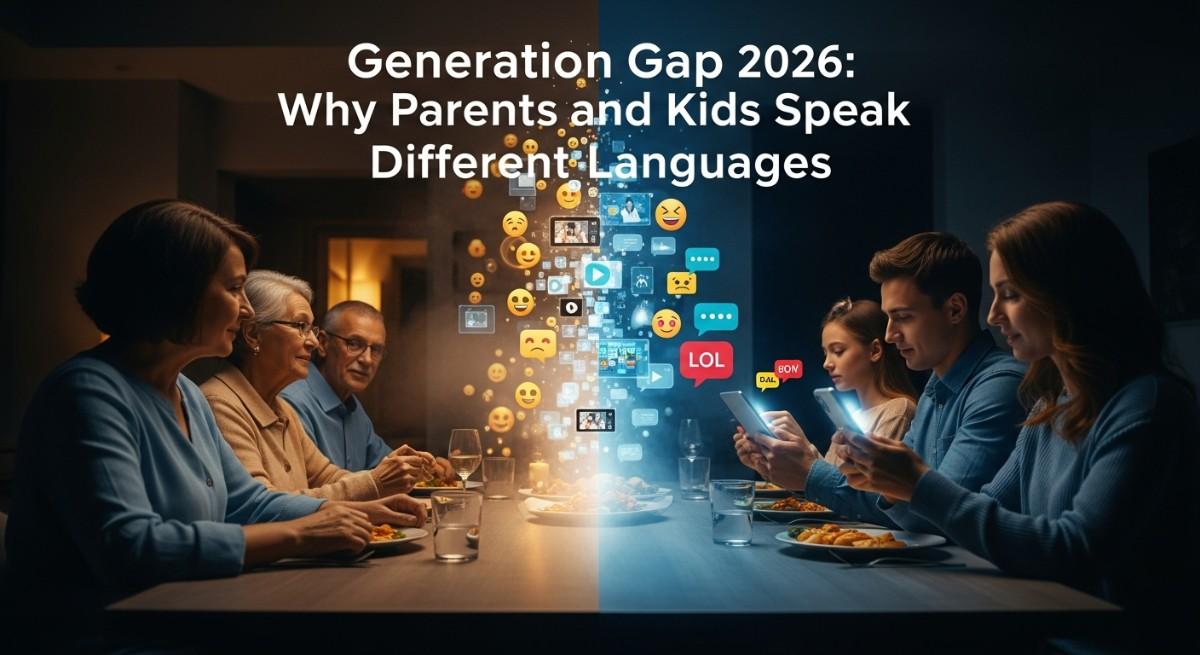
Parents in 2026 often feel like they’re in a foreign country inside their teenagers’ phones. Emojis, memes, AI slang, disappearing messages, and TikTok references are common on one side. Other sides still value face-to-face talks, long explanations, and traditional rules about privacy, respect, and communication. There’s no surprise today’s homes sound like two generations trying to decipher each other’s language.
There’s always been a generation gap, but 2026 has made it deeper and faster. With technology, artificial intelligence, digital culture, and changing social values, parents and children sometimes feel emotionally disconnected even when they live together. Almost all teens aged 13-14 own smartphones, and many use AI tools for entertainment and communication every day, according to a recent PwC survey.
This gap is fascinating because it’s not just about age anymore. It’s about digital identity, emotional expression, online behavior, and understanding reality differently. Parents learned how to survive in the real world. Both the physical and digital worlds are blending together for kids today.
Technology as the Biggest Divider
The Smartphone Childhood
For Generation Alpha and Gen Z teens, smartphones aren’t inventions. Environments are what they are. The first digital interaction many kids have is before they learn to write. According to the 2026 PwC Generation Alpha Survey, 72% of children regularly use smartphones and 70% own tablets.
Parents often have trouble understanding this because their childhoods looked completely different. There was a time when landline phones, TV schedules, and offline friendships were common. Our kids live in a world where they can watch TV, go to school, make friends, shop, and even identify themselves.
There’s tension around screen time because of this difference. Distractions are often treated as a bad thing by parents. They’re extensions of social life for kids. Telling a teenager to “put away your phone” when their phone contains their school discussions, best friends, favorite creators, and emotional support groups. They feel disconnected from society.
A recent report from Pew Research Center found that 42% of parents believe they could manage their children’s screen habits better. This statistic shows something important: parents themselves are unsure. Although they know technology matters, they don’t know where healthy limits should be.
AI and Digital Native Culture
There’s a generation gap widening thanks to artificial intelligence. AI is now used by teens for homework help, entertainment, social interaction, and creativity. AI is often viewed as dangerous or suspicious by adults. Younger users often think it’s normal.
The pace is much faster now than it was in the early days of the internet. According to research by Common Sense Media, teens are significantly more optimistic about AI than parents are.
Children growing up in 2026 will be the first AI-native generation. Their AI asks for explanations, advice, jokes, ideas, and emotional validation. Sometimes parents worry that AI will replace human connection or critical thinking. AI is often just seen as another tool by kids.
It makes for fascinating household conversations. In one generation, people ask, “Can we trust AI? ” The other says, “Why wouldn’t we use it?” The difference is philosophical as much as technological.
Social Media and Emotional Communication
Emojis, Memes, and Internet Slang
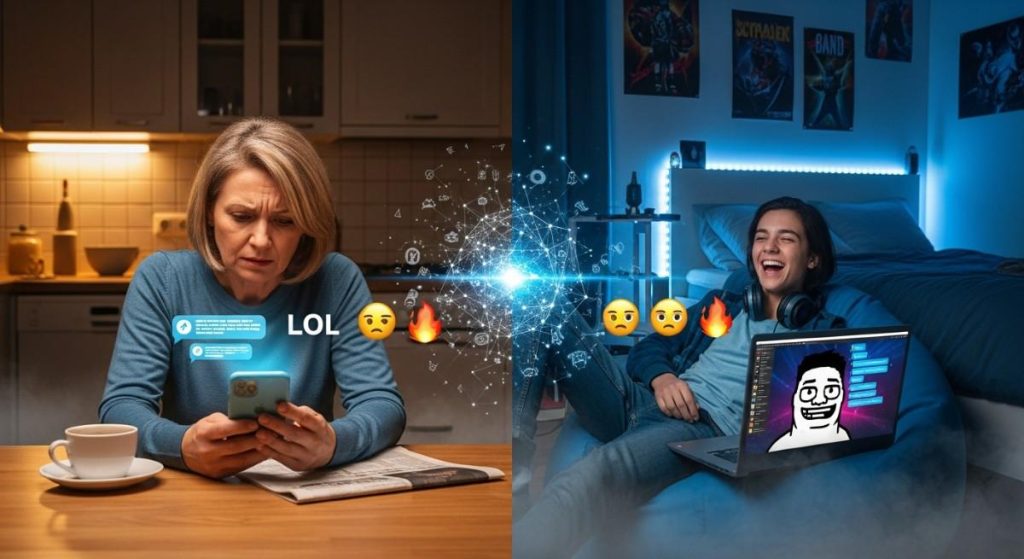
There’s been a change in language. There are memes, GIFs, abbreviations, reaction videos, emojis, and viral references in modern communication. There’s a lot of confusion or emotional shallowness in this style for many parents. For younger generations, it’s often richer and more expressive than traditional conversation.
In one meme, you can express sarcasm, humor, frustration, political opinion, and emotional vulnerability. You can use emojis to express yourself emotionally. They grew up with these digital signals, so they understand them instantly.
There’s a tendency for parents to misinterpret this behavior. Teenagers replying “or LOL” during serious conversations may seem disrespectful, but these responses often carry layered emotional meanings. Because internet communities create new words all the time, digital language evolves fast.
It’s not just that parents and kids speak differently – they interpret emotion differently too. Older generations rely heavily on tone and directness. The younger generation relies a lot on context, irony, and digital symbolism.
Why Parents Misread Online Behavior
There’s a misconception that online interaction is less meaningful than in-person interaction. Kids disagree strongly. Research from Kaspersky found that 97% of people communicate with family digitally through messaging apps, video calls, and shared online experiences.
It’s easy for young people to form emotional bonds online. Friendships, gaming communities, fandoms, and group chats become part of their identity. Sometimes parents dismiss these spaces as fake or unhealthy because they can’t see the emotional reality inside.
There’s a lot of conflict about online privacy because of this misunderstanding. It’s common for teens to feel like their parents are invading their digital lives. Parents feel responsible for their kids’ safety. Both perspectives are valid, but they constantly collide.
As toxic group chats and online bullying have grown, these fears have intensified. Recent reporting from Parents.com described how many teens experience emotional harm in digital social spaces. While parents worry about the dangers of online culture, kids are worried about social exclusion.
Parenting Styles Have Changed Dramatically
From strict parenting to gentle parenting.
One of the biggest changes in 2026 family culture is parenting. Many older generations grew up with strict rules and authority-based discipline. “Gentle parenting” and emotional awareness are becoming more popular.
There’s a lot of good in this change, but also a lot of confusion. Today, kids are encouraged to express their emotions openly, question authority, and talk about mental health. Older generations may view this as disrespectful or overly sensitive because they were taught to suppress emotions.
Parenting trends have also been amplified by social media. There’s always a comparison between parents and idealized online families. Influencers, fictional characters, and viral parenting videos are all things kids compare their parents to. It’s hard to perform when you’re under pressure.
Millennial parents grew up during the internet revolution, which makes them strange. Even though they understand technology better than older generations, they’re still overwhelmed by how fast digital culture evolves. As a result, parents and children both feel uncertain.
The Rise of Emotional Awareness
There’s more openness about mental health today than ever before. Young people talk openly about anxiety, burnout, therapy, emotional triggers, and self-care online. Some parents have trouble understanding this emotional vocabulary because it wasn’t around when they were kids.
Communication in the family changes because of this shift. Emotional validation is expected from kids. It’s common for parents to prioritize resilience and practicality. The one generation says, “I need to feel understood.” The other says, “You need to learn how to cope.”
There’s no right or wrong answer. They define emotional strength differently.
The Role of Artificial Intelligence in Family Dynamics
Kids Trust AI more than adults
AI is becoming a normal part of teens’ lives. For study help, entertainment, and emotional support, they use AI chatbots. Because they remember a time before algorithms shaped daily decisions, adults tend to approach AI with caution.
It creates a trust divide. Kids think AI is cool and convenient. There’s a lot of misinformation, manipulation, privacy risks, and dependency worries for parents.
According to recent European family research from Common Sense Media, most parents believe strong laws are needed to regulate AI technologies. Teenagers are far more optimistic about AI’s future role in society.
AI also changes how kids learn. Now students use AI to summarize lessons, explain difficult topics, generate ideas, and practice communication. Some parents think this is cheating. It’s seen as efficient by many students.
Parents Fear AI Influence
There’s a concern that AI could replace real human interaction, reduce critical thinking, or damage creativity. The fear of AI systems is understandable because they’re becoming more persuasive and emotional.
Control is the deeper issue. It’s hard for parents to control how their kids get information. School, books, and family conversations shaped kids’ worldviews in previous generations. In today’s world, algorithms, creators, AI systems, and online communities shape opinions constantly.
Families change when power shifts.
Why Attention Spans Are Shrinking
The Short-Video Generation:
Content like TikTok has transformed how younger generations consume information. It trains the brain to expect rapid rewards from fast editing, instant entertainment, and constant stimulation. There are a lot of parents who notice their kids having trouble with long conversations, books, and slower activities.
It’s not because kids are lazy. They adapted to a different media environment. Imagine trying to eat a candlelit dinner after living in a flashing arcade. Once your brain gets used to stronger stimulation, it craves it.
Content in short form affects communication styles too. It’s more common for younger generations to want quick replies, visual content, and short explanations. It could be interpreted as impatience or emotional distance by parents.
Instant Gratification Culture
Everything in 2026 feels immediate. Food delivery, streaming entertainment, AI responses, viral fame, and online shopping happen instantly. Children growing up in this environment naturally develop different expectations about time and patience.
Parents often worry that this culture reduces resilience. Kids sometimes feel older generations are unnecessarily slow or resistant to change. This creates friction in everyday life, from homework habits to family discussions.
Education and Learning Differences
Traditional learning vs Digital learning
There’s been a big change in education. Students now learn through YouTube videos, interactive apps, AI tools, and online communities instead of textbooks.
It’s hard for parents because traditional education emphasizes memorization and structured learning. Accessibility, speed, and personalization are important to modern students.
Authority also changes with digital learning. Teachers aren’t the only source of information anymore. Multiple online sources, including AI systems, let students compare explanations instantly.
AI Homework and Online Knowledge
It’s becoming normal to have AI help you with your homework. They use AI for brainstorming essays, explaining math concepts, or summarizing. It’s common for parents to worry that kids are becoming too dependent on technology.
It’s more nuanced than that. Depending on how it’s used, AI can either weaken or strengthen learning. It’s possible for students to struggle academically if they use AI as a shortcut. It may actually help students learn faster if they use AI as a tutor.
Knowing where to draw the line can be tough for parents.
Online Identity vs Real Identity
Kids Living Multiple Digital Lives
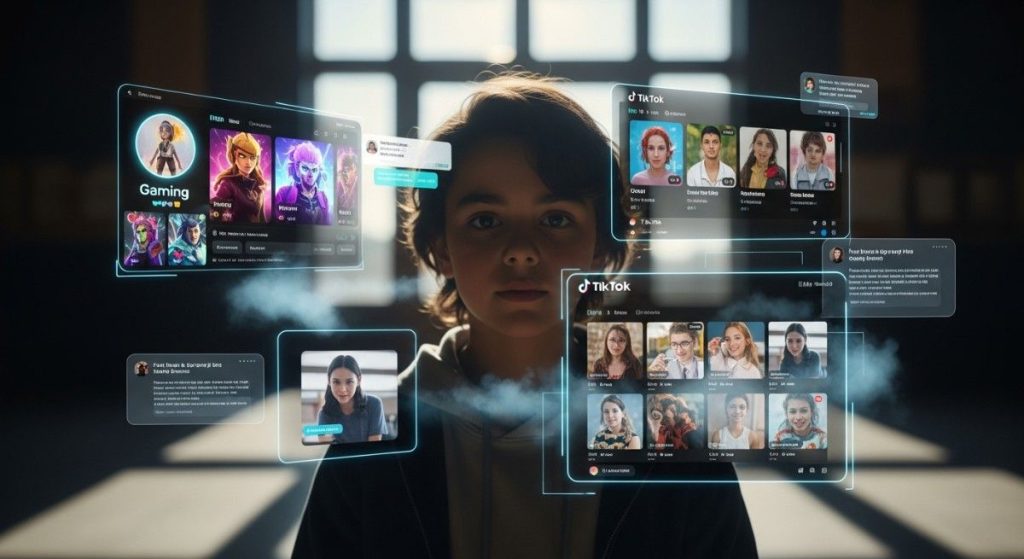
There are a lot of identities kids manage today. At school, there’s one personality. There’s also one on gaming platforms. Another shows up on TikTok, Instagram, or private group chats.
Sometimes parents who grew up in offline environments find this behavior confusing. The younger generation thinks it’s normal.
There’s also pressure with online identities. There’s a constant comparison between teens and edited lives, influencers, and viral trends. Now you can validate yourself publicly with likes, shares, comments, and views.
Privacy Means Something Different Now
It’s common for older generations to view privacy as a form of protection. There’s a tendency among younger generations to see visibility as a way to survive. For many kids, posting online, sharing experiences, and building a digital presence feels natural.
Meanwhile, young people are becoming more aware of digital risks. Sharenting-parents posting excessive content about their kids online-has become more common. It’s getting harder and harder for kids to control their digital footprint.
There’s an ironic reversal here, where kids are sometimes more privacy-conscious than adults.
Mental Health and Emotional Disconnect
Anxiety, loneliness, and online pressure
The digital world connects people constantly, but many young people feel more lonely than ever. It’s easy to compare, feel pressured, and get overwhelmed in online spaces.
Compared to previous generations, kids today face a lot of challenges. Digital records can keep their mistakes forever. It’s possible to get rejected socially. Within hours, trends and beauty standards spread around the world.
According to recent online wellbeing research highlighted by Ofcom discussions via the Anti-Bullying Alliance, children increasingly experience pressure, harmful interactions, and emotional strain in digital spaces.
Parents often underestimate how emotionally exhausting online life can be. Children may appear physically safe at home while struggling mentally in digital environments.
Why Family Conversations Feel Harder
Families spend hours together physically but remain emotionally disconnected online. Scrolling through social media. Short videos are watched by kids. There are different digital realities for everyone.
Attention fragmentation makes conversations harder. There’s a decrease in emotional patience. Often, both generations feel unheard.
Sometimes technology designed to connect people weakens real-world communication inside families.
Bridging the Generation Gap in 2026
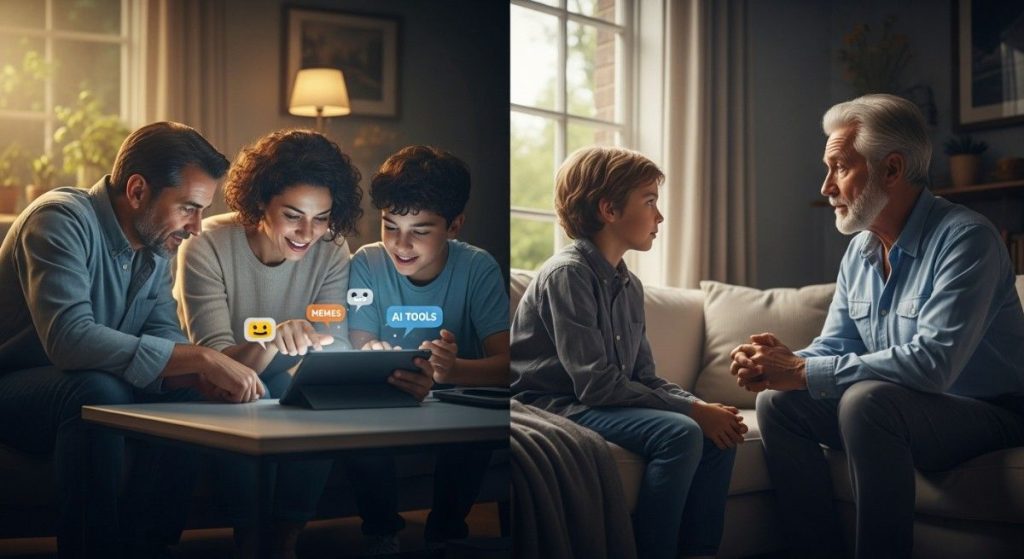
Building Digital Empathy
We can’t ban technology or blame younger generations for the generation gap. Understanding is the real solution. Digital empathy is needed by parents, while emotional empathy is needed by kids.
You can start by learning about online culture without judging it right away. It’s easier to build trust by asking genuine questions about gaming, memes, AI tools, and social platforms.
Understanding why parents worry is also helpful for kids. It’s not irrational to worry about privacy, addiction, mental health, and safety. They’re a result of love and responsibility.
Creating better family communication
The families that communicate well in 2026 tend to work together rather than control each other. Instead of constant punishment or surveillance, healthier families have open conversations about technology, mental health, and online behavior.
Here’s what you can do:
StrategyWhy It WorksDevice-free mealsEncourages real conversationsShared digital activitiesBuilds understandingOpen discussions about AIRReduces fear and secrecyEmotional check-insStrengthens trustBalanced screen rulesPrevents rebellion
Families who adapt together instead of fighting against change are the ones who will win in the future.
Conclusion
Unlike slang or music preferences, the generation gap in 2026 is bigger. There’s been a complete transformation in how humans communicate, learn, socialize, and build identities. Technology has changed the way parents and kids look at the world.
Nowadays, kids are growing up in a world shaped by AI, social media, and instant communication. They’re trying to guide them while learning how these systems work. Both sides feel scared, confused, and misunderstandings.
But this gap doesn’t have to be a wall. Curiosity instead of judgment often reveals that both generations have the same emotional needs. We all want connection, safety, understanding, and respect.
Language changes, but the human need to belong never does.
The FAQ’s
1. Why is the generation gap wider in 2026 than before?
Technological advancements, artificial intelligence, and digital culture have accelerated social change faster than previous generations. There are often huge differences in communication systems and online experiences between parents and kids.
2. How does social media affect parent-child relationships?
Communication styles, emotional expressions, and privacy expectations change with social media. When used thoughtfully, it can create misunderstandings, but it can also help families stay connected.
3. What role does AI play in the modern generation gap?
Artificial intelligence creates different attitudes between generations. Most young people see AI as normal and useful, but most parents are worried about its impact on learning, creativity, and privacy.
4. Why do parents struggle to understand internet slang and memes?
It’s a fast-evolving culture that relies heavily on shared digital context. The meanings behind memes, emojis, and online humor are often layered.
5. How can families reduce the generation gap?
Communication, mutual respect, digital education, and emotional empathy are key. Stronger relationships are usually built when families learn together instead of criticizing each other.