


Introduction
Environmental science is invisible, but you feel it every time you breathe clean air, drink fresh water, or eat healthy food. Biological, chemical, geological, and social sciences are all incorporated into this multidisciplinary field, ensuring that it works together to solve some of the most pressing problems facing the planet today.
From climate change to plastic pollution, from deforestation to species extinction, environmental science offers us tools to help us understand why these problems exist and how to solve them, and the field of environmental science is able to help us understand why these problems exist and how they can be solved.
You will find all the information you need in this comprehensive guide, including:
- Taking a closer look at what environmental science really is
- Here is a breakdown of its five core branches and why each one is important
- In the year 2026, we will face a number of important environmental challenges
- Solutions backed by science that work in the real world
- The application of environmental science to your everyday life and how you can make use of it
Let’s take a deep dive into the science of survival and see what we can learn.
What is environmental science?
The study of environmental science is the systematic study of the environment and our interaction with it. Environmental science is quite different from ecology (which is a science that focuses only on living things), as it combines:
| Component | What It Studies |
|---|---|
| Biology | Living organisms, ecosystems, biodiversity |
| Chemistry | Air/water pollution, toxic substances, soil chemistry |
| Physics | Energy flow, radiation, climate systems |
| Geology | Earth’s structure, soil formation, natural resources |
| Social Science | Environmental policy, human behavior, economics |
The 5 Core Branches of Environmental Science
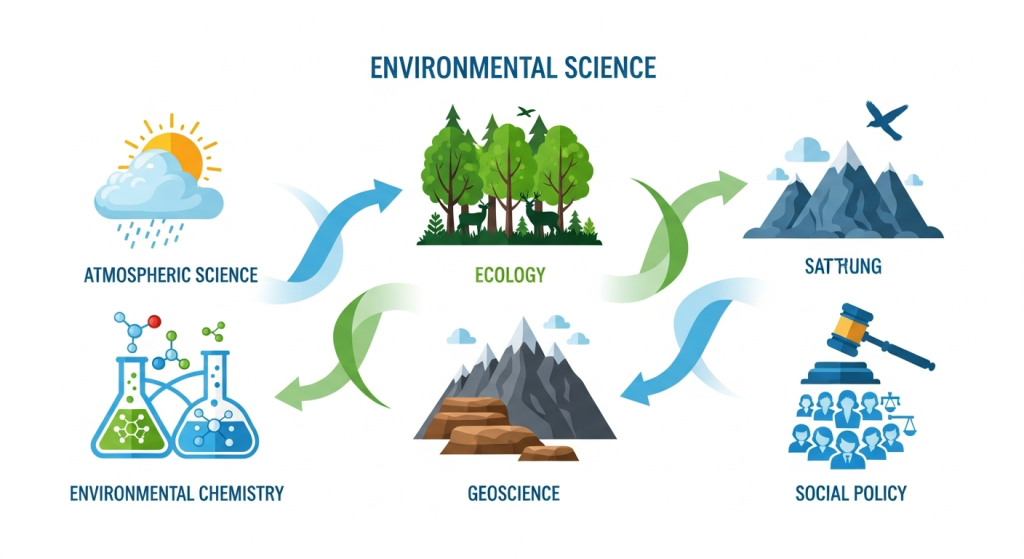
If you understand these branches, you will be able to see the whole picture more clearly.
1. Atmospheric science
The study of Earth’s atmosphere, climate patterns, air pollution, and the depletion of the ozone layer. Climate scientists track greenhouse gases and predict weather disasters.
2. Ecology
Describes how living organisms interact with their environments and examines the relationships between them. Among other things, ecologists study the food chain, population dynamics, and the restoration of habitats.
3. Environmental Chemistry
This course focuses on the chemical reactions taking place in air, water, and soil. There are many toxic heavy metals, pesticide residues, and industrial contaminants that are identified in this branch.
4. Geoscience
The study of Earth’s solid materials, including rocks, minerals, fossil fuels, and groundwater, is the focus of this course. In addition to helping locate sustainable resources, geoscientists also assess the dangers associated with natural hazards.
5. Social & Environmental Policy
Establishes a bridge between the field of science and the field of law and ethics. Experts in the field design regulations like the Clean Air Act, plastic bans, and carbon trading systems in order to protect the environment.
Why Environmental Science Matters More Than Ever
As a result of human impact on the planet, we are currently living in the Anthropocene – a geological era defined by human activity. It is important to keep an eye on the environment in 2026 for the following reasons:
Climate Change Accelerator
In the last century, the global temperature has risen by 1.2 degrees Celsius above what it was pre-industrial. In order to make recommendations for emission reductions, environmental scientists model future scenarios.
Freshwater scarcity
In 2030, there will be a 40% increase in global freshwater demand over supply by 2030. As a result of water recycling and desalination, hydrologists and environmental engineers work together.
Biodiversity Collapse
It is estimated that one million species are in danger of extinction. Biological conservationists are responsible for creating and maintaining protected areas as well as breeding programs.
Pollution & health
Each year, air pollution contributes to the premature deaths of 7 million people. In the development of cleaner industrial processes, environmental chemists play a crucial role.
Resource Deflection
The amount of resources we consume each year is equivalent to 1.7 Earths. It is in the interest of sustainability scientists to promote circular economy models.
Major Environmental Challenges (With Scientific Solutions)
Challenge 1: Plastic pollution
As a result of the fact that there are 380 million tons of plastic produced every year, only 9% of it is recycled.
Environmental Science Solution:
- In the area of biodegradable polymers, research is ongoing
- The Ocean Cleanup project uses technologies to clean the ocean (the Ocean Cleanup project)
- It is possible to recycle chemicals (pyrolysis and depolymerization) in a number of ways
Challenge 2: Deforestation
An area the size of Iceland is lost every year to forest loss, which amounts to 10 million hectares of forest.
The Environmental Science Solution consists of:
- A satellite-based monitoring system (Global Forest Watch) has been developed
- Planting native trees in the reforestation process
- The combination of crops with trees is called agroforestry
Challenge 3: Fossil Fuel Dependence
80% of the world’s energy still comes from fossil fuel sources, which is a huge problem.
The Environmental Science Solution consists of:
- The efficiency of solar PV systems has now exceeded 25%
- Creating green hydrogen through the production of renewable fuels
- The development of enhanced geothermal systems
How Environmental Scientists Work (Real-World Methods)
Environmental scientists don’t just sit in labs. They use:
| Method | Application |
|---|---|
| Remote Sensing | Satellites track deforestation, glacier melt, urban heat islands |
| GIS Mapping | Overlays pollution data with population density |
| Life Cycle Assessment (LCA) | Calculates environmental impact of a product from cradle to grave |
| Environmental Impact Assessment (EIA) | Required before any major construction project |
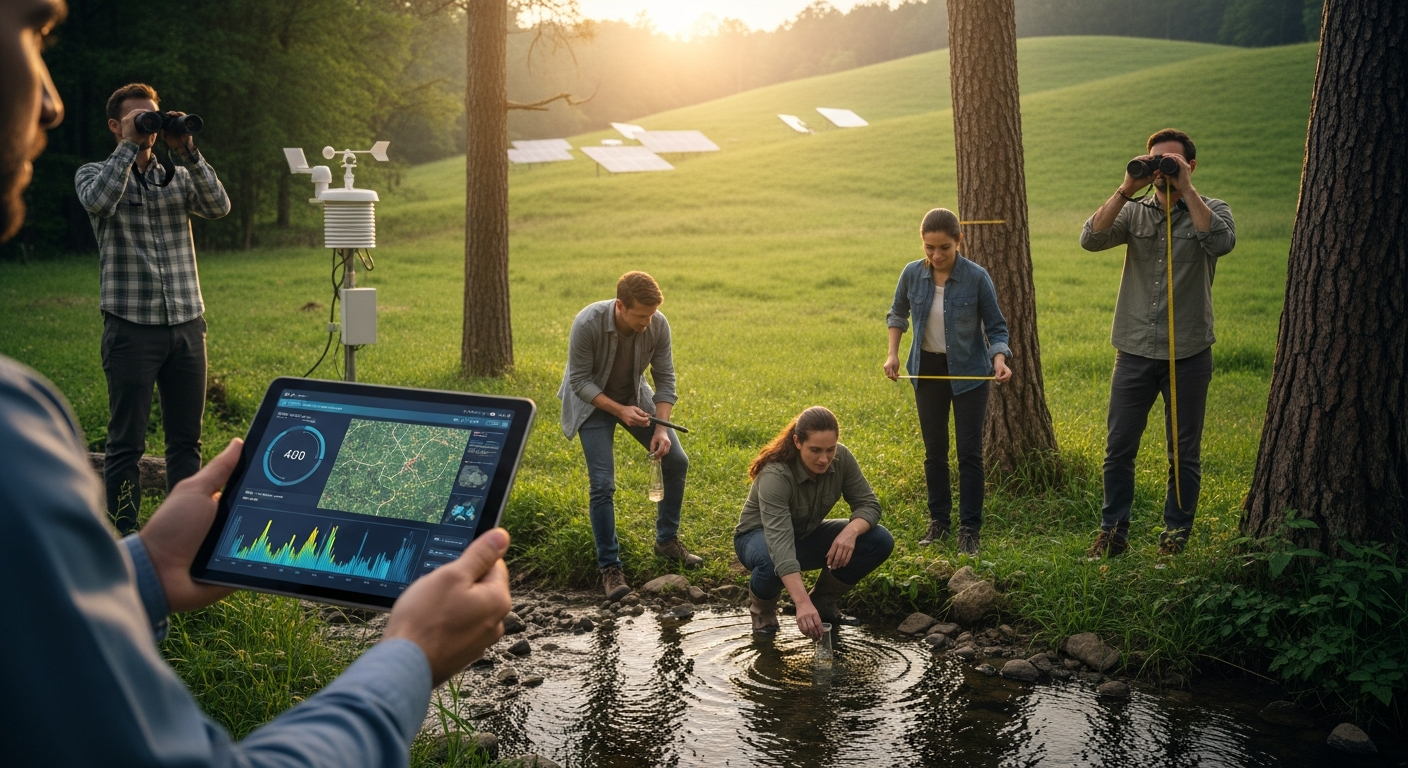
| Citizen Science | Volunteers collect water samples, count bird species |
Example: When a new factory is proposed, environmental scientists conduct an EIA studying air quality, noise levels, water runoff, and endangered species habitat.
Environmental Science in Action: 3 Success Stories
Success 1: The Ozone Layer Recovery
CFCs are ozone-depleting gases that were banned in 1987 as a result of the Montreal Protocol. There is now evidence that the ozone hole is healing and could completely close by the year 2066, according to environmental scientists.
Success 2: London’s Clean Air Zone
As a result of a study by environmental chemists, diesel exhaust has been identified as one of the biggest health hazards. During the two years that the Ultra Low Emission Zone was in place, NO2 levels in London were reduced by 44%.
Success 3: Costa Rica’s forests restoration
In 1983, Costa Rica had a deforestation rate of 26 percent, which has since increased to over 52 percent today as a result of the use of ecological modeling. Several PES programs were established to encourage landowners to plant trees in exchange for payment of ecosystem services.
How to Study Environmental Science (Career Guide)

The following are the paths you can follow if you decide to pursue environmental science as a career:
Educational Pathway:
- As a high school student, you are required to take Biology, Chemistry, Geography, and Mathematics
- Bachelor’s Degree: B.Sc. in Environmental Science, Ecology, or Earth Sciences (4 years)
- Master’s Degree (Optional): Specialize in Climate Modeling, Environmental Policy, or Toxicology
- PhD (Research/Academy): University Teaching positions or Advanced Research Positions in the field
Top Careers & Average Salaries (US, 2026):
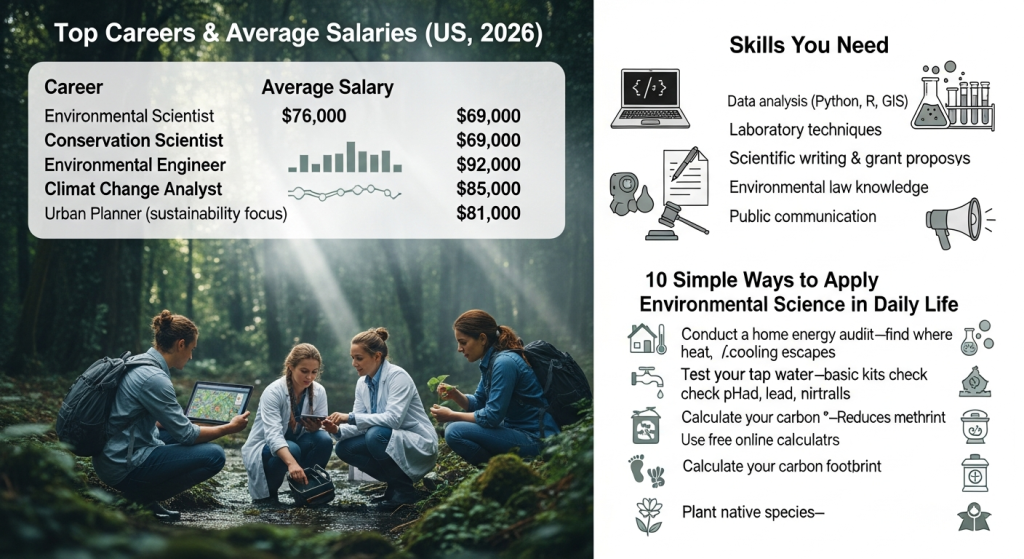
CareerAverage SalaryEnvironmental Scientist$76,000Conservation Scientist$69,000Environmental Engineer$92,000Climate Change Analyst$85,000Urban Planner (sustainability focus)$81,000
Skills you need:
- Analyzing data (using Python, R, and GIS)
- Techniques used in the laboratory
- Writing scientific papers & grant proposals is one of my specialties
- Environmental law knowledge
- Public communication
10 Simple Ways to Apply Environmental Science in Daily Life
In other words, you don’t need a degree to think like an environmental scientist. Let’s get started:
- You should conduct an energy audit of your home to determine where heat and cooling escape
- If you have tap water, you should test it for pH, lead, and nitrates using a basic kit
- Make a compost bin – This reduces the amount of methane released from landfills
- Make sure you calculate your carbon footprint using a free online carbon footprint calculator
- It is important to plant native species in order to support the local pollinators
- It is important to reduce the use of single-use plastics by carrying a reusable water bottle with you
- Idle electronics should be unplugged to save electricity and reduce the demand on the grid
- If you use the Ecosia search engine, you will be planting trees with the revenue generated by the ads
- Get involved in local cleanups – rivers, parks and beaches – by joining a group
- Citizen science projects on Zooniverse are an excellent way to support environmental science research
The Future of Environmental Science (2026–2030)
Emerging trends to watch:
| Trend | What It Means |
|---|---|
| AI for climate modeling | Machine learning predicts extreme weather earlier |
| Microplastic detection | New sensors find plastics in blood, rain, and food |
| Nature-based solutions | Mangroves for storm protection, green roofs for cooling |
| Environmental DNA (eDNA) | Detect species from water/soil samples without trapping |
| Carbon removal technology | Direct air capture machines now operational in Iceland |
Conclusion
Environmental science is more than a field of study – it is the roadmap which humanity needs to follow in order to survive. It is well known that every environmental challenge has a scientific solution waiting to be implemented, from the air we breathe to the water we drink.
There is no doubt that we are part of the solution, no matter if we become professionals in the field of environmental science or if we apply its principles at home. There is no need for the planet to depend on just a handful of people to accomplish sustainability perfectly. In order to make it happen, millions of people have to do it imperfectly but consistently.
Frequently Asked Questions
Q1: Is environmental science a difficult subject?
Since it is interdisciplinary, you will need to have a basic understanding of math, chemistry, and biology. However, many students find it rewarding because it offers a practical and solution-oriented approach to learning.
Q2: What’s the difference between environmental science and environmental studies?
There is a strong focus on natural sciences in environmental science (labs, data, and experiments).
Among the many facets of environmental studies, there is a strong emphasis on policy, ethics, and humanities.
Q3: Can I get a job with only a bachelor’s in environmental science?
Yes, of course! There are a number of entry-level jobs available in the field, such as field technicians, lab analysts, environmental educators, and sustainability coordinators.
Q4: How does environmental science contribute to climate change?
It is possible to mitigate climate change by measuring greenhouse gas sources, modeling future warming scenarios, and testing mitigation strategies, such as carbon capture and reforestation, among others.
Q5: What is the highest-paying job in environmental science?
With experience, environmental engineers and climate data scientists can earn more than 90,000–90,000–120,000 per year.