


A look at modern challenges, legal frameworks, and the path to a fairer justice system
Why Crime and Justice Matter
Crime and justice are two sides of the same coin. Without crime, justice would be unnecessary; without justice, crime would end society as we know it. Every day, millions of people around the world interact with laws, courts, police, and prisons somehow or indirectly. The way a society deals with crime and delivers justice defines its character, safety, and future.
Here we look at the relationship between crime and justice, the different types of crime, how justice systems work, the challenges they face, and what reforms are needed to ensure fairness.
Do you know what crime is? A Simple Definition
Laws and Definition of Crime
Crime is any action or omission that violates a law and is punishable by the state. Not every wrong act is a crime—only those that the government prohibits through legislation. For example, lying to a friend is morally wrong but usually not a crime. Lying under oath in court (perjury) is a crime.
Types of Crime
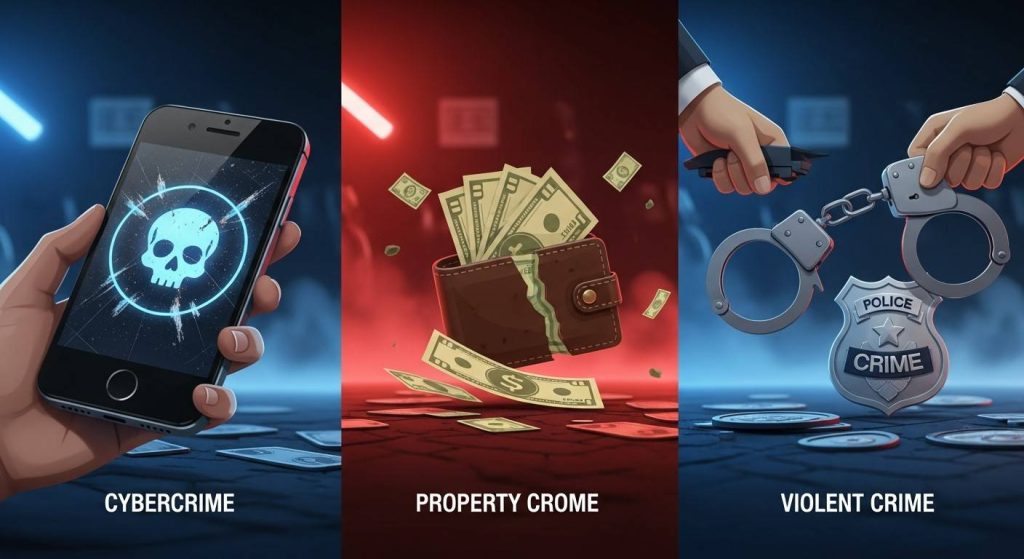
Crimes are generally divided into several categories:
- Violent crimes – murder, assault, robbery, kidnapping
- Property crimes – theft, burglary, arson, vandalism
- White-collar crimes – fraud, embezzlement, insider trading, money laundering
- Cybercrimes – hacking, identity theft, online scams
- Drug-related crimes—possession, trafficking, manufacturing
- Sex crimes – rape, sexual assault, child exploitation
- Traffic and public order crimes – drunk driving, disorderly conduct
In each case, law enforcement and the justice system have to take a different approach.
What Is Justice? Punishment isn’t everything
The Four Pillars of Justice
Justice is not just about catching and punishing criminals. It has four main components:
- Distributive justice—equal distribution of resources and rights
- Procedural justice – fair processes and hearings
- Retributive justice – punishment proportional to the crime
- Justice that restores harm caused by crime, often through mediation and reconciliation
Justice vs. Revenge
Many people confuse justice with revenge. Revenge is personal, emotional, and often excessive. Justice is impartial, rule-based, and aims for proportionality. The moral authority of a justice system is lost when it becomes vengeful.
What the Criminal Justice System Is Like
The Three Big Components
Modern justice systems have three parts:
- Law enforcement (police, investigators) – look into cases and arrest suspects
- Courts (judges, prosecutors, defense lawyers)—determine guilt and decide sentences
- Corrections (prisons, probation, parole) – carry out sentences and try to rehabilitate offenders
The Process from Crime to Verdict
A typical criminal case follows these steps:
Crime committed → report or discovery → investigation → arrest → charging → arraignment → trial → verdict → sentencing → appeal (if any)
Each step has rules to keep you saferights of the accused and the victim.
Today’s biggest challenges in crime and justice
- Overcrowded jails
In many countries, prisons are overcrowded, leading to violence, disease, and little rehabilitation. For example, some prisons hold double or triple their intended capacity.
- Racial and Economic Bias
Studies show that poor people and minorities often receive harsher sentences than wealthy or majority-group members for the same crimes. This undermines public trust in justice.
- Police Violence and Harassment
When police use excessive force or fabricate evidence, they become criminals themselves. Holding officers accountable is a major challenge.
- Slow Justice
Justice delayed is justice denied. Cases can take years or even decades, leaving victims and suspects in limbo.
- Rise of online crime
Traditional laws and investigative methods struggle to keep up with fast-changing digital crimes. Jurisdiction issues (which country’s laws apply) make it even harder.
- Underreporting of Crimes
There are a lot of crimes—especially sexual assault and domestic violence—that go unreported because victims fear retaliation, shame, or distrust of the system.
Crime and justice cases that changed the world
The Nuremberg Trials (1945–1946)
After World War II, Nazi leaders were tried for war crimes and crimes against humanity. This established the principle that individuals—even heads of state—can be held accountable under international law.
The O.J. Simpson Case (1995)
This US murder trial highlighted issues of race, police misconduct, and media influence on justice. It showed how public opinion and legal verdicts could differ dramatically.
The Central Park Five (1989–2002)
Five teenagers were wrongly convicted for brutal assault. They spent years in prison before DNA evidence proved their innocence. False confessions and prosecutorial misconduct made this case famous.
Justice and Crime Around the World
| Country | Unique Feature |
|---|---|
| USA | Elected judges and prosecutors; high incarceration rate |
| Germany | Inquisitorial system (judge actively investigates) |
| Japan | 99% conviction rate; heavy reliance on confessions |
| India | Massive case backlog; fast-track courts for certain crimes |
| Nordic countries | Focus on restorative justice and prisoner rehabilitation |
No system is perfect. Each country struggles with its own mix of crime problems and justice gaps.
Reforms to Improve Crime and Justice
- Invest in preventative measures
Every dollar spent on education, mental health care, and poverty reduction can save ten dollars in future policing and prison costs.
- Use technology smartly
Body cameras on police, electronic monitoring for low-risk offenders, and AI-assisted case management can improve efficiency and accountability.
- Expand Restorative Justice Programs
Bringing victims and offenders together (when safe and voluntary) often leads to lower recidivism and greater victim satisfaction than prison alone.
- End Cash Bail for Nonviolent Offenders
People should not be jailed before trials just because they are poor. Alternatives like supervised release work well for low-risk defendants.
- Providing better legal representation
Public defenders are often overworked and underpaid. More fair trials are ensured when they have reasonable caseloads and resources.
- Focus on Rehabilitation, Not Just Punishment
Prison should prepare people to return to society as law-abiding citizens. That means education, job training, drug treatment, and mental health services.
Crime and justice in the future
Predictive Policing and AI Ethics
Policing uses algorithms to predict where bad stuff might happen. But if the data is biased, the predictions will be too. Future systems must be transparent and audited.
Virtual Trials and Evidence in the Digital Age
COVID-19 pushed many courts online. In the future, more hearings may happen virtually, saving time and money—but raising questions about digital access and fairness.
Global Cooperation Against Transnational Crime
Drug trafficking, human smuggling, and cybercrime cross borders easily. It’s important to share intelligence and harmonize laws to fight them.
Conclusion—Justice Isa’s Continuous Journey
Crime and justice will always be with us because humans are not flawless. But we can—and must—strive for fair, fast, and effective systems. A system that protects the innocent, punishes the guilty proportionally, and helps everyone feel safe under the law.
Understanding crime and justice empowers you to demand better from your leaders and institutions, whether you’re a victim, an accused, a law student, or just a concerned citizen.
Call to Action
What are your thoughts on crime and justice in your country? Share your opinion in the comments below or contact us to write a guest post.











good